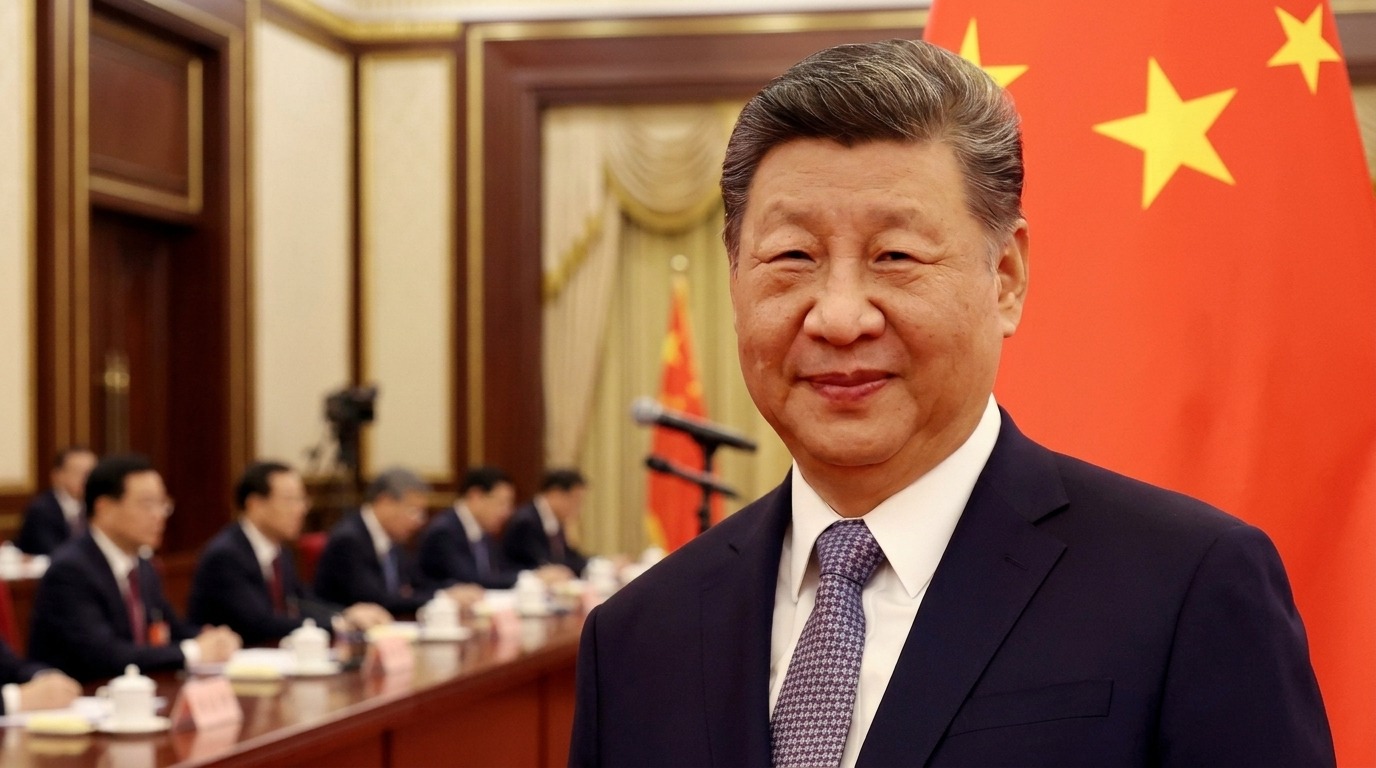
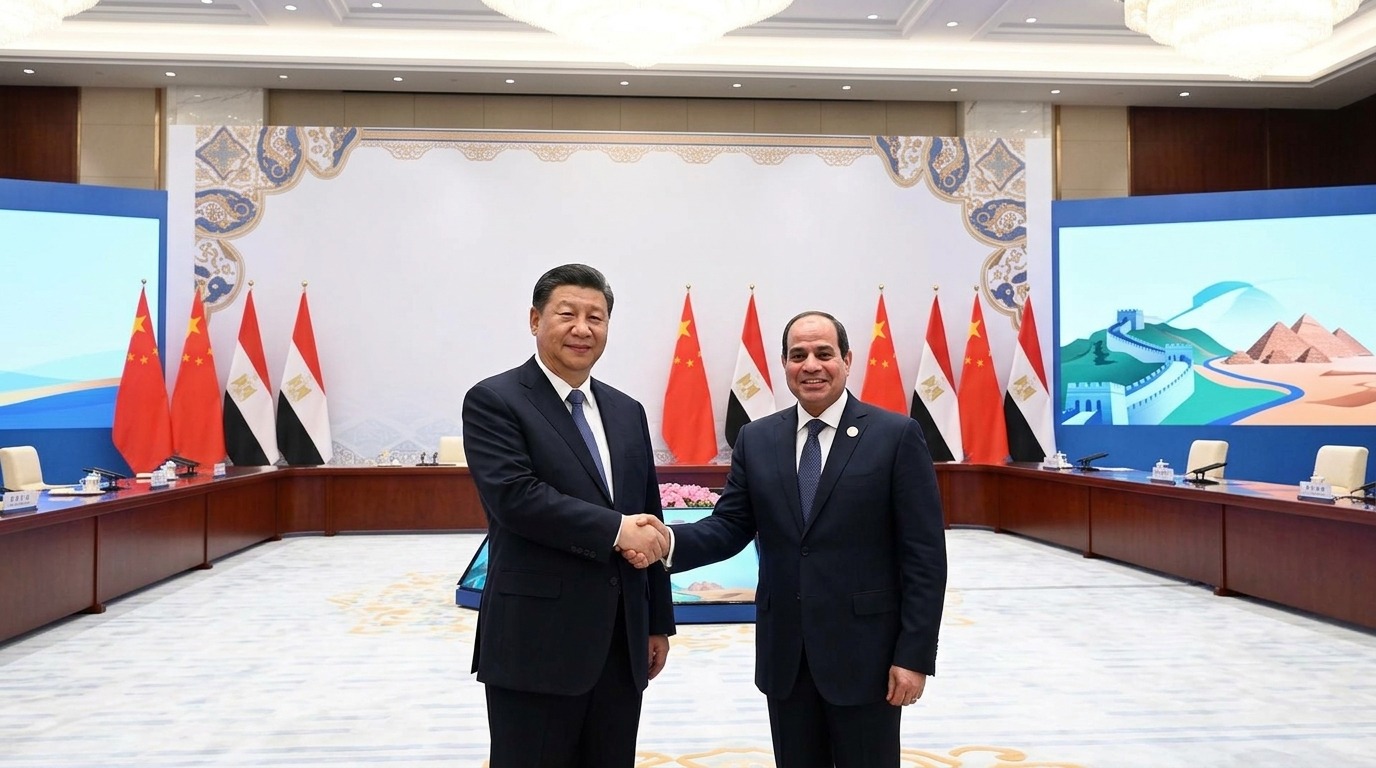
Xi was welcomed by Egyptian President Abdel Fattah al-Sisi on Wednesday during his first visit to Egypt in a decade. The visit comes as Cairo seeks to diversify its international partnerships while maintaining its longstanding relationship with Washington.
The symbolism is significant.
Egypt remains a major recipient of US military assistance, receiving around $1.3 billion annually, but its relationship with China has expanded steadily across infrastructure, manufacturing, energy and defence.
Chinese imports from Egypt exceeded $10 billion during the first half of the year, while Chinese companies have become increasingly involved in major infrastructure projects, including development linked to Egypt's new administrative capital.
Military cooperation is also developing.
Egypt and China recently conducted joint military exercises involving Chinese J-16 fighter aircraft and French-made Rafale jets, signalling a relationship that extends beyond trade and investment.
For Beijing, Egypt's strategic importance is difficult to overstate. The country controls the Suez Canal, one of the world's most important maritime trade routes, and occupies a central position between North Africa, the Mediterranean and the Middle East.
The current regional conflict makes that geography even more valuable.
Disruption around the Strait of Hormuz has increased attention on alternative trade routes and maritime infrastructure. At the same time, uncertainty over the long-term reliability of US security commitments is encouraging several regional governments to broaden their external relationships.
Egypt appears to be pursuing precisely that strategy.
Rather than replacing Washington with Beijing, Cairo is building a more diversified network of economic and strategic partnerships involving China, Russia, Europe and the United States.
For China, deeper engagement with Egypt offers access to a major population centre, a strategic maritime corridor and an influential diplomatic actor in regional conflicts.
Xi's visit therefore represents more than a bilateral diplomatic event.
It is part of a wider redistribution of influence across the Middle East in which economic investment, infrastructure and defence cooperation are increasingly being used alongside traditional diplomacy.
The emerging regional order may ultimately be defined less by exclusive alliances and more by countries seeking strategic flexibility among competing global powers.