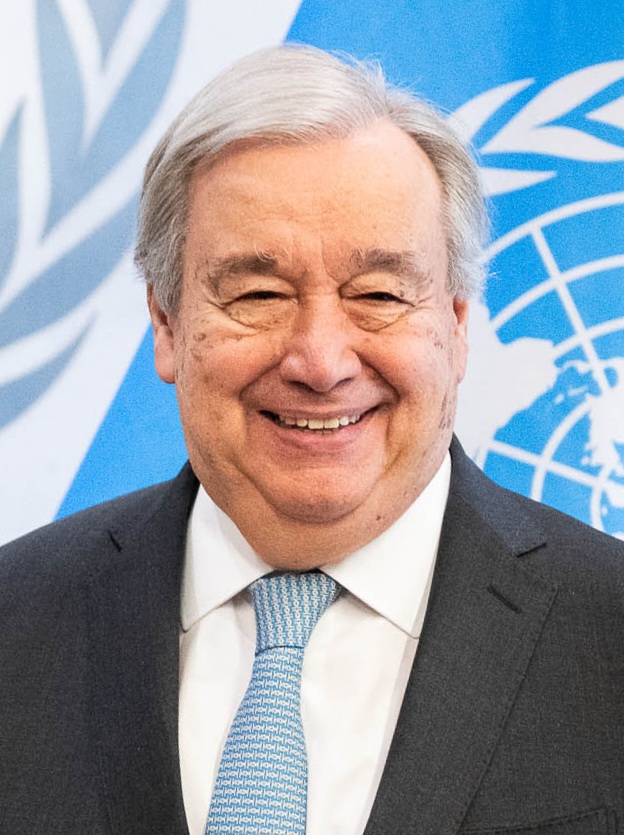
Guterres is scheduled to leave office on 31 December 2026 after two five-year terms. The selection process has entered its most consequential phase, with the Security Council conducting informal straw polls before eventually recommending a candidate to the 193-member General Assembly.
The field has also become more competitive. Costa Rica's Rebeca Grynspan led the first Security Council straw poll in July with 10 "encourage" votes. In the second poll on 21 August, however, Guyana's Carolyn Rodrigues-Birkett moved into first place with eight, while Grynspan and Argentina's Rafael Grossi each received seven. The results remain non-binding, and crucially, the identities of the permanent-five votes are not publicly distinguished at this stage.
That uncertainty is strategically important.
The next Secretary-General will inherit an institution facing simultaneous pressures: great-power rivalry, Security Council paralysis, declining confidence in multilateral institutions, financial stress, increasingly complex conflicts and growing demands from developing countries for greater representation in global decision-making.
The central question is therefore not whether the next Secretary-General can "save" the UN.
It is whether the office can still convert diplomatic authority into collective action when the most powerful states increasingly disagree on the rules, priorities and purposes of the international system.
The answer will depend less on personality than on institutional leverage.
The Real Transition Is Institutional
The Secretary-General is often portrayed as the world's chief diplomat.
That description is incomplete.
The Secretary-General has political influence, convening authority, diplomatic access and the ability to place issues on the international agenda. But the office does not possess sovereign power over member states.
The UN remains fundamentally a member-state organisation.
The Security Council can authorise coercive measures and peace operations, but its five permanent members—China, France, Russia, the United Kingdom and the United States—retain veto power. The General Assembly can generate political legitimacy and establish norms, but most of its resolutions are not legally binding.
This creates the central contradiction facing the next Secretary-General:
The world expects the UN to solve problems that its member states increasingly cannot agree on how to solve.
Guterres himself has argued that multilateralism is not necessarily what is failing; rather, the behaviour of major powers and their use of veto power have made collective action increasingly difficult. He has also described Security Council reform and reform of the international financial architecture as essential unfinished tasks for his successor.
The next Secretary-General therefore inherits an institution whose authority remains considerable—but whose capacity to translate authority into action is increasingly conditional.
A Stronger UN Is Not the Same as a Stronger Secretary-General
This distinction matters for governments, investors and institutions assessing the next phase of global governance.
A powerful Secretary-General cannot independently eliminate the veto.
The Secretary-General cannot force major contributors to pay assessed contributions on time.
The Secretary-General cannot compel states to accept peacekeeping mandates.
Nor can the office redesign the Security Council without the political agreement of member states.
What the Secretary-General can do is build coalitions around areas where consensus remains possible.
That could mean prioritising:
conflict prevention before crises become wars;
mediation between states and armed actors;
humanitarian access;
climate and development diplomacy;
reform of UN operations;
partnerships with regional organisations;
more effective use of the General Assembly;
stronger coordination between international financial institutions and the UN system.
This suggests that the next Secretary-General's effectiveness may ultimately be measured less by the number of major reforms formally adopted than by the institution's ability to create practical coalitions around problems where great-power consensus is unavailable.
The Security Council Is the Structural Constraint
The Security Council remains the clearest expression of the UN's power problem.
Its architecture reflects the geopolitical settlement of 1945.
The world it governs does not.
Africa has no permanent seat despite the continent being central to a substantial share of the Council's peace and security agenda. Latin America and the Caribbean remain excluded from permanent representation. India and other major emerging powers also remain outside the permanent category.
The mismatch between contemporary geopolitical weight and institutional representation has become increasingly difficult to defend.
In 2026, negotiations on Security Council reform have moved beyond abstract calls for change. The General Assembly's intergovernmental negotiations have considered specific models for expanding representation, with the latest discussions showing broad support for greater African representation.
But agreement on the need for reform is very different from agreement on the structure of reform.
That distinction will define the next Secretary-General's political environment.
The Veto Problem
The P5 veto is not simply a procedural feature of the UN.
It is the central mechanism through which great-power rivalry can constrain collective action.
Recent Council activity illustrates the problem.
In 2025, the Security Council adopted 44 resolutions, down from the previous year, while several major initiatives—including resolutions concerning Gaza—failed because of vetoes by permanent members.
The result is a paradox.
The UN remains the principal global institution for collective diplomacy precisely when collective diplomacy is becoming harder.
The next Secretary-General therefore faces a strategic choice.
Should the office spend political capital pursuing formal Charter reform that requires the agreement of the very powers that benefit from the existing system?
Or should it pursue incremental changes in working methods, coalition-building and regional partnerships that can deliver results without requiring a constitutional transformation?
The likely answer is both—but with very different expectations attached to each.
Africa's Role Is Becoming More Important
For Aldrenor's Africa-connected audience, the UN succession process has a significance that extends well beyond the question of whether an African candidate ultimately emerges.
Africa is one of the largest constituencies in the UN system, one of the most heavily represented regional blocs in the General Assembly and a central theatre for peacekeeping, development, climate diplomacy and humanitarian action.
The African Union's position is explicit.
The continent's Common African Position, rooted in the Ezulwini Consensus and Sirte Declaration, calls for at least two permanent African seats with the same prerogatives—including the veto for as long as it exists—and five additional non-permanent seats.
In 2026, the AU has continued to push the issue as a strategic priority.
The African Union Commission has described the absence of permanent African representation as a historical injustice, while current UN reform negotiations indicate broad agreement that Africa should receive equitable representation in a reformed Council.
This gives African governments an important source of collective leverage.
But it also creates a test of African diplomacy.
The question is no longer simply whether Africa can demand reform.
It is whether African states can coordinate their positions, build alliances beyond the continent and translate demographic and political weight into negotiating power.
The Secretary-General Race Is Already Sending a Signal
The regional dynamics of the current race are revealing.
The early field is dominated by candidates from Latin America and the Caribbean, alongside candidates from Africa and other regions. The current official list includes Rebeca Grynspan, Carolyn Rodrigues-Birkett, Rafael Grossi, Michelle Bachelet, María Fernanda Espinosa, Macky Sall, Olara Otunnu and newly nominated Ivonne A-Baki.
The first two straw polls show how fluid the contest remains.
Grynspan's initial lead demonstrated early support for a candidate with extensive experience in international economic governance. Rodrigues-Birkett's subsequent rise demonstrates that the E10—alongside the P5—will matter in determining whether a candidate can build a sufficiently broad coalition.
But the deeper signal is that no candidate has yet established an overwhelming coalition.
That means the eventual winner will probably need to be acceptable to competing geopolitical camps rather than merely popular with one regional bloc.
The Financial Constraint Is Becoming a Political Constraint
The UN's authority ultimately depends on its ability to deliver.
That requires money.
The organisation has faced a serious liquidity crisis caused by delayed and incomplete payments from member states. In 2025, peacekeeping faced a shortfall exceeding $2 billion against an approved budget of approximately $5.6 billion, forcing missions to reduce operations.
The problem continued into 2026.
In June, the General Assembly adopted a financial reform designed to reduce the pressure created by returning unspent funds to member states when those funds were not backed by cash. The change was intended to protect more than $900 million in peacekeeping resources and around $400 million in the regular budget.
The reform provides breathing room.
It does not solve the underlying problem.
The UN still depends on member states to finance mandates they themselves approve.
This creates a structural mismatch between political ambition and financial capacity.
Governments can demand more peacekeeping, humanitarian assistance, development coordination and mediation.
But unless they finance those mandates, the institution's operational capacity will continue to shrink.
For the next Secretary-General, therefore, financial diplomacy may become almost as important as political diplomacy.
Peacekeeping Is Being Forced to Change
The traditional model of UN peacekeeping is also under pressure.
Conflicts are increasingly fragmented, armed groups are more diverse, drones and other technologies are changing battlefield dynamics, and peacekeepers are frequently deployed where there is no stable peace to keep.
The UN's latest review of peace operations, released in August 2026, calls for a reset centred on stronger peacemaking, closer partnerships with host states, more focused mandates and more agile operations.
This is strategically significant.
The next Secretary-General may inherit fewer resources but more demands.
That means the organisation will have to become more selective about where peacekeeping is deployed and what political objective each mission is designed to achieve.
For Africa, where UN and regional peace operations remain particularly important, the question will also be how responsibilities are divided between the UN, African Union and regional organisations.
A more effective future model may involve the UN providing legitimacy, financing and diplomatic coordination while regional organisations provide greater political and operational ownership.
Mediation May Become the UN's Most Valuable Asset
If the Security Council becomes increasingly difficult to use, the Secretary-General's diplomatic function becomes more important.
The UN's comparative advantage may lie less in imposing solutions and more in creating channels through which adversaries can negotiate.
That includes:
quiet diplomacy;
preventive engagement;
ceasefire facilitation;
humanitarian negotiations;
shuttle diplomacy;
support for regional mediation;
post-conflict political settlements.
This is where the personality and credibility of the Secretary-General matter most.
A Secretary-General who can speak to governments that refuse to speak directly to one another can create diplomatic space that formal institutions cannot.
But this also requires neutrality to be perceived as credible.
The office must be able to maintain dialogue without appearing captured by any major power bloc.
That balancing act will become increasingly difficult as geopolitical competition intensifies.
What Governments Will Expect From the Next Secretary-General
The next Secretary-General will face competing demands from different parts of the UN membership.
Major powers are likely to prioritise strategic stability, geopolitical predictability and institutional restraint.
Developing countries are likely to demand stronger action on development finance, climate vulnerability, debt, trade and representation.
Conflict-affected states will want more effective mediation and peace operations.
African governments will push for stronger representation and a more balanced global governance architecture.
Civil society will expect greater accountability on human rights and humanitarian issues.
The private sector will increasingly care about geopolitical stability, global trade rules, climate policy and the reliability of international institutions.
The challenge is that these priorities are not always compatible.
The next Secretary-General therefore needs more than diplomatic fluency.
The office will require a clear hierarchy of priorities.
Can Institutional Reform Actually Happen?
This is perhaps the hardest question in the entire succession debate.
Formal Security Council reform requires extraordinarily broad political agreement.
The permanent members have little incentive to surrender privileges they regard as central to their strategic position.
The General Assembly can build political momentum, but it cannot unilaterally rewrite the Charter.
This means expectations should remain realistic.
The next Secretary-General is unlikely to preside over a dramatic overnight transformation of the UN.
But meaningful reform does not require a single constitutional breakthrough.
The organisation can still change through:
Working methods.
Improved transparency, greater coordination between the General Assembly and Security Council and stronger engagement with affected states.
Regional partnerships.
Deeper cooperation with the African Union, European Union, ASEAN, Arab League and other regional organisations.
Peace operations.
Smaller, more focused and politically integrated missions.
Financial reform.
Greater predictability in assessed contributions and better alignment between mandates and available resources.
Preventive diplomacy.
More investment in preventing conflicts rather than responding after violence escalates.
Representation.
Progress towards a Security Council that better reflects contemporary geopolitical realities.
The practical path to a stronger UN may therefore be evolutionary rather than revolutionary.
The Strategic Test for the Next Secretary-General
The most important test will not be whether the next Secretary-General can make the UN look more efficient.
It will be whether the organisation can become more useful.
That means asking five questions.
1. Can the UN still prevent conflicts?
If prevention becomes more effective, the organisation can remain relevant even when the Security Council cannot agree on coercive action.
2. Can the Secretary-General preserve diplomatic channels between rival powers?
If not, the UN risks becoming primarily a forum for public confrontation rather than practical diplomacy.
3. Can developing countries gain greater influence?
Representation will increasingly determine legitimacy.
4. Can the organisation operate within tighter financial constraints?
The next UN leadership may have to achieve more with structurally less predictable funding.
5. Can reform occur without destroying the institution's remaining consensus?
This may be the most delicate challenge.
An overly ambitious reform agenda could produce paralysis.
An overly cautious approach could accelerate irrelevance.
What Decision-Makers Should Watch Next
For governments, investors and institutions assessing the international environment, the UN succession process should be monitored through several strategic indicators.
The P5 Position
The most important question is not who leads the early straw poll.
It is whether the eventual candidate can avoid opposition from every permanent member.
The P5 veto remains the decisive structural constraint.
The E10 Coalition
The ten elected Security Council members can determine whether a candidate has sufficient breadth of support.
The second straw poll's narrow distribution suggests the race remains open.
Africa's Negotiating Position
African governments will need to balance support for the broader reform agenda with the immediate political realities of the Secretary-General selection.
The ability of the AU to maintain a coherent negotiating position will influence its leverage.
Financial Commitments
Watch whether major contributors restore predictable funding.
Without financial stability, institutional reform will have limited practical impact.
Peacekeeping Reform
The implementation of the new UN peace-operations review will provide an early test of whether the incoming administration can modernise the organisation's approach to conflict.
General Assembly Authority
If Security Council paralysis continues, the political role of the General Assembly may become increasingly important.
That could gradually shift the centre of gravity of multilateral diplomacy.
Executive Outlook
The succession of António Guterres will not, by itself, determine the future of the United Nations.
The deeper issue is whether the international system can still produce collective decisions in an era when its most powerful states increasingly disagree about the rules governing global affairs.
The next Secretary-General will inherit an institution that remains indispensable but constrained.
The UN still provides the world's most universal diplomatic forum. It still coordinates humanitarian action, supports peace operations, establishes international norms and provides legitimacy that no individual power can easily reproduce.
But its limitations are becoming harder to ignore.
The Security Council can be paralysed by vetoes.
Peacekeeping can be weakened by funding shortfalls.
Development priorities can collide with geopolitical interests.
And developing countries can question an institutional architecture that continues to reflect a world that existed eight decades ago.
This is why the 2026 succession should not be judged primarily as a contest between Grynspan, Rodrigues-Birkett, Grossi, Bachelet, Espinosa, Sall, Otunnu, Baki or any other candidate.
The more important question is what political mandate the next Secretary-General receives.
If member states want a more effective UN, they will need to give its leadership the resources, diplomatic space and institutional reforms required to act.
If they want the organisation to remain primarily a forum for expressing disagreement, no Secretary-General will be able to restore multilateral power.
The choice ultimately belongs to governments.
The Secretary-General can convene.
The Security Council can decide.
The General Assembly can legitimise.
But only member states can provide the political authority and financial resources necessary to make multilateralism work.
For Africa, the stakes are particularly high.
A more representative UN could give the continent greater influence over the institutions that shape peace, security, development finance and international economic governance. The current reform negotiations already recognise broad support for greater African representation, while the AU continues to insist on permanent representation with full prerogatives.
The next Secretary-General will therefore enter office at a moment of institutional transition.
The opportunity is not to restore the UN to an imagined golden age.
It is to redesign its practical role for a world in which power is more distributed, conflicts are more complex, financing is tighter and the Global South expects a greater voice.
The UN does not need another Secretary-General who simply manages decline.
It needs a political strategist capable of making multilateralism useful again.
Whether member states will allow that strategist to succeed may be the defining question of the next five years.