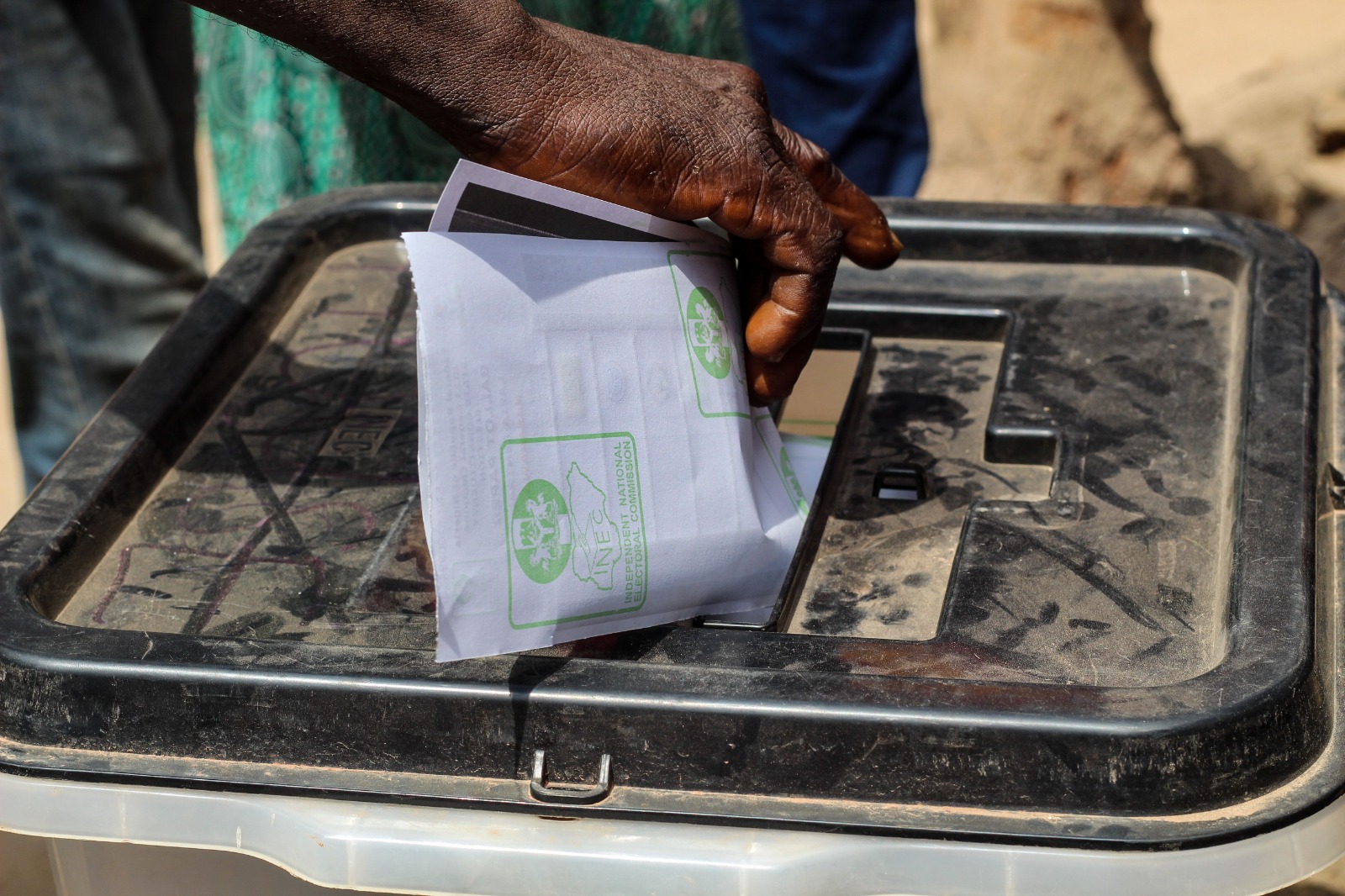

But demographic weight does not automatically translate into electoral power.
Recent evidence presents a more complicated picture. Young Africans are generally less likely than older citizens to vote, identify with political parties or participate in conventional political institutions. Yet they are increasingly prominent in protests, online political mobilisation and issue-based movements. Afrobarometer's latest cross-country evidence shows that youth participation remains weaker in formal politics even as protest becomes an important channel for political expression.
That distinction is becoming strategically important.
Africa's younger voters are not necessarily demanding a particular ideology. They are increasingly judging governments through the lens of jobs, prices, public services, corruption, economic opportunity and whether political institutions respond to everyday realities.
This creates a new political vulnerability for governments.
Macroeconomic stabilisation may satisfy investors and international institutions without immediately satisfying households. Fiscal reform may improve debt ratios while food, transport, electricity and housing remain expensive. GDP growth may accelerate while graduates continue to struggle to find productive employment.
For political leaders, the question is therefore shifting from:
“Is the economy improving?”
to:
“Can voters feel the improvement?”
Zambia's August 2026 election provides a particularly useful illustration. President Hakainde Hichilema won a second term with roughly 60% of the vote, but his principal challenger performed more strongly than expected by arguing that economic improvements had not translated sufficiently into better household living standards. Reuters described the contest as a test of Hichilema's economic record amid persistent cost-of-living pressures.
The broader implication is significant: Africa's demographic shift is forcing governments to reconsider how economic performance translates into political legitimacy.
The Demographic Shift Is Becoming a Political Variable
Africa's youth population has long been described primarily as an economic opportunity.
That framing is incomplete.
It is also becoming a political variable.
A continent in which a majority of citizens are young produces a fundamentally different electoral environment from one dominated by older populations.
The political implications are already visible.
Young Africans are more educated than previous generations but face serious employment and economic constraints. Across 38 African countries surveyed by Afrobarometer, 43% of young people aged 18–25 reported being unemployed and actively seeking work. Across the broader 18–35 cohort, job creation remains one of the most important demands placed on governments.
This creates a structural contradiction.
Governments are increasingly governing younger, more educated populations whose expectations have risen faster than the availability of economic opportunity.
That gap can become politically destabilising.
A young graduate who has access to a smartphone, follows global economic developments and understands how peers elsewhere live may evaluate government performance against international standards rather than only local historical conditions.
Political expectations therefore become increasingly connected to global information flows.
Are Younger Voters Actually Becoming More Decisive?
The answer is yes in demographic importance, but not yet uniformly in electoral participation.
This distinction matters.
Afrobarometer data show that young Africans have historically voted at lower rates than older citizens. In its 2021–2023 cross-country findings, 63% of voting-age youth said they voted in their country's last election, compared with 78%–84% among older cohorts. Young people were also less likely to feel close to political parties or contact elected officials.
This means political parties cannot simply assume that a large youth population automatically translates into a large youth turnout.
The real political contest is increasingly about conversion:
How effectively can political actors convert demographic weight into electoral participation?
That is where registration campaigns, digital communication, candidate credibility, mobilisation networks and issue-based campaigning become strategically important.
Zambia demonstrates the scale of the opportunity. Ahead of the August 2026 election, 4.07 million registered voters were aged 18–35—46.3% of the registered electorate, according to the Electoral Commission of Zambia and election observers.
A constituency approaching half of the electorate cannot be treated as a peripheral voting bloc.
But neither can it be assumed to vote as a single bloc.
The more important trend is that young voters are becoming politically consequential without necessarily becoming politically homogeneous.
What Actually Mobilises Young Voters?
The evidence points towards a surprisingly practical political agenda.
Young voters are not primarily mobilised by abstract demographic identity.
They are responding to economic and institutional conditions.
Across 35 African countries, Afrobarometer found that young people identified health as the most important problem governments should address, followed by unemployment, rising cost of living, education, infrastructure and water. Nearly half said job creation should be the priority for additional government spending on youth.
The political hierarchy is therefore increasingly clear:
1. Employment
Jobs remain the central political issue.
For younger citizens, employment represents more than income. It affects independence, housing, family formation, migration decisions and social status.
In Nigeria, for example, Afrobarometer found that job creation was the leading priority for additional government spending among young people, followed by business finance, training and education.
2. Cost of Living
Inflation is politically powerful because it is experienced daily.
Citizens may not follow sovereign spreads or debt-service ratios, but they notice food prices, transport fares, electricity bills and rent.
This creates a major communications challenge for governments pursuing difficult reforms.
A government can successfully stabilise an economy and still lose the political narrative if households do not perceive an improvement in purchasing power.
3. Education-to-Employment Conversion
The problem is increasingly not simply access to education.
It is whether education produces economic opportunity.
Afrobarometer's 2025 research identifies inadequate training, lack of experience and mismatches between education and labour-market requirements as leading barriers facing young Africans.
This makes skills policy an increasingly political issue.
4. Public Services
Health, electricity, water, transport and digital connectivity increasingly form part of the political contract.
For young voters, government performance is judged through whether institutions make everyday life easier.
5. Corruption and Governance
Economic hardship can become more politically explosive when citizens believe that political elites are insulated from the consequences.
This is particularly powerful among digitally connected young populations that can rapidly document, compare and distribute evidence of perceived government failures.
The Cost-of-Living Politics of Economic Reform
This may become one of the most important political themes of Africa's next electoral cycle.
Governments across the continent are pursuing reforms designed to stabilise currencies, reduce fiscal deficits, restructure debt, remove subsidies and attract investment.
Many of these policies can improve macroeconomic fundamentals.
But macroeconomic improvement does not necessarily translate immediately into household prosperity.
Zambia provides a timely example.
Hichilema's first term was marked by debt restructuring, economic stabilisation and efforts to restore investor confidence following the country's sovereign debt crisis. His administration can point to significant improvements in macroeconomic conditions.
Yet the 2026 election demonstrated the political limits of that argument.
The opposition successfully framed the election around the gap between improving economic indicators and persistent household hardship. Hichilema ultimately won, but the strength of the opposition vote demonstrated that macroeconomic credibility does not eliminate cost-of-living politics.
This distinction should concern policymakers across Africa.
Economic reform creates political value only when citizens can eventually connect reform to improved living standards.
The longer that transmission takes, the greater the political risk.
The Smartphone Has Changed the Political Campaign
Africa's political communication environment is also changing.
Social media has lowered the cost of political organisation.
Young people no longer require formal party structures to create political visibility, coordinate protests or shape public narratives.
Kenya's 2024 Gen Z protests demonstrated this clearly.
The movement initially emerged online around opposition to proposed tax increases and rapidly developed into nationwide demonstrations that challenged established political structures. The protests cut across traditional ethnic and regional political divisions and ultimately forced President William Ruto to withdraw the finance bill.
Nigeria's 2024 #EndBadGovernance protests followed a similar pattern, with young people using digital platforms to organise around inflation, economic reforms and the rising cost of living.
The implication is not that social media has replaced elections.
It has changed the speed at which political sentiment can form and spread.
A policy announcement that once required weeks of traditional media coverage can now trigger a national political response within hours.
But Digital Politics Has a Major Limitation
Africa's digital political transformation is real, but it is uneven.
In 2024, only 38% of Africa's population used the internet, according to the International Telecommunication Union. Urban internet usage was 57%, compared with only 23% in rural areas.
This creates an important strategic warning.
The online youth population should not automatically be treated as representative of all young voters.
Urban, educated and digitally connected youth may dominate political conversation without representing rural or lower-income electorates.
Political parties that over-index on social media can therefore mistake visibility for electoral reach.
The most sophisticated campaigns will combine digital mobilisation with physical grassroots networks, local-language communication, community organisations and conventional voter outreach.
Are Traditional Parties Adapting?
The evidence is mixed.
Political parties are becoming more sophisticated at using digital communication, but institutional adaptation is proving more difficult.
Young voters often distrust established political organisations even when they remain interested in democratic government.
Afrobarometer found that young Africans are broadly supportive of democracy but significantly dissatisfied with how democracy works in their countries. Young citizens are also less likely than older citizens to feel close to political parties.
This creates a paradox.
Young Africans may reject the performance of political institutions without rejecting democracy itself.
That distinction is politically important.
The challenge for established parties is therefore not simply recruiting younger candidates or creating youth wings.
It is rebuilding credibility around issues that affect young people's economic futures.
A social-media campaign cannot compensate indefinitely for weak employment outcomes, high living costs or perceptions of corruption.
Could Youth-Led Movements Reshape Political Systems?
Potentially, but mobilisation is easier than institutionalisation.
Kenya's Gen Z movement demonstrated that young citizens can disrupt conventional political calculations without relying on traditional parties. Madagascar's recent youth-led protests over basic services similarly demonstrated how digitally connected younger citizens can challenge established political systems. International IDEA has identified youth-led protest as an important political trend in Africa, including movements in Madagascar and Morocco.
The harder question is what happens afterwards.
Movements without formal leadership can mobilise quickly but may struggle to translate protest energy into electoral organisations, legislative coalitions or durable policy platforms.
This creates three possible trajectories:
First, absorption.
Established parties adapt, recruit younger leaders and incorporate youth demands.
Second, fragmentation.
Youth movements remain powerful protest networks but fail to develop institutional political capacity.
Third, political replacement.
New parties and candidates emerge directly from youth movements and begin displacing established political organisations.
The third scenario is the most disruptive, but also the most difficult to sustain.
The New Political Risk Calculation
For African governments, the most important change may not be that young people are becoming more politically active.
It is that the cost of ignoring them is rising.
A government can traditionally survive a period of economic dissatisfaction if opposition parties are fragmented, media ecosystems are controlled and political loyalties remain strong.
Those conditions are becoming less reliable.
Younger citizens have:
Greater access to information.
Lower attachment to traditional political parties.
Stronger connections across national borders.
Greater familiarity with digital mobilisation.
Higher expectations regarding economic opportunity.
Greater visibility into how governments perform elsewhere.
This creates a more fluid political environment.
The political risk is therefore increasingly issue-based rather than purely ideological.
A government does not necessarily need to face an organised opposition movement to experience instability.
A single policy, fuel prices, taxation, electricity tariffs, education costs or unemployment, can become the catalyst for broader dissatisfaction.
The Investment Implication
The youth vote is also becoming an economic intelligence variable.
Investors evaluating African markets should increasingly monitor demographic and political indicators together.
A country with a large youth population but weak employment creation may carry a different political-risk profile from a country with similar demographics but stronger job creation and social mobility.
Key indicators worth monitoring include:
Youth unemployment and underemployment.
Real household income.
Food and transport inflation.
Graduate employment.
Internet and smartphone penetration.
Youth voter registration.
Electoral turnout by age.
Trust in political institutions.
Frequency of youth-led protests.
Government spending on employment and skills.
Access to affordable housing.
Education-to-employment conversion.
Digital restrictions and internet shutdowns.
Political party membership among younger voters.
These indicators can provide investors with a more sophisticated understanding of political stability than headline election polling alone.
What Governments Should Do Next
The strategic response is not simply to create more youth programmes.
Governments need to connect economic policy directly to the political expectations of younger citizens.
1. Make employment a measurable political outcome
Job creation should be tracked not only through headline unemployment figures but through the quality, productivity and durability of employment.
2. Close the gap between reform and household experience
Governments pursuing fiscal or monetary reforms should invest simultaneously in targeted measures that protect vulnerable households and accelerate the transmission of economic recovery into living standards.
3. Treat digital access as political infrastructure
Affordable internet access is increasingly relevant to education, employment, entrepreneurship and political participation.
4. Modernise political communication
Young voters are unlikely to respond permanently to one-way political messaging.
Governments and parties will need more transparent, interactive and evidence-based communication.
5. Create institutional routes for youth participation
If younger citizens have no credible institutional mechanism for influencing policy, protest becomes a more attractive alternative.
Political parties and governments therefore need meaningful pathways into policymaking, candidate selection and public consultation.
Executive Outlook
Africa's demographic transition is creating a political generation that cannot be understood through the traditional categories of African electoral politics.
Young voters are not automatically opposition voters.
They are not a single ideological bloc.
And they are not necessarily more likely to vote than older citizens.
Their significance comes from something more structural.
They represent the future majority of the electorate while already exerting disproportionate influence over political narratives, protest movements and public expectations.
The political systems that adapt successfully will be those that understand the distinction between youth visibility and youth electoral power.
The decisive question is not whether young Africans are angry.
It is whether political institutions can convert that anger, aspiration and economic expectation into credible democratic participation.
Zambia's 2026 election offers an important warning for governments pursuing economic reform: improving macroeconomic indicators can strengthen a government's credibility with markets while leaving a separate political question unresolved, whether households believe their own economic position is improving.
For governments across the continent, that gap is becoming increasingly important.
For investors, it is becoming a political-risk indicator.
For political parties, it is becoming an electoral strategy problem.
And for Africa's political system as a whole, it may represent the beginning of a generational transition in which the largest demographic group increasingly determines which economic promises, political narratives and governing models survive at the ballot box.
Sources
Afrobarometer — African youth concerned about health and unemployment
Afrobarometer — From aspiration to action: Barriers to youth empowerment in Africa
Afrobarometer — African youth and political/civic participation
Afrobarometer — Africa's youth: more educated, less employed, still unheard
United Nations Population Fund — Demographic Dividend Atlas for Africa
International Telecommunication Union — Measuring Digital Development: Africa 2025
International IDEA — Digitalization and Youth Engagement in Electoral Processes in the SADC Region
International IDEA — Global State of Democracy: Africa and Western Asia
Reuters — Zambia's 2026 election and cost-of-living pressures
Reuters — Zambia opposition challenge following 2026 election