
The important question for investors is not simply whether governments are reducing deficits.
It is whether the new fiscal architecture will make sovereign financing more credible, reduce borrowing costs and create a more predictable environment for private capital.
That distinction matters.
Fiscal consolidation can improve sovereign creditworthiness, lower risk premia and create space for private investment. But poorly designed consolidation can also suppress public investment, weaken growth and increase pressure on domestic financial markets.
Africa's fiscal reset is therefore becoming an investment story.
In WAEMU, the regional deficit narrowed from 5.4% of GDP in 2024 to an estimated 3.4% in 2025, while public debt fell from 68% to about 65% of GDP, the first decline in the regional debt ratio in more than a decade. Yet debt-service costs reached 83% of tax revenue in 2025, demonstrating how quickly higher borrowing costs and shorter maturities can absorb fiscal space.
Elsewhere, Ghana is moving from crisis restructuring towards a formal debt anchor; Nigeria is implementing major tax and fiscal-management reforms; Egypt is combining primary surpluses with active liability management; South Africa is developing a new fiscal anchor; and Senegal is negotiating a new IMF-supported programme following the discovery of substantially higher-than-reported public debt.
The result is a changing African sovereign-risk landscape.
For investors, the winners will not necessarily be the countries with the lowest headline debt ratios. They will increasingly be countries that demonstrate credible fiscal institutions, transparent debt data, rising domestic revenues, manageable refinancing profiles and the ability to preserve productive public investment while consolidating.
Why It Matters
Fiscal Policy Is Becoming a Cost-of-Capital Issue
Fiscal policy is often discussed as a government problem.
For investors, it is a pricing variable.
When deficits remain persistently high, governments require more financing. Increased borrowing can push up domestic yields, absorb banking-system liquidity, and increase the premium demanded by investors.
When fiscal credibility improves, the reverse can happen.
Lower perceived sovereign risk can reduce the yield investors demand to hold government debt. It can also reduce financing costs for banks and corporates, particularly where sovereign bonds provide the benchmark for pricing credit across the economy.
This is why the quality of fiscal adjustment matters as much as its size.
A government that reduces its deficit by improving tax collection, controlling inefficient expenditure and extending debt maturities can create a fundamentally different investment environment from one that achieves the same headline deficit through abrupt cuts to productive investment.
The fiscal reset should therefore be evaluated through three questions:
How much is the government borrowing?
How predictable is its future borrowing requirement?
How credible is its ability to service that debt without destabilising growth or financial markets?
Africa's Fiscal Reset Is Broad, But Not Uniform
The continent is not moving towards a single fiscal model.
Different countries are responding to different combinations of debt burdens, revenue constraints, currency risks, domestic capital-market conditions and political pressures.
Yet a common direction is emerging.
Governments are increasingly attempting to shift from debt accumulation towards debt management, from short-term financing towards longer maturities, and from tax incentives and exemptions towards broader domestic revenue mobilisation.
The IMF's April 2026 Regional Economic Outlook describes sub-Saharan Africa as entering 2026 after significant stabilisation gains, but facing renewed pressure from geopolitical shocks, higher commodity prices, limited fiscal space and elevated macroeconomic vulnerabilities.
That environment makes fiscal credibility more valuable.
Governments have less room to respond to new shocks with additional borrowing. Investors, meanwhile, have greater reason to distinguish between sovereigns with credible adjustment strategies and those where debt dynamics remain dependent on favourable commodity prices, currency movements or repeated refinancing.
WAEMU: The Most Important Regional Test
WAEMU provides perhaps the clearest example of how fiscal rules can influence the investment environment.
The regional fiscal framework historically centred on two headline limits:
A fiscal deficit of 3% of GDP.
Public debt of 70% of GDP.
The convergence framework was suspended during the COVID-19 shock in 2020 and subsequently expired. The WAEMU Commission has proposed a revised framework retaining the 3% deficit and 70% debt ceilings while adding an escape clause for severe external shocks and stronger mechanisms for correcting excessive debt.
As of 2026, however, the new pact had not yet been formally adopted.
That timing matters for investors.
A fiscal rule is valuable not merely because a number appears in legislation. Its investment value comes from whether markets believe governments will comply with it and whether there are credible mechanisms for correcting deviations.
The IMF has therefore argued for a stronger correction mechanism when debt exceeds 70% of GDP, transition arrangements for countries already above the ceiling, greater transparency and clearer enforcement.
The Regional Numbers Are Improving
WAEMU's fiscal position has already started to improve.
The regional deficit declined to an estimated 3.4% of GDP in 2025 from 5.4% in 2024. Public debt fell from 68% to approximately 65% of GDP.
But the improvement in the headline debt ratio conceals a more important financing challenge.
Debt service reached 83% of tax revenue in 2025, partly because governments increasingly relied on the regional Treasury market and shorter maturities.
This illustrates the central investment lesson:
Debt sustainability is not determined by debt-to-GDP alone.
The maturity structure, interest burden, currency composition, refinancing requirements and revenue base can be equally important.
For investors, a country with a moderate debt ratio but heavy short-term refinancing requirements may present greater near-term risk than a higher-debt sovereign with longer maturities and stronger revenue capacity.
The Sovereign-Bank Nexus Is Becoming an Investment Variable
WAEMU also highlights another issue that investors cannot ignore: the relationship between governments and domestic banks.
As governments borrow more heavily from regional markets, banks can become increasingly exposed to sovereign debt.
This creates a feedback loop.
Higher sovereign risk can weaken bank balance sheets. Weaker banks can reduce private-sector lending. Lower private-sector credit can weaken investment and growth, making fiscal consolidation more difficult.
The IMF has warned that elevated sovereign exposures, non-performing loans and low provisioning remain financial-stability vulnerabilities across WAEMU. It has also called for stronger prudential measures and stress testing of sovereign-risk scenarios.
For investors, this means sovereign analysis increasingly needs to extend into financial-sector analysis.
A government’s borrowing strategy can affect the valuation of banks, the availability of corporate credit and the cost of financing throughout the economy.
Ghana: From Debt Crisis to a Formal Fiscal Anchor
Ghana provides a different model.
Following its debt crisis and restructuring programme, the government has moved towards institutionalising the fiscal adjustment rather than treating it as a temporary crisis response.
The amended Public Financial Management framework establishes a 45% of GDP debt anchor to be achieved by 2034, alongside an operational primary-surplus target. The IMF's 2026 assessment says Ghana's public debt fell from about 93% of GDP at the end of 2022 to 48.8% at the end of 2025, supported by fiscal adjustment, debt restructuring, nominal growth and exchange-rate appreciation.
The government is also shifting its domestic borrowing strategy.
After relying heavily on short-term Treasury bills following the domestic debt exchange, Ghana resumed longer-term bond issuance in April 2026 and is developing mechanisms to manage the significant maturities expected in 2027–28. Its medium-term debt management strategy targets longer domestic maturities to improve the cost-risk profile of the portfolio.
That matters for investors because the country is moving from emergency liquidity management towards normalisation of its domestic capital market.
If credibility is maintained, the potential payoff is significant:
a lower sovereign risk premium, deeper local-currency markets and greater room for private-sector financing.
But the adjustment remains politically and economically sensitive.
The IMF has cautioned that Ghana's consolidation has relied heavily on expenditure compression and that maintaining reform momentum while meeting large development needs will be critical.
Nigeria: Tax Reform Is Becoming a Debt Strategy
Nigeria's fiscal challenge is different.
The country's headline debt ratio is substantially lower than those of several highly indebted African sovereigns. But its fiscal revenue base remains relatively weak, while interest payments consume a large share of federal government revenue.
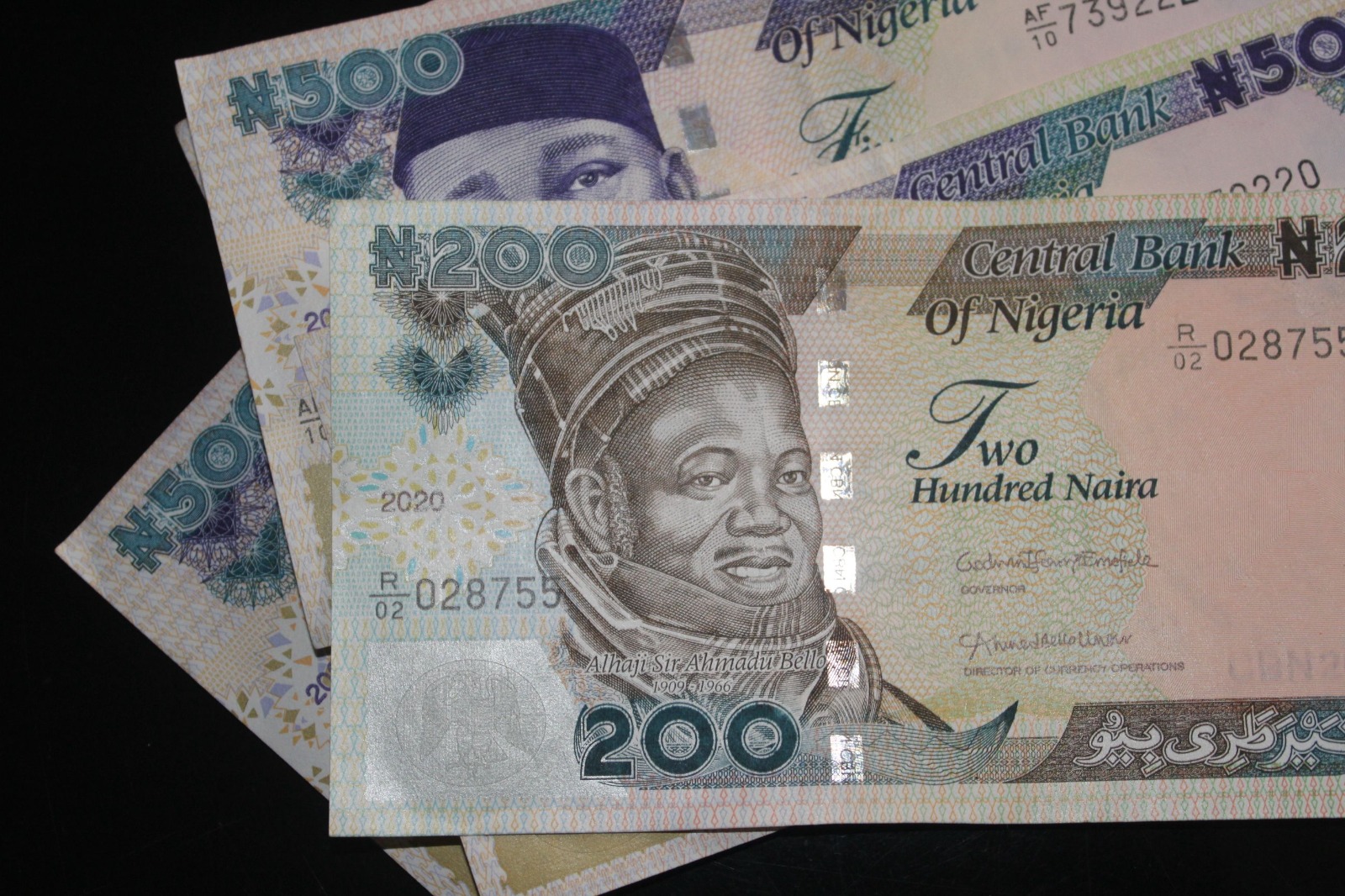
The IMF estimates Nigeria's consolidated government deficit at 4.4% of GDP in 2025, with the 2026 budget implying a federal government deficit of roughly 4.4% of GDP. Public debt was estimated at 36.1% of GDP in 2025.
The investment issue is therefore not simply the debt stock.
It is the government's ability to generate sufficient recurring revenue to finance expenditure and service debt without excessive reliance on borrowing.
Nigeria's new tax laws, effective from January 2026, broaden the tax base, strengthen compliance and increase digitalisation of revenue collection. IMF analysis estimates that the combination of tax-policy and administrative measures could increase revenue by approximately 4.6% of GDP over three years, although the actual gains will depend heavily on implementation.
This creates a potentially important investment signal.
If higher domestic revenue becomes durable, Nigeria could finance more infrastructure and social expenditure without proportionately increasing debt.
But the opposite is also possible.
If revenue reforms underperform while capital expenditure rises and external financing becomes more expensive, domestic borrowing could increase pressure on interest rates and private-sector credit.
The question for investors is therefore not whether Nigeria has introduced tax reform.
It is whether tax reform produces a structurally stronger revenue base.
Egypt: Debt Management Is Moving Beyond Fiscal Austerity
Egypt illustrates another evolution in sovereign strategy.
The government's debt-reduction programme is increasingly built around three interconnected tools:
Sustained primary surpluses.
State-asset sales and divestment.
Active debt and liability management.
The IMF reports that Egypt reduced gross financing needs by 5% of GDP in FY2025/26, while the government is targeting a further reduction through maturity extension, liability-management operations, debt repayment and the use of divestment proceeds.
The strategy is important because fiscal consolidation alone does not necessarily solve a refinancing problem.
A government can run a primary surplus while still facing substantial financing pressures because large volumes of debt mature each year.
For investors, extending maturities and broadening the investor base can reduce rollover risk and improve market stability.
Egypt is therefore demonstrating an increasingly important principle across emerging markets:
Debt management is not merely about how much a government owes; it is about when, to whom, in what currency and at what interest rate it owes it.
Senegal: Fiscal Transparency Has Become a Pricing Variable
Senegal demonstrates the other side of the fiscal equation.
The discovery of previously undisclosed debt significantly changed the country's fiscal profile. Public debt was revised to approximately 132% of GDP in 2024 and about 130% in 2025, according to the IMF's 2026 WAEMU assessment.
On 1 September 2026, Senegal and the IMF reached a staff-level agreement on a new three-year programme worth approximately US$2.2 billion, aimed at restoring debt sustainability and strengthening fiscal transparency. Reuters reported that Senegalese international bonds fell sharply following the announcement, underscoring how quickly fiscal credibility can feed into market pricing.
The Senegal case carries a broader lesson.
Fiscal transparency is itself a financial asset.
Investors cannot price sovereign risk accurately when the underlying debt data are uncertain.
Once previously undisclosed liabilities emerge, the market does not simply reprice the additional debt. It also reprices the credibility of the institutions responsible for reporting fiscal information.
That can raise the risk premium well beyond the mechanical effect of the additional debt.
What This Means for the Cost of Capital
The fiscal changes now underway across Africa affect investors through several channels.
1. Sovereign Bond Yields
Credible consolidation can reduce sovereign risk premia.
But if investors believe fiscal rules are politically reversible or poorly enforced, the headline targets may have little effect on yields.
2. Domestic Interest Rates
Governments borrowing heavily from local markets can compete with private borrowers for available capital.
Reducing government financing requirements can therefore create room for private-sector credit.
3. Corporate Borrowing Costs
Corporate debt is generally priced relative to sovereign risk.
When sovereign risk rises, companies often pay more to borrow, even when their own balance sheets remain relatively strong.
Fiscal credibility can therefore reduce financing costs beyond the government itself.
4. Bank Valuations
Banks holding significant quantities of sovereign debt are exposed to changes in government creditworthiness.
Fiscal deterioration can therefore become a banking-sector problem.
5. Foreign Investment
International investors increasingly assess fiscal institutions alongside growth prospects.
A country with stronger fiscal transparency, credible debt management and predictable tax policy can become more attractive even when its headline growth rate is not the highest in the region.
What Investors Should Watch Next
The next phase of Africa's fiscal adjustment should be monitored through a broader set of indicators than debt-to-GDP.
Watch the Primary Balance
A sustained primary surplus can indicate that governments are generating enough revenue to cover non-interest expenditure.
But investors should examine whether the surplus is being achieved through durable revenue gains or temporary expenditure compression.
Watch Domestic Revenue
Tax-to-GDP performance will be one of the most important indicators of fiscal durability.
Countries that expand revenue through broader tax bases, better administration and reduced leakages will have greater fiscal flexibility than countries dependent on commodity windfalls.
Watch Debt Maturities
A sovereign with significant debt falling due in the next 12–24 months may face greater refinancing risk than headline debt figures suggest.
Investors should therefore track maturity walls, refinancing calendars and the proportion of short-term instruments in government portfolios.
Watch Domestic Market Absorption
Increasing sovereign issuance can crowd out private-sector borrowing.
This is particularly important where domestic banks are major buyers of government securities.
Watch Fiscal Transparency
Changes in debt reporting, off-budget transactions, guarantees, and contingent liabilities can materially change the investment assessment.
Senegal demonstrates why this matters.
Watch the Sovereign-Bank Nexus
Where banks hold large sovereign exposures, fiscal stress can quickly become financial-sector stress.
WAEMU's current reforms make this relationship particularly important to monitor.
The Investment Opportunity Is Shifting
The fiscal reset does not simply create winners and losers among sovereign bond investors.
It is likely to influence the broader allocation of capital across African economies.
Countries demonstrating credible fiscal consolidation could gradually attract lower-cost capital into infrastructure, manufacturing, financial services and private enterprise.
Conversely, governments facing persistent deficits, weak revenue mobilisation or opaque debt structures may see capital become more expensive and shorter-term.
This creates a potential investment differentiation story.
The most attractive markets may increasingly be those where fiscal reform is accompanied by structural reforms that improve productivity and private-sector growth.
Fiscal consolidation by itself is not enough.
A government that reduces borrowing but simultaneously weakens infrastructure investment, suppresses private-sector credit, or increases regulatory uncertainty may improve one metric while damaging the broader investment environment.
The strongest reform model is therefore one in which fiscal discipline and economic productivity reinforce each other.
What Serious Decision-Makers Should Do Next
Investors
Move beyond headline debt ratios.
Build sovereign assessments around fiscal credibility, revenue mobilisation, debt maturity profiles, domestic market depth, contingent liabilities and the strength of fiscal institutions.
Banks
Stress-test portfolios against sovereign-yield shocks.
In markets where government securities represent a large proportion of bank assets, fiscal consolidation or deterioration can materially affect liquidity, capital adequacy and lending capacity.
Corporates
Treat fiscal policy as a business-planning variable.
Changes in tax rates, customs policy, government borrowing and public investment can alter demand, financing costs and infrastructure availability.
Infrastructure Investors
Assess whether fiscal consolidation protects or reduces public investment.
Projects dependent on government counterpart funding, guarantees or budget allocations require particularly careful assessment of fiscal capacity.
Policymakers
The objective should not be merely to satisfy a numerical deficit rule.
The stronger objective is to establish a fiscal framework that markets believe, investors can price, and future governments can sustain.
That requires transparent debt reporting, credible correction mechanisms, realistic revenue forecasts and disciplined borrowing strategies.
Executive Outlook
Africa's fiscal debate is moving beyond the question of whether governments should borrow.
The more important question is how governments borrow, what they borrow for, how transparently they report it, and whether their fiscal institutions can convince investors that today's borrowing will not become tomorrow's crisis.
WAEMU's proposed new convergence framework is significant because it attempts to restore a regional fiscal anchor while addressing the weaknesses that allowed debt to rise faster than reported fiscal deficits.
Ghana is moving from debt restructuring towards institutionalised debt discipline.
Nigeria is attempting to make tax reform a foundation for stronger domestic revenue mobilisation.
Egypt is combining fiscal consolidation with active liability management and maturity extension.
Senegal's experience demonstrates the price markets can impose when fiscal transparency breaks down.
South Africa is developing a more explicit fiscal anchor aimed at keeping debt on a declining path and reducing debt-service pressures.
These are different strategies, but they point in the same direction.
Fiscal credibility is becoming part of Africa's investment infrastructure.
For investors, this means the next generation of African opportunities will need to be assessed not only through GDP growth, commodity exposure or demographic potential, but through the quality of the fiscal institutions underpinning those economies.
The countries that can combine credible fiscal rules, stronger domestic revenue, transparent debt management and productive public investment are likely to enjoy a structural advantage in the competition for capital.
And ultimately, that is what the rewriting of Africa's fiscal rules is about:
not simply reducing deficits, but determining who gets to borrow more cheaply, who attracts long-term capital and who creates the conditions for private investment to scale.
Sources
IMF — 2026 Discussions on Common Policies of the West African Economic and Monetary Union
IMF — WAEMU 2026 Staff Report and proposed enhanced Convergence Pact
IMF — Ghana 2026 Article IV Consultation and Debt Sustainability Analysis
IMF — Egypt 2026 Seventh Review under the EFF and Second Review under the RSF