That phase is now giving way to something more difficult.
Inflation has moderated substantially in several major African economies, allowing some central banks to reduce or pause policy rates. But the decline in inflation has not eliminated the pressures confronting policymakers. Energy prices, geopolitical disruptions, exchange-rate movements, food costs, fiscal conditions and uneven economic growth are pulling policy in different directions.
The result is a widening divergence in monetary-policy strategies across the continent.
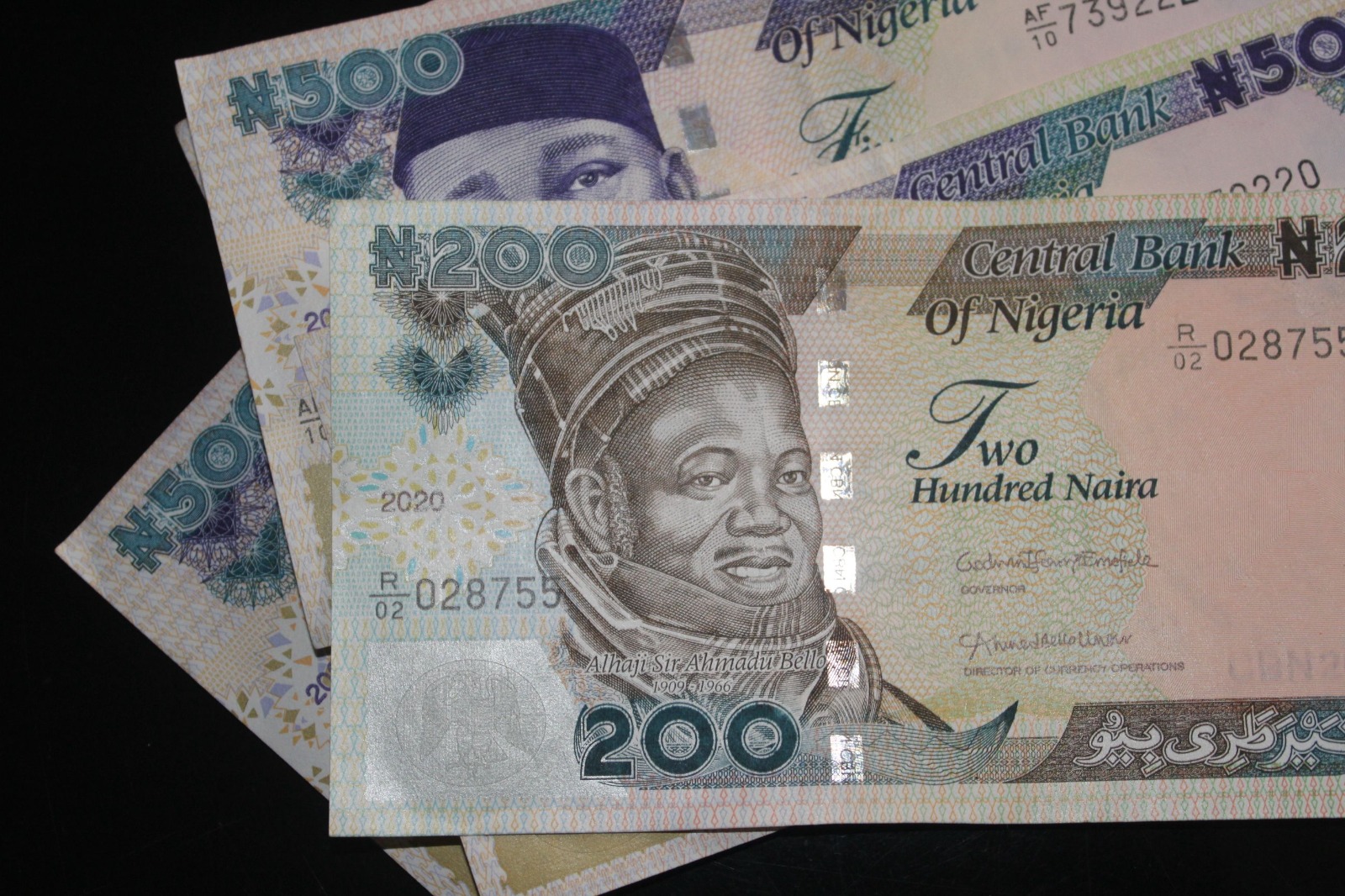
Nigeria remains firmly focused on maintaining restrictive monetary conditions. The Central Bank of Nigeria (CBN) cut its Monetary Policy Rate by 50 basis points to 26.5% in February 2026 and subsequently left it unchanged at its May and July meetings. The CBN also maintained a 45% cash-reserve requirement for deposit money banks.
Ghana, by contrast, has moved much further into the disinflation phase. Its Monetary Policy Committee held the policy rate at 14% in July after a substantial easing cycle, even as inflation rebounded from 3.7% in May to 5.3% in June. The Bank of Ghana explicitly identified the tension between preserving disinflation gains and supporting economic recovery.
South Africa presents another model. The South African Reserve Bank kept its policy rate at 7% in July, despite inflation rising to 5% in June, above its 3% target. The bank judged the existing stance to remain sufficiently restrictive while warning about higher services inflation and inflation expectations.
Kenya sits in a different position again. The Central Bank of Kenya has reduced its Central Bank Rate to 8.75%, where it remained at its August 2026 meeting, while July inflation stood at 6.5%. The combination points towards a monetary environment in which policy is no longer uniformly tightening, but neither is the continent entering a broad-based easing cycle.
The central issue for businesses and investors is therefore no longer simply whether African interest rates are falling.
It is whether individual economies have reached a point where lower inflation, credible exchange-rate adjustment and improving financial conditions can coexist without reigniting price pressures.
That distinction matters because monetary policy is transmitted unevenly across African economies. A new IMF study of emerging and frontier economies in sub-Saharan Africa finds that monetary tightening generally passes quickly into short-term market rates and subsequently into bank lending and deposit rates, but that exchange rates often do not appreciate following tightening. The study also finds that monetary-policy transmission is stronger in economies with more developed financial systems and credible inflation-targeting frameworks.
For corporate treasurers, borrowers, banks and investors, this creates a new decision environment.
The key variable is no longer the policy rate in isolation. It is the interaction between real interest rates, inflation expectations, currency stability, liquidity, government borrowing and credit conditions.
The End of One Monetary Cycle Does Not Mean the Beginning of Another
The broad African inflation picture has improved.
The African Development Bank projects average inflation across Africa to decline to 9.5% in 2026 from an estimated 13.6% in 2025, with further easing projected for 2027. It also notes that many African currencies either strengthened against the US dollar in 2025 or experienced slower rates of depreciation, creating room for some central banks to pause or ease monetary policy.
But averages conceal important differences.
Countries with relatively contained inflation can afford to think about supporting credit and investment. Countries where inflation expectations remain fragile have less room to cut rates. Economies exposed to imported energy and food inflation face another constraint: a weaker currency can quickly transmit external price shocks into domestic inflation.
This is why the next phase of African monetary policy is likely to be characterised by divergence rather than synchronisation.
Central banks are increasingly asking different versions of the same question:
How much monetary restraint is still necessary to secure price stability without unnecessarily weakening growth?
The answer depends on the credibility of each country's monetary framework, the strength of its currency, the condition of its banking system and the degree to which inflation is being driven by demand rather than supply.
Nigeria: The Cost of Keeping Inflation Expectations Anchored
Nigeria provides perhaps the clearest example of why falling inflation does not automatically produce rapid monetary easing.
The CBN reduced its MPR to 26.5% in February 2026 and has held it at that level through July. The decision to maintain a high policy rate reflects the continuing priority placed on inflation control and macroeconomic stability following the major exchange-rate and fuel-subsidy reforms initiated in 2023.
The IMF's June 2026 Article IV assessment reinforces this approach.
The Fund projected Nigerian GDP growth of 4.1% in 2026 and advised the CBN to maintain a tight, data-dependent monetary stance until disinflation becomes firmly established and inflation expectations are anchored. It also supported continued exchange-rate flexibility, arguing that the naira should continue to absorb external shocks rather than being defended through persistent intervention.
This creates an important distinction for businesses.
A high policy rate does not necessarily mean policymakers believe the economy is overheating.
In Nigeria's case, restrictive policy is also being used to rebuild monetary credibility, reinforce the transmission mechanism and prevent a temporary improvement in inflation from becoming another cycle of currency pressure and price instability.
For borrowers, that means financing costs are likely to remain structurally elevated for longer than a simple headline-inflation comparison might suggest.
For banks, the challenge is balancing high-yielding assets against the risk that expensive credit weakens borrower capacity and eventually increases non-performing loans.
For investors, the more important signal may be the durability of disinflation and foreign-exchange-market functioning rather than the timing of the next rate cut.
The IMF has specifically noted that Nigeria's monetary transmission has strengthened following the transition towards a more unified and flexible exchange-rate system.
That makes the current policy cycle consequential beyond the headline MPR.
It is part of a broader attempt to establish a more credible monetary framework.
Ghana: When Easing Creates Its Own Policy Dilemma
Ghana demonstrates the opposite challenge.
The country entered 2026 after a substantial improvement in inflation dynamics. Headline inflation reached 3.3% in February, and the Bank of Ghana subsequently reduced its policy rate to 14%.
But by June, inflation had risen to 5.3%, from 3.7% in May.
The Bank of Ghana nevertheless kept the MPR at 14% in July, arguing that premature further easing could reverse the disinflation gains, while additional tightening could undermine the recovery and the improving credit environment.
That is the new monetary-policy problem in miniature.
Once inflation has fallen significantly, central banks face pressure to reduce borrowing costs and support economic activity. But cutting too aggressively can weaken the currency, stimulate demand prematurely or cause inflation expectations to rise again.
Ghana's experience also demonstrates why headline inflation alone is insufficient for judging policy.
The Bank of Ghana reported that private-sector credit grew 41.2% year-on-year in June 2026, while average bank lending rates had fallen to 15.6% from 27% a year earlier. At the same time, the banking sector's capital adequacy ratio improved substantially and the non-performing-loan ratio declined.
For businesses, the implication is significant.
The transmission of monetary easing into actual financing conditions may already be occurring even when the policy rate itself remains unchanged.
The relevant question for corporate decision-makers is therefore not simply What is the MPR?
It is:
What is happening to the cost and availability of credit in the real economy?
South Africa: A Different Kind of Constraint
South Africa illustrates why monetary policy cannot be assessed solely through the lens of growth.
The SARB kept its policy rate at 7% in July after raising it previously, even though economic growth remained relatively weak. Inflation had risen to 5% in June, while services inflation and inflation expectations were showing renewed pressure.
By July, however, headline inflation had fallen to 4.3%, according to Statistics South Africa. Food and non-alcoholic beverage inflation fell to just 0.9%, its lowest level in more than 16 years.
The SARB's challenge is therefore different from Nigeria's.
It has a comparatively well-developed monetary-policy transmission mechanism and a formal 3% inflation target, with a tolerance band of plus or minus one percentage point.
The question is whether the recent inflation improvement is durable enough to permit further easing without allowing services inflation or expectations to become entrenched above target.
For South African businesses, the policy rate is therefore increasingly connected to the outlook for investment and consumption rather than simply inflation containment.
For investors, the yield curve and real-rate environment may provide more information than the headline policy decision itself.
And for the rand, monetary-policy credibility remains closely linked to how convincingly the SARB can demonstrate that inflation will return to the 3% objective over time.
Kenya: Lower Rates, But Limited Room for Complacency
Kenya has also moved into a more accommodative monetary phase.
The Central Bank Rate was reduced to 8.75% in February 2026 and remained at that level through August. July inflation was 6.5%, while the CBK reported that market participants expected inflation to remain above 5% but within the target range over the following three months.
The CBK's market survey also highlighted higher fuel and energy prices, rising freight and logistics costs associated with geopolitical tensions and weather-related supply disruptions as risks to the inflation outlook.
That combination creates a relatively narrow policy corridor.
Rates can be lower than they were during the peak tightening cycle, but policymakers still need to monitor whether external shocks feed into domestic prices or exchange-rate expectations.
For Kenyan businesses, this means lower benchmark rates do not necessarily imply permanently cheap money.
For investors, the key variables are increasingly the durability of inflation within the target range, the shilling's external stability and the pace at which lower policy rates transmit into commercial lending.
The New Monetary-Policy Equation
Across these economies, the policy challenge can be reduced to four interacting variables:
Inflation → Currency → Growth → Financial Stability
A central bank cannot optimise each independently.
A rate cut may support growth but weaken the currency.
A weaker currency may increase imported inflation.
Higher inflation may require rates to remain higher for longer.
Higher rates may protect the currency and contain prices but weaken credit growth, investment and household demand.
And weaker borrowers can eventually create stress within the banking system.
This is why the next phase of African monetary policy is likely to be more data-dependent and less predictable than the previous tightening cycle.
The policy rate will remain important.
But it will increasingly be only one signal among several.
Sources
International Monetary Fund — Nigeria: 2026 Article IV Consultation
International Monetary Fund — Monetary Policy Transmission in Sub-Saharan Africa
African Development Bank — Africa Macroeconomic Performance and Outlook 2026
South African Reserve Bank — July 2026 Monetary Policy Statement