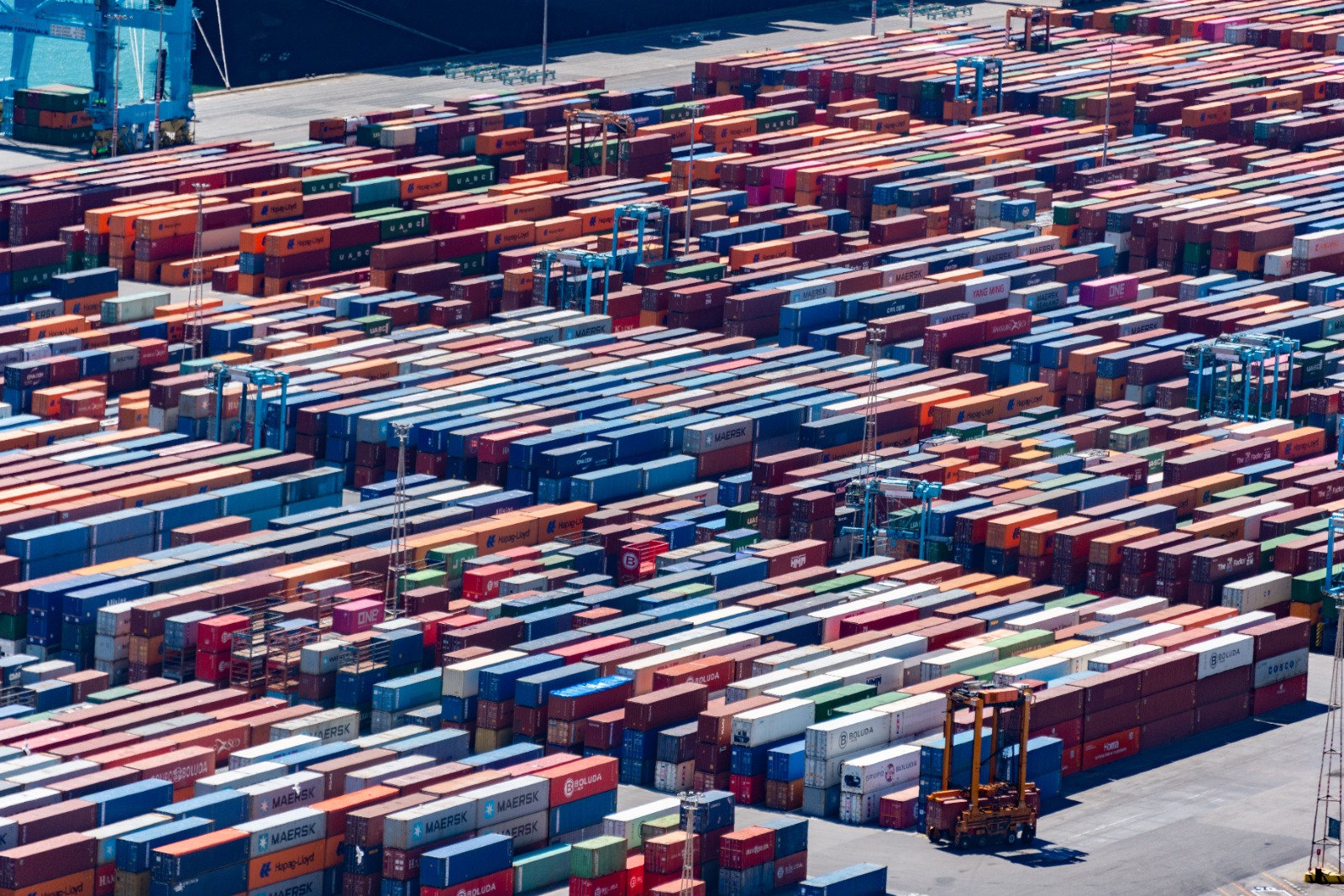
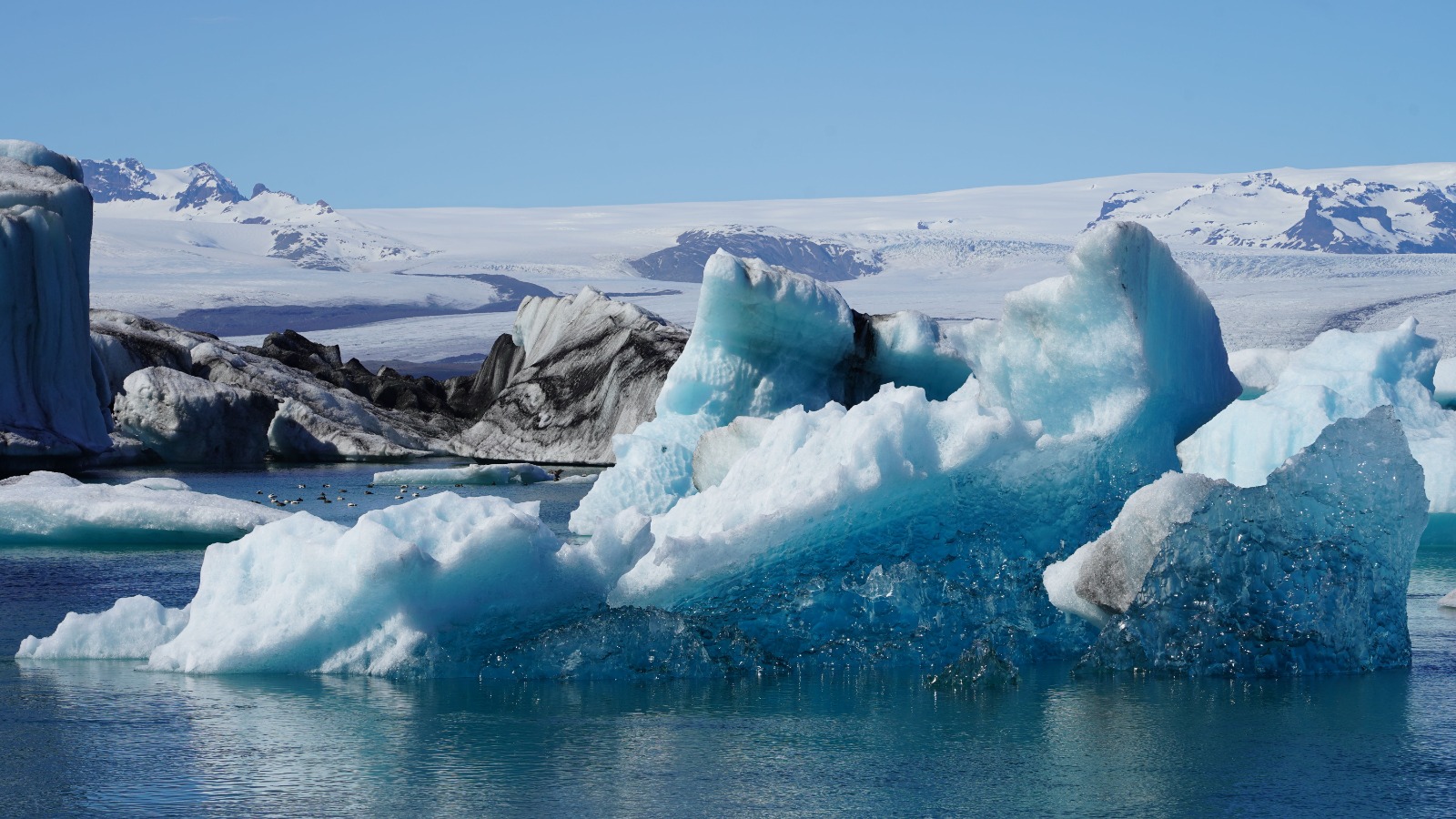
The transformation is already visible.
In August 2026, South Korea launched its first commercial test voyage through the Northern Sea Route (NSR), sending the PanStar Acro from Asia towards Europe along Russia's Arctic coast. The voyage is designed to assess whether the route can become part of South Korea's future commercial shipping network, with Seoul targeting more regular Arctic operations by 2030.
China has moved further. In 2025, a Chinese container vessel completed an Arctic route to Europe, with Chinese authorities presenting the service as part of the country's developing "Polar Silk Road". The voyage demonstrated that the Arctic is moving beyond scientific exploration and energy shipments towards commercial container logistics.
Russia remains the indispensable power on the Northern Sea Route. Moscow controls the principal coastal infrastructure, regulates access to the route and is investing in icebreakers, navigation systems and year-round operating capability. Russian officials reported almost 38 million tonnes of cargo moving through the NSR in 2024 and set a target of more than 40 million tonnes for 2025.
At the same time, NATO is strengthening its northern posture. Finland and Sweden's accession has substantially altered the strategic geography of the High North, while NATO launched Arctic Sentry in February 2026 and established a multinational Forward Land Forces presence in Finland.
The underlying driver is climate change.
The Arctic's winter sea-ice maximum reached a record low in March 2025, while the September 2025 minimum ranked among the ten lowest in the satellite record. NOAA reports that the last decade has been the warmest on record in the Arctic and that annual Arctic temperatures have risen at more than twice the global rate since 2006.
But the strategic conclusion should not be that the Arctic is about to replace the Suez Canal.
That is too simple.
The emerging reality is more consequential: the Arctic is becoming an additional layer of global connectivity, resource competition and military geography.
The question for governments, investors and shipping companies is therefore no longer whether the Arctic matters.
It is how quickly the economic and security systems surrounding it will adapt.
Why the Arctic Matters Now
For much of the modern era, the Arctic was treated as a geographical barrier.
Its ice limited commercial navigation, isolated communities and made large-scale industrial development extraordinarily expensive.
That assumption is changing.
Declining sea ice is extending seasonal navigation windows and making previously inaccessible waters more commercially usable. NOAA's 2025 Arctic Report Card notes that changing sea-ice extent and thickness are already allowing increased marine traffic while prompting governments to reassess national-security concerns.
This does not mean the Arctic has become an easy shipping environment.
It remains one of the world's most difficult maritime operating zones.
But strategic geography changes before commercial economics fully catches up.
A route that was previously unusable can become strategically important long before it becomes a mainstream alternative to existing global trade corridors.
That is what is now happening in the Arctic.
The Northern Sea Route Is Becoming a Strategic Asset
The Northern Sea Route stretches along Russia's Arctic coastline, connecting the Atlantic and Pacific through the Arctic Ocean.
Its attraction is obvious.
For Asian-European trade, an Arctic route can substantially reduce distance and sailing time compared with traditional routes through the Suez Canal or around the Cape of Good Hope.
A Chinese Arctic container service in 2025 reached Felixstowe in roughly 20 days, compared with around 40 days through the Suez route and roughly 50 days around the Cape, according to Chinese government reporting.
But distance alone does not determine commercial viability.
The NSR is constrained by ice conditions, seasonal accessibility, specialised vessels, insurance, search-and-rescue limitations, port infrastructure and the availability of icebreaker support.
That creates a critical distinction between theoretical distance advantage and commercial reliability.
For global shipping companies, reliability matters at least as much as speed.
A route that is ten days shorter but exposed to unpredictable ice, limited emergency infrastructure or geopolitical restrictions may not be preferable to a longer route with established ports, insurance markets and predictable schedules.
The Arctic therefore has to demonstrate not merely that ships can pass through it, but that cargo can move through it repeatedly, safely and economically.
South Korea's 2026 trial voyage is important precisely because it tests that proposition.
Russia's Arctic Infrastructure Creates a Geopolitical Bottleneck
The Northern Sea Route is not simply a piece of open ocean.
A significant portion of its commercial value depends on infrastructure located within Russian territory and waters.
Russia has invested heavily in icebreakers, ports, navigation systems, meteorological services, communications infrastructure and Arctic energy projects.
Moscow is also developing systems designed to improve year-round navigation. In March 2026, the Russian government said it was expanding icebreaker escort capabilities and testing unmanned aerial systems for ice reconnaissance and maritime monitoring.
This gives Russia something few other Arctic powers possess: the ability to influence the operational conditions of a major emerging maritime corridor.
That matters commercially and geopolitically.
The more dependent international shipping becomes on Russian Arctic infrastructure, the greater the strategic importance of Moscow's regulatory decisions.
It also creates a structural tension.
Asian trading powers may see the NSR as a way to diversify away from traditional maritime chokepoints. Yet using the route may simultaneously increase their dependence on Russian infrastructure.
For China, South Korea and other Asian economies, the Arctic therefore presents both diversification and concentration risk.
China's Polar Silk Road Is Moving From Policy to Practice
China's Arctic strategy is no longer theoretical.
Beijing formally articulated its vision for a Polar Silk Road in its 2018 Arctic policy white paper, describing the Arctic as an increasingly important arena for shipping, resource development and international cooperation. China explicitly encouraged Chinese enterprises to participate in Arctic infrastructure and conduct commercial trial voyages.
The significance lies in what has happened since.
Chinese companies have moved from studying the route towards testing commercial services.
In September 2025, a container ship from Fujian launched an Arctic service to Europe, linking Chinese ports with Felixstowe, Rotterdam, Hamburg and Gdansk. Chinese authorities said the service could save more than 20 days compared with traditional routes in certain circumstances.
This suggests that Beijing sees the Arctic not simply as an environmental or scientific issue but as part of the broader architecture of global trade.
The strategic logic is straightforward.
China is the world's largest trading economy by merchandise trade and has a strong interest in diversifying the routes through which goods, energy and strategic materials move.
The Arctic offers another corridor.
It cannot replace China's existing maritime networks, but it can become an additional option when conventional routes face congestion, geopolitical disruption or elevated costs.
That optionality itself has strategic value.
South Korea's Move Signals a Wider Commercial Test
South Korea's decision to test the Northern Sea Route is particularly significant because Seoul is a major maritime, shipbuilding and trading power.
The PanStar Acro voyage carries 837 TEU of cargo, including automotive parts and chemicals, and is travelling towards European ports including Britain, the Netherlands and Poland. Reuters reported that the voyage is expected to take roughly 40–45 days and forms part of South Korea's strategy to establish regular Arctic routes by 2030.
The commercial case is therefore only part of the story.
For South Korea, Arctic shipping could strengthen Busan's position as a global logistics hub while providing Korean exporters with another route into European markets.
For Russia, the voyage demonstrates that Asian commercial interest in the NSR is expanding despite the geopolitical environment created by the war in Ukraine and Western sanctions.
For Europe, it raises a more difficult question:
Can European companies participate in a potentially valuable emerging trade route without increasing strategic dependence on Russian-controlled infrastructure?
That question will become more important if Arctic shipping moves from occasional voyages to regular seasonal services.
The Suez Canal Is Not About to Become Obsolete
The Arctic shipping narrative can easily become exaggerated.
The Northern Sea Route has a genuine distance advantage for certain Asia-Europe routes, but it does not offer the same year-round reliability or infrastructure density as the Suez corridor.
The Suez Canal remains embedded in a vast global logistics ecosystem involving ports, container terminals, shipping services, insurance markets, maintenance networks and established trade schedules.
The Arctic is still developing that ecosystem.
There is also a major seasonal problem.
Ice conditions remain variable, and some parts of the route can require ice-class vessels or escort services. The commercial economics therefore depend on fuel costs, icebreaker fees, vessel specifications, insurance premiums, cargo type and reliability, not simply nautical miles.
The more realistic scenario is not Arctic versus Suez.
It is Arctic plus Suez plus other alternative corridors.
Global trade is becoming more interested in redundancy.
The experience of recent disruptions, from the pandemic to the Red Sea crisis, has shown companies the value of having alternative routes available.
The Arctic could become one of those alternatives.
Climate Change Is Creating the Opportunity, and the Risk
This is the central paradox of Arctic commerce.
The economic opportunity exists partly because climate change is reducing the physical barrier created by sea ice.
The Arctic's sea-ice system is changing rapidly.
In March 2025, Arctic winter sea ice reached its lowest maximum extent in the satellite record. The September 2025 minimum was the tenth lowest, while the long-term trend since 1979 remains strongly downward.
NOAA also reports that the last ten years are the ten warmest on record for the Arctic and that the region has warmed at more than twice the global rate since 2006.
This is opening economic possibilities.
It is also increasing environmental and operational risk.
More shipping means greater exposure to oil spills, black carbon emissions, underwater noise, ecological disturbance and accidents in an environment where emergency response is difficult.
The International Maritime Organization's Polar Code establishes mandatory requirements covering ship design, equipment, operations, training, search and rescue and environmental protection. A separate MARPOL prohibition on the use and carriage of heavy fuel oil in Arctic waters entered into force in July 2024, subject to specified exemptions and transitional arrangements.
The commercial Arctic will therefore develop under increasingly stringent environmental and safety requirements.
That raises operating costs, but may also favour sophisticated operators with newer vessels, stronger compliance systems and better risk-management capabilities.
Critical Minerals Are Adding Another Layer of Strategic Competition
Shipping is only one part of the Arctic story.
The region contains significant deposits of energy resources and minerals that are becoming strategically important as economies compete for supply chains supporting defence, electrification and advanced technology.
Greenland has become an especially prominent example.
Its mineral potential has attracted growing attention from the United States, Europe and Canada as governments seek alternatives to concentrated global supply chains for critical minerals.
In March 2026, Canada and Greenland signed a declaration aimed at strengthening cooperation on critical minerals and energy, explicitly linking Arctic resources with economic and national-security interests.
Canada has also allocated more than C$55 million to Arctic infrastructure projects designed to strengthen mineral supply chains and export diversification.
This is strategically important because Arctic infrastructure serves multiple purposes.
A port built to export minerals can also support shipping.
A road built to reach a mine can improve regional connectivity.
A communications network built for commercial operations can strengthen military awareness.
The result is an emerging overlap between commercial infrastructure, resource security and national defence.
NATO Is Moving North
The Arctic is also becoming a more important military theatre.
Seven of the eight Arctic states are now NATO members, following Finland and Sweden's accession. NATO has consequently strengthened its northern posture significantly.
In February 2026, the Alliance launched Arctic Sentry, an enhanced activity focused on deterrence and defence in the Arctic and High North. In June, NATO also established Forward Land Forces in Finland, strengthening its ability to operate across the northern flank.
The scale of military activity is increasing.
Exercise Cold Response 2026 involved more than 32,000 personnel from 14 allied countries across Norway and Finland, demonstrating NATO's growing focus on mobility, logistics and operations in northern conditions.
The strategic geography has therefore changed.
Before Finland and Sweden joined NATO, Russia's northern frontier faced a different alliance configuration.
Now NATO possesses a substantially more integrated northern flank.
That matters for the security of the North Atlantic, the Norwegian Sea, the Baltic region and Arctic maritime approaches.
The Arctic is no longer a distant military theatre.
It is becoming part of the central security architecture connecting North America and Europe.
The Arctic's Strategic Value Extends Beyond Shipping
The most important mistake would be to judge the Arctic solely by the number of commercial ships using the Northern Sea Route.
Its strategic value is broader.
The region sits at the intersection of:
European and Asian trade routes;
Russian energy exports;
North American and European defence;
critical minerals;
submarine cables and communications;
fisheries;
energy infrastructure;
satellite and surveillance systems;
emerging maritime corridors;
Indigenous and regional economic interests.
This creates a form of strategic convergence.
The same geography that enables a shipping route can also support energy infrastructure, mineral exports, military surveillance and communications networks.
As these systems develop, control over Arctic infrastructure becomes increasingly consequential.
What Could Stop the Arctic From Becoming a Major Trade Corridor?
The Arctic's potential is substantial, but its commercial future remains uncertain.
1. Seasonality
The route is becoming more accessible, but it is not yet equivalent to an open-ocean trade corridor.
Seasonal ice remains a fundamental constraint.
2. Infrastructure
Arctic ports, repair facilities, search-and-rescue systems, communications networks and emergency-response capacity remain less developed than those surrounding established global routes.
3. Geopolitical Risk
Russia's role creates a fundamental complication for Western shipping and financial institutions.
The more geopolitical competition intensifies, the harder it may become to integrate Russian-controlled Arctic infrastructure into globally standardised logistics networks.
4. Insurance
Commercial insurers must price risks that are difficult to model, including ice, limited emergency response and geopolitical exposure.
Higher insurance costs can erode the apparent savings from shorter voyages.
5. Environmental Regulation
The Arctic is an exceptionally sensitive environment.
Growing regulatory requirements may increase operating costs and restrict the types of vessels and fuels that can be used.
6. Cargo Economics
Not every cargo benefits equally from shorter sailing distances.
High-value, time-sensitive or temperature-sensitive cargo may justify Arctic voyages earlier than low-value bulk commodities.
The initial commercial market may therefore be specialised rather than universal.
The Emerging Strategic Contest
The Arctic is unlikely to become a simple contest between Russia and NATO.
Its future will involve several overlapping groups.
Russia seeks to monetise its Arctic geography, energy resources and transport infrastructure while strengthening sovereignty over its northern territories.
China wants additional trade routes, resource access and a stronger role in Arctic governance.
South Korea and other Asian trading powers are examining whether Arctic routes can improve logistics resilience and reduce dependence on established maritime chokepoints.
The United States and Canada are focused increasingly on sovereignty, defence, critical minerals and northern infrastructure.
European states face the dual challenge of accessing Arctic economic opportunities while reducing strategic dependence on Russia.
NATO is increasingly treating the High North as an integrated security theatre rather than a peripheral region.
The result is a new form of geopolitical competition in which commercial and security interests increasingly overlap.
What Decision-Makers Should Watch
For governments, investors and corporate executives, the important indicators are not simply annual Arctic shipping volumes.
The more revealing signals will be:
Regular Commercial Services
If Asian-European container services begin operating on predictable seasonal schedules, the Arctic's commercial credibility will rise significantly.
Infrastructure Investment
New ports, icebreakers, communications systems, warehouses, fuel facilities and search-and-rescue infrastructure will reveal whether states and companies believe the route can become commercially durable.
Insurance Pricing
A meaningful reduction in insurance premiums would indicate that insurers are becoming more comfortable with Arctic operating risk.
Vessel Investment
The development of specialised ice-class commercial fleets would signal confidence in long-term demand.
Critical-Mineral Projects
New mines and processing facilities in Greenland, Canada, Alaska and other Arctic territories could accelerate infrastructure development and create additional demand for Arctic logistics.
NATO Capability
The expansion of northern military infrastructure will reveal how seriously Western governments view the Arctic's changing strategic geography.
Russia-China Cooperation
The depth of Russian-Chinese cooperation around Arctic energy, shipping and infrastructure will be one of the most important indicators of how the region's economic order develops.
Executive Outlook
The Arctic is not becoming the new Suez Canal overnight.
It is becoming something more strategically significant: a new layer of optionality in the global economic and security system.
For shipping companies, that means another potential corridor.
For China and South Korea, it offers additional routes into European markets.
For Russia, it represents an opportunity to convert geography into economic and strategic leverage.
For NATO, it is a rapidly changing northern security frontier.
For Canada, Greenland, the United States and the Nordic states, it is increasingly connected to critical minerals, infrastructure and sovereignty.
For investors, the most significant opportunities may not initially be in shipping itself.
They may emerge in the infrastructure surrounding it: ports, ice-class vessels, navigation technology, satellite communications, insurance, logistics, critical-mineral infrastructure, energy systems and specialised engineering.
But the Arctic carries an unusual contradiction.
The same climate transformation making new economic activity possible is also destabilising the physical system on which that activity depends.
That means the Arctic should not be understood simply as a new frontier waiting to be exploited.
It is a rapidly changing strategic system in which climate, commerce, resources and security are becoming inseparable.
The Northern Sea Route may never displace the Suez Canal.
China's Polar Silk Road may never become a year-round equivalent of established global shipping networks.
And South Korea's current voyage may prove to be an experiment rather than the beginning of a new trade regime.
But the direction of travel is already clear.
Governments are investing.
Shipping companies are testing.
Military alliances are repositioning.
Resource strategies are moving north.
And climate change is accelerating the transformation.
The strategic significance of the Arctic therefore lies not in the prediction that the North will replace the old global trade map. It lies in the fact that the map is acquiring a new strategic dimension.
Climate change is no longer simply changing the planet.
It is changing the geography of power.
Sources
Reuters — South Korea ship to test Arctic commercial route amid Western concerns
Reuters — South Korea's Northern Sea Route commercial test voyage
Government of the Republic of Korea — First trial voyage through the Northern Sea Route
U.S. National Oceanic and Atmospheric Administration — Arctic Report Card 2025
National Snow and Ice Data Center — 2025 Arctic Sea Ice Minimum
International Maritime Organization — Shipping in Polar Waters
Russian Ministry of Transport — Northern Sea Route cargo volumes
Russian Government — Northern Sea Route navigation and Arctic infrastructure
China State Council — China's Arctic Policy and Polar Silk Road
China State Council — China's first Arctic shipping route to Europe
Natural Resources Canada — Canada-Greenland Critical Minerals and Energy Cooperation
Natural Resources Canada — Arctic Infrastructure and Critical Minerals Investment
S&P Global — Greenland, Rare Earths, Geography and Geopolitics