That model has not vanished. But its assumptions have changed.
The pandemic exposed the vulnerability of highly concentrated production networks. Russia's invasion of Ukraine demonstrated how energy, commodities and industrial inputs could become instruments of geopolitical pressure. US-China strategic competition has increasingly placed semiconductors, artificial intelligence, critical minerals and advanced manufacturing inside the national-security debate. Attacks on shipping in the Red Sea and the prolonged crisis around the Strait of Hormuz have demonstrated how quickly maritime chokepoints can become macroeconomic risks.
The result is a new calculation.
Companies are increasingly asking not simply "Who can supply this most cheaply?" but "Who can supply this reliably if the geopolitical environment deteriorates?"
Governments are asking a similar question at national scale.
Where should strategic industries be located? Which suppliers can be trusted? How much dependency is acceptable? Which commodities require stockpiles? Which foreign investments should face national-security screening? Which trade routes, currencies, technologies and energy systems are sufficiently resilient?
This is the logic behind friend-shoring, near-shoring, strategic stockpiles, industrial subsidies, export controls and investment screening.
The shift is visible in the numbers as well as in policy. The OECD's latest Trade in Value Added analysis finds that global production networks remain deeply integrated: foreign value-added content of OECD exports reached around 30.4% in 2022, the highest level since 1995. The evidence therefore does not support a simple story of deglobalisation. Instead, production networks are being reconfigured around resilience and geopolitical risk.
That distinction matters.
The next phase of globalisation is unlikely to be defined by the end of global trade. It will be defined by selective interdependence.
Strategic industries will become more regional, more politically managed and more heavily scrutinised. Non-sensitive goods will continue to move through global markets. Companies will maintain international supplier networks, but increasingly with multiple sources, alternative routes and contingency capacity.
The economic cost will be higher.
Resilience requires redundancy, and redundancy is expensive.
But governments and corporations are increasingly willing to pay some of that cost because the alternative, being unable to operate when a critical supplier, shipping route or geopolitical relationship fails, can be considerably more expensive.
The central question for the next decade is therefore not whether globalisation survives.
It is what kind of globalisation emerges after risk becomes a central input into every major supply-chain decision.
The End of "Just in Time" as a Complete Strategy
For much of the modern global economy, efficiency was the overriding objective.
Companies reduced inventories, concentrated production in specialised locations and built supplier relationships across borders. The objective was to minimise working capital and maximise scale.
This produced enormous gains in efficiency.
It also created dependencies.
A disruption at one factory could affect manufacturers thousands of kilometres away. A shortage of one semiconductor could interrupt vehicle production. A shipping disruption could alter the cost of food, energy and manufactured goods across multiple continents.
The lesson from recent shocks is not that just-in-time production was inherently wrong.
It is that efficiency without resilience can create systemic vulnerability.
Businesses are therefore moving towards a more balanced model: maintaining enough redundancy to absorb shocks while retaining the benefits of global sourcing.
That means dual sourcing.
It means alternative ports.
It means additional inventory for strategically important components.
It means regional production capacity.
It means suppliers in politically aligned or comparatively stable jurisdictions.
And increasingly, it means mapping the geopolitical exposure of every critical input.
The supply chain is becoming a strategic asset rather than simply an operational function.
US-China Competition Is Rewriting the Technology Supply Chain
Nowhere is this shift more visible than in the relationship between the United States and China.
The world's two largest economies remain deeply connected, but the nature of that relationship has changed.
Trade policy is increasingly intertwined with industrial policy and national security.
In January 2026, the United States imposed a 25% tariff on certain advanced computing chips while creating exemptions designed to support the development of domestic technology supply chains. The measure explicitly linked semiconductor imports with national-security considerations and domestic manufacturing capacity.
Washington has also continued to use export controls as a strategic tool.
In January, the US Department of Commerce revised its licensing policy for Nvidia H200, AMD MI325X and similar advanced chips exported to China, allowing case-by-case review subject to security conditions.
The message for businesses is clear.
Semiconductors are no longer treated simply as commercial products.
They are strategic infrastructure.
The same applies to semiconductor manufacturing equipment, advanced computing, artificial intelligence systems and other technologies with dual-use applications.
This is changing investment decisions.
A chip company can no longer assess a new manufacturing location solely on labour costs, tax incentives and access to customers. It must also consider export-control exposure, technology-transfer rules, national-security screening and the political relationship between its headquarters and the host country.
The supply chain has become part of corporate geopolitical strategy.
Critical Minerals Are Becoming Strategic Infrastructure
The same transformation is occurring beneath the technology and energy sectors.
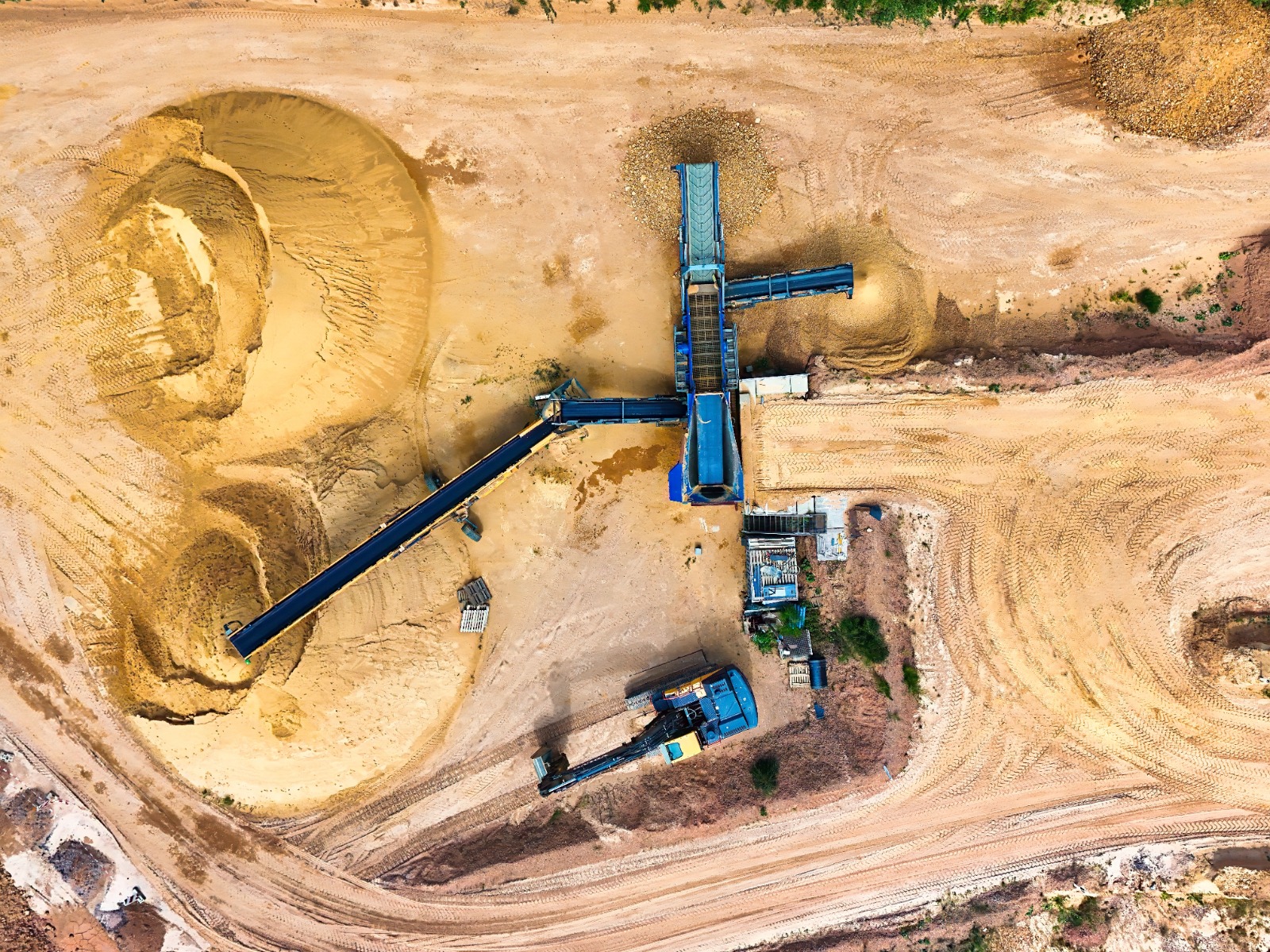
Critical minerals; including rare earth elements, graphite, cobalt, lithium, gallium and tungsten—have moved from specialist commodities into the centre of economic-security policy.
The reason is straightforward.
They sit inside the supply chains for electric vehicles, batteries, semiconductors, renewable energy systems, aerospace, defence and advanced manufacturing.
The International Energy Agency's 2026 Global Critical Minerals Outlook shows how concentrated these supply chains remain. China accounts for more than 90% of global refining capacity for several important materials, including gallium, graphite, manganese and rare earth elements.
The IEA also reports that the number of mineral tariff codes covered by Chinese export controls has tripled since 2023. New restrictions from China and other producing countries have turned supply concentration from a theoretical concern into an immediate economic-security challenge.
This is why governments are now willing to subsidise mines, processing plants, recycling facilities and alternative supply chains that might not have appeared economically attractive under purely market-based calculations.
The European Union's Critical Raw Materials Act, for example, is designed to increase European capacity to extract, process and recycle strategic materials while diversifying imports. The EU is now designating strategic projects specifically because secure access to these materials has become a matter of economic and national security.
The implication is profound.
A mine is no longer simply a mining project.
A refinery is no longer simply a refinery.
A processing plant can become an element of national strategy.
For investors, this creates a new category of opportunity: security-premium infrastructure.
Projects that diversify strategically important supply chains may receive government support, preferential financing, guaranteed demand or regulatory assistance because their value extends beyond conventional commercial returns.
The Sea Lanes Are Becoming Part of the Supply Chain Balance Sheet
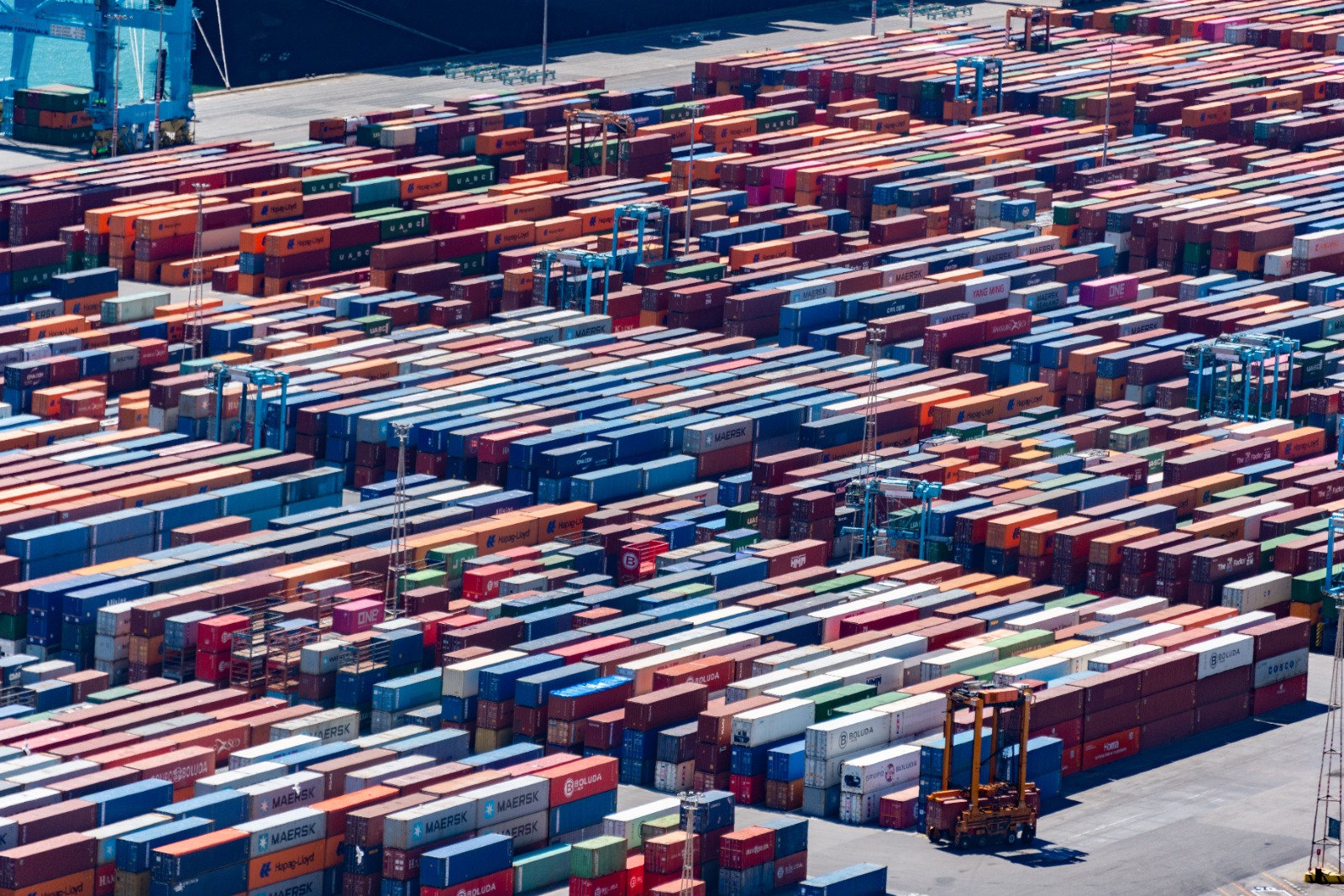
Globalisation depends on maritime trade.
That makes shipping chokepoints strategic assets.
The Strait of Hormuz is the clearest current example.
The prolonged conflict in the Middle East has sharply reduced shipping activity through the waterway. The International Maritime Organization reported on 28 August that up to 400 ships carrying approximately 6,000 seafarers had been unable to leave the Persian Gulf safely since the crisis began, while disruptions to fuel, fertiliser and commodity supply chains were affecting economies worldwide.
Reuters reported in August that shipping through Hormuz remained materially below normal levels even as some traffic resumed, while the crisis was prompting Gulf states to accelerate investment in alternative pipelines, ports and logistics infrastructure.
The Red Sea presents a similar lesson.
The International Maritime Organization warned in July that renewed attacks on international shipping threatened commercial routes and global supply-chain stability.
These disruptions change the economics of supply chains.
A company that relies on one maritime route may appear efficient during normal conditions. But if that route becomes inaccessible, the cost of emergency rerouting, higher insurance, longer transit times, fuel consumption and inventory shortages can quickly exceed the savings achieved through geographic concentration.
This is creating demand for alternative routes and infrastructure.
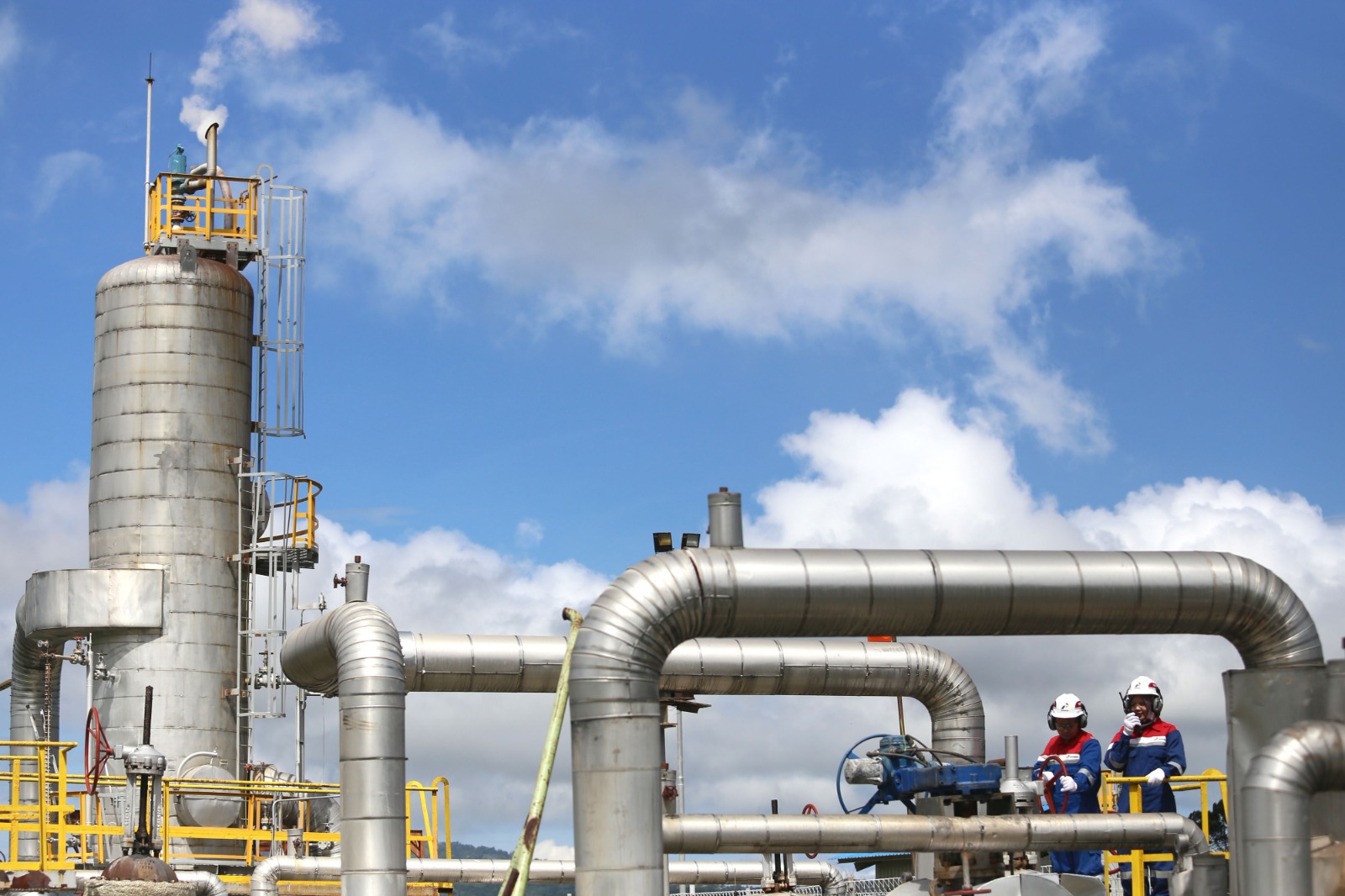
Pipelines that bypass chokepoints.
Ports with alternative access.
Rail corridors connecting different maritime systems.
Warehouses positioned closer to end markets.
Strategic fuel reserves.
Regional distribution centres.
The infrastructure investment opportunity is therefore shifting from simply moving goods efficiently towards keeping goods moving when the normal route fails.
The Arctic Is Moving From Peripheral Route to Strategic Option
The Arctic offers another illustration of how geopolitical competition and supply-chain resilience are beginning to intersect.
Russia has increased its use of the Northern Sea Route to move energy exports towards Asian markets. Reuters reported in August that seven tankers carrying around six million barrels of Russian crude were already using the route in 2026, with the Arctic corridor offering shorter transit times to Asia than traditional routes under favourable conditions.
Russia has also authorised Chinese vessels to use the Northern Sea Route for transit to Europe, with Rosatom describing a 2026 programme involving regular seasonal services rather than isolated experimental voyages.
South Korea has now begun its first commercial test voyage through the Arctic route to Europe, signalling that the Northern Sea Route is attracting interest beyond Russia and China.
The Arctic should not yet be treated as a replacement for the Suez Canal.
Seasonal ice, insurance, infrastructure, geopolitical sanctions and navigational risks remain substantial constraints.
But its strategic significance is increasing.
The broader lesson is more important than the route itself:
As established trade corridors become more exposed to geopolitical risk, previously marginal infrastructure can acquire strategic value.
That principle applies far beyond the Arctic.
Friend-Shoring Is Creating a New Geography of Production
The traditional global supply chain was organised around cost.
The emerging model adds a second variable: trust.
Friend-shoring means moving strategic production towards politically aligned partners.
Near-shoring means moving production closer to final markets.
Reshoring means bringing production back domestically.
None of these strategies necessarily means abandoning global trade.
The OECD's latest evidence shows that global production networks remain highly integrated despite these shifts. What is changing is their configuration. Regional value chains are strengthening while companies seek alternative suppliers and locations to reduce concentrated geopolitical exposure.
For companies, this creates a more complicated optimisation problem.
The cheapest supplier may no longer be the best supplier.
A supplier that is 8% more expensive but located in a politically stable jurisdiction, has alternative transport routes and can maintain production during a crisis may generate a better risk-adjusted return.
That is a fundamental change in procurement logic.
Industrial Policy Is Back
For decades, industrial subsidies were often criticised as inefficient interventions in markets.
Today, many of the world's largest economies are using them deliberately.
The rationale has changed.
Governments increasingly view strategic manufacturing capacity as an insurance policy against geopolitical disruption.
Semiconductors, batteries, defence technologies, critical minerals, energy equipment and telecommunications infrastructure are receiving policy support because governments are unwilling to leave strategic capacity entirely to market forces.
The United States' semiconductor policies are one example.
Its 2026 measures explicitly connect semiconductor production with national security and domestic industrial capacity.
The same principle is evident in critical minerals.
The European Union is using its Critical Raw Materials Act to identify strategic projects and improve access to public and private finance. More than 160 applications were submitted during the second selection round in 2026, demonstrating the growing commercial interest in strategic supply-chain diversification.
This creates a new investment environment.
Government policy is becoming a larger determinant of industrial economics.
A factory's competitive position may depend not only on wages, energy prices and logistics but also on whether governments classify its output as strategically important.
Strategic Stockpiles Are Becoming More Valuable
The old industrial logic often treated inventory as an inefficiency.
The new logic increasingly treats some inventory as insurance.
Strategic stockpiles already exist for energy and defence materials in many economies. The list of commodities considered strategically important is now expanding.
Critical minerals, semiconductors, pharmaceutical inputs, fertilisers and other essential goods are increasingly being assessed through a resilience lens.
The objective is not to stockpile everything.
That would be economically impossible.
Instead, governments and corporations are identifying goods where:
supply is highly concentrated;
substitutes are limited;
demand is strategically important;
disruption could stop production;
alternative suppliers would take years to develop.
Where those conditions exist, inventory becomes a form of risk management.
This is likely to create new markets for specialised storage, commodity finance, inventory insurance and strategic warehousing.
Currency Risk Is Becoming Part of Supply-Chain Risk
Geopolitical fragmentation also has a financial dimension.
Companies traditionally evaluated suppliers through price, quality and delivery.
Increasingly, they must also consider payment systems, sanctions exposure, currency convertibility and access to international financial infrastructure.
The use of financial sanctions and trade restrictions demonstrates that economic interdependence can be weaponised.
The IMF's 2026 work on geoeconomics describes tariffs, sanctions, export controls and restrictions on access to financial markets as tools through which major powers pursue geopolitical objectives.
For multinational businesses, this means geopolitical exposure can appear on the balance sheet even when the company has no physical operations in a conflict zone.
A supplier may become inaccessible because of sanctions.
A payment channel may become restricted.
A currency may become difficult to convert.
An export licence may be delayed.
A technology component may become subject to a new control regime.
The result is a broader definition of supply-chain risk:
The supply chain now includes the financial and regulatory systems through which goods move.
The Cost of Resilience
There is, however, a danger in overcorrecting.
If every company attempts to duplicate every supplier, build excessive inventory and relocate production exclusively to politically aligned economies, global production costs will rise sharply.
Consumers would ultimately bear part of that cost.
The IMF has warned that deeper geopolitical fragmentation and renewed trade tensions could weaken global growth and destabilise financial markets. Its April 2026 outlook projected global growth of 3.1% for 2026 under its conflict assumptions and identified prolonged conflict, geopolitical fragmentation and renewed trade tensions as significant downside risks.
The July update projected 3.0% global growth in 2026 and 3.4% in 2027, while warning that trade fragmentation could accelerate, increasing prices and reducing output.
Resilience therefore has a price.
The strategic challenge is finding the point where the additional cost of redundancy is justified by the reduction in disruption risk.
That requires better data rather than political slogans.
What Comes After Globalisation?
The emerging model is unlikely to be a world divided into completely separate economic blocs.
The economic costs of total decoupling would be enormous.
Instead, the more likely outcome is layered globalisation.
Layer One: Strategic Industries
Semiconductors, advanced computing, defence systems, critical minerals, telecommunications infrastructure and certain energy technologies will become increasingly national-security sensitive.
These sectors will experience more government intervention, export controls, investment screening and industrial subsidies.
Layer Two: Regional Manufacturing
Consumer goods, automotive components, food processing, pharmaceuticals and industrial products are likely to become more regionally organised.
Companies will still trade globally, but production will increasingly cluster around major consumer markets.
Layer Three: Global Commercial Trade
Non-sensitive products will continue to move through global markets because cost advantages remain powerful.
Textiles, commodities, consumer products and many services will continue to cross borders where political risk is manageable.
The future is therefore not deglobalisation.
It is selective globalisation.
What This Means for Africa
For Africa, this restructuring could become a major strategic opportunity.
The continent has often occupied the raw-material end of global supply chains.
That position is now being reconsidered because critical minerals, energy resources, agricultural commodities and strategic industrial inputs have acquired greater geopolitical value.
But simply exporting more raw materials would leave much of the opportunity unrealised.
The more important opportunity is to move up the value chain.
Africa can position itself as a diversified supplier of:
critical minerals;
processed metals;
battery materials;
agricultural products;
processed foods;
energy;
green industrial inputs;
manufactured consumer goods;
industrial components;
logistics services.
The opportunity is strengthened by the expansion of regional African production networks.
The World Bank's latest August 2026 analysis argues that Africa's next integration gains will come from building regional production hubs, reducing trade and regulatory friction and connecting production across borders. It estimates that only around 15–20% of Africa's total trade is intra-African, but that this trade is considerably more diversified and manufacturing-intensive than Africa's exports to the rest of the world.
This matters in a fragmented global economy.
Africa does not need to become self-sufficient.
It needs to become strategically indispensable.
A country or region that can provide secure access to critical minerals, processed agricultural goods, energy or industrial components becomes more valuable to multiple competing economic blocs.
That creates negotiating power.
The New Competitive Advantage: Strategic Reliability
For corporate leaders, the central change is conceptual.
Supply-chain management used to ask:
Where can we buy this most efficiently?
The new question is:
Where can we obtain this reliably under multiple geopolitical scenarios?
That changes how companies evaluate suppliers.
A serious supply-chain strategy should now consider at least six dimensions:
Cost: Can the supplier remain commercially competitive?
Capacity: Can it scale production during demand shocks?
Geopolitical exposure: Could political conflict interrupt supply?
Route resilience: Are there alternative transport corridors?
Regulatory exposure: Could sanctions, export controls or investment restrictions affect the relationship?
Financial resilience: Can the supplier continue operating through currency, credit or payment disruptions?
The strongest suppliers of the future will therefore not necessarily be the cheapest.
They will be the suppliers capable of remaining operational when conditions deteriorate.
What Decision-Makers Should Do Next
For CEOs and Boards
Supply-chain exposure should become a board-level risk issue.
Companies should map their exposure to individual countries, suppliers, shipping routes, currencies and critical inputs.
The objective is not to eliminate all risk.
It is to identify concentration risk that the organisation cannot afford.
Boards should also establish clear thresholds for when geopolitical risk justifies alternative sourcing or additional inventory.
For Investors
Investors should look beyond individual manufacturing companies and assess the infrastructure supporting supply-chain resilience.
Potential beneficiaries include:
strategic ports;
alternative transport corridors;
industrial parks;
critical-mineral processing;
recycling;
logistics technology;
energy infrastructure;
data centres;
regional manufacturing;
specialised warehousing;
supply-chain finance.
The investment thesis is shifting from global efficiency infrastructure towards resilience infrastructure.
For Governments
Governments should avoid confusing resilience with protectionism.
Strategic capacity matters, but excessive localisation can raise costs and reduce competitiveness.
The objective should be diversified interdependence.
That means maintaining multiple trade relationships, developing domestic capabilities in genuinely strategic sectors and building alternative routes without attempting to produce everything domestically.
For African Policymakers
Africa should use the current restructuring of global supply chains to accelerate industrial development.
Priority areas should include:
processing critical minerals locally;
developing regional manufacturing corridors;
improving ports and cross-border logistics;
strengthening electricity reliability;
harmonising standards;
expanding industrial finance;
developing technical skills;
improving investment certainty;
using AfCFTA to create continental-scale production networks.
The goal should be to become a reliable supplier within multiple global value chains rather than remain dependent on a single external market.
Executive Outlook
Globalisation survived the pandemic.
It survived the energy shock.
It survived the war in Ukraine.
It is surviving the current wave of trade restrictions, geopolitical rivalry and shipping disruption.
But it is not emerging unchanged.
The economic system built around maximum efficiency is being supplemented by a system built around efficiency plus resilience.
That is the defining shift.
Companies will still seek lower costs.
Governments will still pursue trade.
Capital will still cross borders.
Factories will still depend on international components.
But strategic risk is now being priced into those decisions.
The result will be a world where supply chains are more diversified, production is more regional in strategic sectors, governments play a larger role in industrial policy and geopolitical alignment becomes an increasingly important factor in investment decisions.
The most important change may therefore be psychological.
For much of the globalisation era, geopolitical stability was treated as the background condition under which business operated.
It is increasingly becoming an input into the business model itself.
That means the winners of the next phase of globalisation will not necessarily be those with the lowest production costs.
They will be those capable of balancing cost, access, resilience and strategic trust.
For Africa, the implication is particularly significant.
The continent's resources, markets and geographic position give it an opportunity to become part of the world's diversification strategy. But that opportunity will only become economically transformative if African economies move beyond raw-material supply and develop the processing, manufacturing, infrastructure and institutional capabilities required by sophisticated global buyers.
The next era of globalisation will not eliminate interdependence.
It will make countries and companies much more selective about which dependencies they are willing to accept.
The question for business leaders and policymakers is therefore no longer simply where the world manufactures.
It is:
Who does the world trust to keep producing when the world becomes less predictable?
That is where the next generation of strategic advantage will be built.
Sources
International Monetary Fund, World Economic Outlook: Global Economy in the Shadow of War, April 2026.
International Monetary Fund, World Economic Outlook Update: Global Economy in Crosscurrents of War and Technology, July 2026.
International Monetary Fund, Global Financial Stability Report: Global Financial Markets Confront the War in the Middle East and Amplification Risks, April 2026.
International Monetary Fund, Understanding Geoeconomics in a Volatile World, June 2026.
OECD, Globalisation Isn't Dead. It's Reconfiguring, 2026.
International Energy Agency, Global Critical Minerals Outlook 2026, July 2026.
International Energy Agency, Energy Technology Perspectives 2026.
European Commission, Strategic Projects under the Critical Raw Materials Act.
European Commission, Strategic Projects for Critical Raw Materials — Second Selection Round, January 2026.
International Maritime Organization, Statement: Six Months of Uncertainty for Seafarers in Strait of Hormuz, 28 August 2026.
International Maritime Organization, Statement on Recent Attacks on Ships in the Red Sea, July 2026.
International Maritime Organization, Polar Code / Shipping in Polar Waters.
United Nations Trade and Development (UNCTAD), Global Trade Update: July/August 2026.
United States White House, Adjusting Imports of Semiconductors, Semiconductor Manufacturing Equipment and Their Derivative Products into the United States, January 2026.
US Bureau of Industry and Security, Department of Commerce Revises License Review Policy for Semiconductors Exported to China, January 2026.
US White House, Presidential Determination on Recoverable Critical Minerals and Materials, July 2026.
US Trade Representative, USTR Takes Action in Forced Labor Section 301 Investigations, July 2026.
World Bank, Integrating Africa: From Threads to Hubs, August 2026.
Reuters, reporting on Strait of Hormuz shipping disruption and Gulf infrastructure diversification, August 2026.
Reuters, reporting on Russia's Northern Sea Route oil exports, August 2026.
Reuters, reporting on Chinese vessels using the Northern Sea Route, August 2026.
Reuters, repo