Executive Summary
The Strait of Hormuz has become more than a Middle Eastern security flashpoint. It is a real-time stress test of the global economic system.
Before the current disruption, roughly 20 million barrels of oil per day passed through the Strait, around one-quarter of global seaborne oil trade, with approximately 80% of those flows destined for Asia. More than 110 billion cubic metres of liquefied natural gas (LNG) also transited the waterway in 2025, representing almost one-fifth of global LNG trade.
The scale of the current disruption demonstrates the vulnerability built into that system. The US Energy Information Administration estimates that oil and petroleum-liquid flows through Hormuz averaged only 4.9 million barrels per day in the second quarter of 2026, down from 21.6 million barrels per day in the fourth quarter of 2025. Reuters reported on 28 August that only seven commodity vessels crossed the Strait on the previous day, compared with a 10-day average of 15. Separate reporting indicates that overall traffic remains only a fraction of normal levels.
Yet the most important consequence may not be the immediate oil-price shock.
It is the strategic lesson.
Governments and companies are being forced to reconsider an assumption that underpinned globalisation for decades: that supply chains should primarily be designed around cost and efficiency.
Hormuz suggests that the next phase of globalisation may instead prioritise redundancy, strategic reserves, alternative routes, domestic production and politically secure suppliers—even when those choices cost more.
That would represent a fundamental change in the economics of global trade.
Why It Matters
The Strait of Hormuz is only around 21 miles wide at its narrowest point, but the economic system built around it is enormous.
The waterway connects the Persian Gulf with the Gulf of Oman and the Arabian Sea, providing the principal maritime outlet for energy exports from Saudi Arabia, the United Arab Emirates, Kuwait, Qatar, Iraq, Bahrain and Iran.
Its importance comes not simply from the volume of energy passing through it, but from the lack of credible substitutes.
Saudi Arabia and the UAE possess pipelines that can bypass the Strait, but the International Energy Agency estimates that only about 3.5–5.5 million barrels per day of crude capacity is available through alternative routes. That is a fraction of the approximately 20 million barrels per day that normally moves through Hormuz.
Natural gas presents an even greater vulnerability.
Approximately 93% of Qatar's LNG exports and 96% of the UAE's LNG exports transit Hormuz. The IEA estimates that the combined volumes represent about 19% of global LNG trade, with no alternative route capable of simply replacing those shipments.
This creates a distinctive form of geopolitical leverage.
A disruption does not have to permanently eliminate supply to create economic damage. It only has to introduce uncertainty into the timing, cost and reliability of supply.
That uncertainty affects:
oil and gas prices;
shipping insurance;
tanker rates;
refinery economics;
electricity costs;
fertiliser production;
petrochemicals;
food prices;
inflation expectations;
corporate margins;
government budgets; and
central-bank policy.
The chokepoint therefore transmits geopolitical risk into almost every major component of the global economy.
Hormuz as an Economic Weapon
The concept of an economic weapon is important because the Strait does not need to be physically closed indefinitely to exert strategic influence.
The threat of disruption can itself change economic behaviour.
When ships hesitate to enter a waterway, insurers increase risk premiums, operators alter routes, commodity traders increase inventories and governments begin considering emergency reserves.
The economic weapon therefore operates through risk pricing as much as through physical interruption.
The current disruption demonstrates this mechanism.
EIA data show that oil flows through Hormuz collapsed from an average of 21.6 million barrels per day in the final quarter of 2025 to 4.9 million barrels per day in the second quarter of 2026.
At the same time, the market response has not been proportional to the full physical scale of the disruption.
That is partly because alternative production, inventories, demand adjustments and rerouting have absorbed some of the shock.
It is also because markets price expectations.
When traders believe that a diplomatic agreement could restore shipping, risk premiums can fall before physical flows recover.
That dynamic was visible this week. Brent crude fell more than 2% on 26 August as markets responded to signs of renewed diplomatic activity involving Oman and Iran, despite the underlying disruption to Hormuz traffic.
The message for policymakers is significant:
Control over a chokepoint creates leverage not only over physical commodities, but over expectations.
The Energy Security Problem
For decades, energy security was often framed around access to sufficient production.
Hormuz exposes a different problem: access to transportation.
A country may have sufficient oil available somewhere in the global market and still face an energy-security problem if the infrastructure connecting producer and consumer is vulnerable.
This distinction matters because the world has spent decades optimising energy supply chains for efficiency.
Oil is produced where production is cheapest, transported across long distances and refined in facilities optimised around particular crude grades. LNG is contracted internationally and delivered according to complex shipping schedules.
The system works extremely well when maritime routes remain open.
It becomes expensive when they do not.
The current disruption has demonstrated that energy resilience depends on a chain of infrastructure rather than a single commodity.
Pipelines, ports, refineries, LNG terminals, strategic reserves, tanker fleets and shipping insurance all form part of the energy-security equation.
Oil and LNG Are Not Equally Exposed
One of the most important distinctions for investors is that the Hormuz shock affects oil and LNG differently.
Oil has a degree of flexibility because crude can be rerouted through pipelines, alternative ports and different global suppliers.
Saudi Arabia operates the East-West pipeline linking its oil infrastructure to the Red Sea, while the UAE has infrastructure connecting production to Fujairah outside the Strait. Together, these routes provide some capacity to bypass Hormuz.
But those alternatives cannot replace the full volume normally moving through the waterway.
LNG is more constrained.
Qatar is one of the world's largest LNG exporters, and almost all of its LNG exports pass through Hormuz. The IEA estimates that a sustained disruption could remove more than 300 million cubic metres per day of gas supply from the global market—an enormous shock that cannot easily be replaced at short notice because competing liquefaction facilities are already operating at high utilisation.
The result is that gas-intensive economies can face a different problem from oil-importing economies.
A shortage of LNG can affect electricity generation, fertiliser production, industrial activity and household heating simultaneously.
That makes LNG security a strategic industrial issue, not simply an energy-market issue.
Asia Carries the Greatest Exposure
Hormuz is often discussed in Washington and European capitals as an energy-security problem, but the largest direct exposure sits in Asia.
In 2025, around 80% of the oil transported through Hormuz was destined for Asian markets. China, India and Japan are among the principal recipients.
The LNG exposure is similarly concentrated.
Almost 90% of LNG volumes transiting Hormuz in 2025 were destined for Asia. The IEA estimates that LNG delivered through the Strait represented around 27% of Asia's total LNG imports, compared with roughly 7% of Europe's LNG inflows.
This changes the geopolitical calculation.
A prolonged Hormuz disruption would not simply be a Middle Eastern crisis transmitted into Western energy markets.
It would be a major Asian industrial and energy-security event.
For China, the exposure is particularly significant because the country is the world's largest crude-oil importer.
The EIA estimates that China's crude imports fell to 8.1 million barrels per day in the second quarter of 2026, 32% below the previous quarter, following higher prices and disrupted flows through Hormuz. That compares with a record annual average of 11.6 million barrels per day in 2025.
China's response is therefore likely to extend beyond simply finding replacement barrels.
It could accelerate investment in strategic inventories, alternative suppliers, domestic production, overland pipelines, refinery flexibility and diversified maritime routes.
That is the deeper strategic consequence of Hormuz.
China and the Strategic Geography of Energy
China's vulnerability is not simply that it imports large quantities of Middle Eastern oil.
It is that much of the world's Middle Eastern energy supply is geographically concentrated.
EIA data show that Middle Eastern suppliers accounted for approximately 54% of China's crude-oil imports in 2024, with Saudi Arabia, Iran, Iraq and the UAE among its major suppliers.
This creates a strategic incentive for Beijing to diversify both suppliers and transportation infrastructure.
China has already spent years developing pipelines, strategic petroleum reserves, relationships with Russia and Central Asian producers, and overland infrastructure capable of reducing dependence on maritime routes.
Hormuz strengthens the economic rationale for those investments.
It also changes the way China may evaluate Gulf diplomacy.
For Beijing, energy security is inseparable from geopolitical stability.
A stable Gulf protects China's industrial economy.
A fragmented Gulf increases the value of alternative suppliers and transport corridors.
Europe Faces a Different Risk
Europe is less directly dependent on Hormuz than Asia, particularly because European energy markets have diversified since Russia's invasion of Ukraine.
Yet Europe is not insulated.
The European market competes with Asia for LNG cargoes when global supply tightens.
If Qatari and Emirati LNG becomes unavailable, European buyers may be forced to compete more aggressively for cargoes from the United States, Africa and other suppliers.
That raises the global price of LNG even where physical exposure to Hormuz is limited.
The IEA observed that the March 2026 disruption pushed Asian and European natural-gas prices to their highest levels since January 2023 during the period of greatest volatility.
This is an important feature of modern commodity markets:
Geographic exposure and economic exposure are not the same thing.
Europe does not need to import LNG directly through Hormuz to experience the consequences of a disruption there.
It only needs to compete with another buyer for the same replacement cargo.
Africa Is Exposed Through Prices and Freight
Africa's exposure is different again.
Many African economies are net importers of refined petroleum products even when the continent itself produces substantial quantities of crude oil.
A prolonged disruption in Gulf energy flows can therefore affect African economies through higher fuel prices, freight costs, electricity generation costs and imported inflation.
Oil-producing economies may benefit from higher crude prices on the revenue side while simultaneously facing higher domestic fuel and logistics costs.
Oil-importing economies face the opposite pressure.
For countries already managing foreign-exchange constraints, higher energy import bills can increase pressure on currencies and government budgets.
The effects also extend beyond energy.
Higher fuel and shipping costs increase the delivered cost of food, industrial inputs, machinery and manufactured goods.
For African manufacturers, the Hormuz shock therefore reinforces an existing strategic argument: supply-chain resilience increasingly requires regional sourcing, local production and greater diversification of logistics routes.
Maritime Chokepoints Are Becoming Strategic Infrastructure
Hormuz is part of a wider network of vulnerable maritime corridors.
The global economy depends on a relatively small number of chokepoints, including:
the Strait of Hormuz;
the Bab el-Mandeb;
the Suez Canal;
the Panama Canal;
the Strait of Malacca; and
the Turkish Straits.
Each performs a different function, but together they reveal a structural weakness in globalisation.
Production has become globally distributed while transportation remains geographically concentrated.
That creates a paradox.
The global economy has diversified its suppliers but not necessarily its routes.
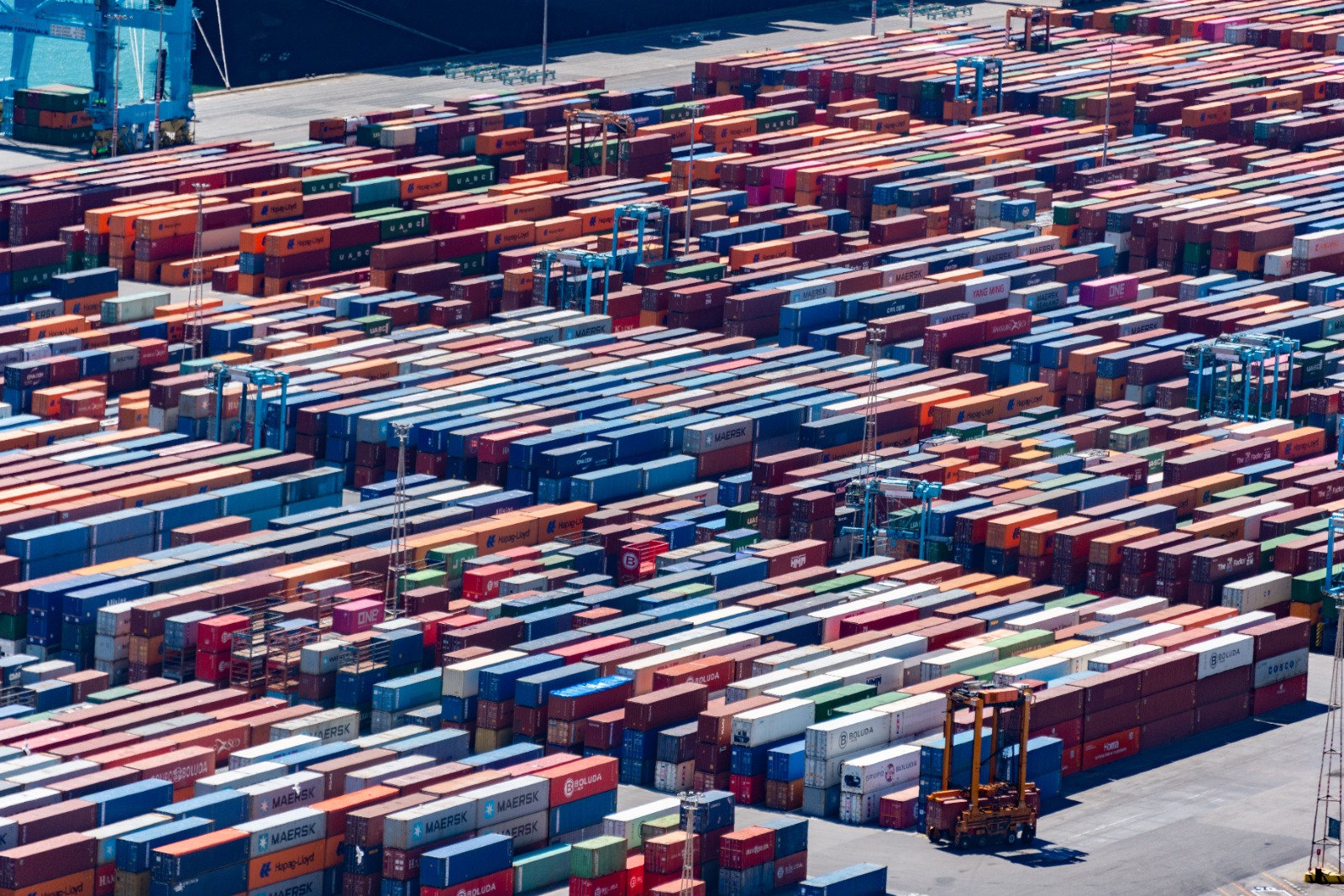
A company may have five suppliers across three continents but still depend on the same shipping corridor to bring critical components into its factory.
That is why chokepoint risk is increasingly becoming a boardroom issue.
The Alternative-Route Problem
The obvious response to Hormuz is to build alternative routes.
The problem is that infrastructure cannot be created at the speed of geopolitical crises.
Pipelines require years of planning and billions of dollars of capital.
Ports require land, terminals, storage and supporting logistics.
Rail corridors require multiple countries to coordinate regulation and investment.
LNG infrastructure requires liquefaction plants, shipping capacity and receiving terminals.
The current crisis is nevertheless accelerating that investment.
Reuters reported on 28 August that Gulf states are increasing investment in pipelines, ports and alternative export infrastructure as the disruption persists. Saudi Arabia and the UAE are leading efforts to strengthen routes that bypass Hormuz, while other regional projects are being explored to connect energy supplies with ports beyond the Gulf.
This could become one of the most consequential infrastructure responses to the crisis.
The strategic value of an alternative route is not measured only by how much commodity it can carry.
It is measured by how much geopolitical leverage it removes from a chokepoint.
Qatar's Diplomatic Role
Qatar occupies a particularly unusual position in the crisis.
It is simultaneously one of the world's most important LNG exporters, a state whose exports depend heavily on Hormuz, and a diplomatic intermediary between Washington and Tehran.
On 28 August, Reuters reported that Qatar was intensifying mediation efforts after the Qatari prime minister visited Tehran and urged Iran to respect freedom of navigation. Iran has agreed to develop conditions for restoring maritime traffic and has discussed a potential corridor involving Iranian and Omani waters.
This diplomacy is economically significant.
Qatar has a direct commercial interest in restoring reliable navigation because its LNG exports depend on the Strait.
But its role also demonstrates how energy infrastructure and diplomacy are becoming increasingly intertwined.
The Gulf states are not merely energy producers.
They are becoming strategic intermediaries in the architecture of global trade.
Sanctions and Economic Warfare
Hormuz also exposes the growing overlap between financial sanctions and physical trade infrastructure.
The United States has shifted towards intensified economic pressure on Iran, with President Donald Trump stating on 27 August that Washington was focusing on economic pressure rather than direct negotiations. US Treasury Secretary Scott Bessent has also warned of potential secondary sanctions against countries maintaining financial relationships with Iran.
This creates a complex environment for global companies.
A firm operating in shipping, energy, banking or commodities can face multiple layers of geopolitical exposure:
physical risk → sanctions risk → insurance risk → payment risk → reputational risk.
That means geopolitical risk can no longer be evaluated solely through the probability of military conflict.
A government does not necessarily need to attack a company's assets to disrupt its business.
Changing the legal, financial or insurance environment around a trade corridor can produce similar economic effects.
The Insurance and Shipping Multiplier
One of the least visible consequences of a chokepoint disruption is the cost of risk itself.
When insurers perceive greater probability of vessel damage, detention, mines or attacks, premiums increase.
Shipowners then pass those costs through freight rates.
Commodity traders incorporate the additional risk into pricing.
Importers face higher delivered costs.
Consumers eventually absorb part of the increase.
The commodity itself therefore becomes more expensive even before a physical shortage occurs.
This is one reason why the economic importance of Hormuz extends beyond the barrels and LNG cargoes physically moving through the waterway.
The chokepoint changes the cost of confidence.
Market Signals
Several developments now point towards a structural rather than temporary reassessment of supply-chain risk.
1. Physical flows remain severely constrained
Reuters reported on 28 August that only seven commodity vessels transited Hormuz on the previous day, compared with a 10-day average of 15. The data also showed continued low traffic through the Strait despite diplomatic efforts to restore navigation.
2. Oil markets are pricing diplomacy as well as scarcity
Brent crude has moved sharply in response to changing expectations around negotiations, demonstrating that geopolitical risk premiums can reverse rapidly when markets anticipate restored supply.
3. Alternative infrastructure is attracting capital
Gulf governments are increasing investment in pipelines, ports and alternative routes to reduce reliance on Hormuz.
4. Energy security is becoming industrial policy
The disruption is forcing governments to consider strategic inventories, domestic production, alternative suppliers and infrastructure redundancy as components of national competitiveness.
5. Asia is reassessing concentration risk
The concentration of Hormuz energy flows towards China, India, Japan and South Korea means Asian governments have stronger incentives than most Western economies to diversify energy procurement and logistics.
Strategic Risks
The most important risk is that governments respond to Hormuz by building expensive infrastructure that remains underutilised once the crisis passes.
Redundancy has a cost.
Pipelines may operate below capacity. Strategic reserves tie up capital. Alternative ports require maintenance. Dual sourcing can increase procurement costs.
But the economics of redundancy change when geopolitical shocks become more frequent.
A route that appears inefficient during stable periods can become extremely valuable during a crisis.
The strategic calculation is therefore moving from:
“What is the cheapest supply chain?”
towards:
“What is the cheapest supply chain that can survive a geopolitical shock?”
That distinction could reshape investment decisions across energy, manufacturing, logistics and technology.
Financing the New Resilience Economy
If governments begin systematically redesigning supply chains around geopolitical resilience, a large new investment cycle could emerge.
Potential beneficiaries include:
alternative oil and gas pipelines;
strategic petroleum storage;
LNG terminals;
renewable energy infrastructure;
electricity-grid upgrades;
rail and road corridors;
deep-water ports;
shipping and tanker fleets;
maritime surveillance;
supply-chain software;
industrial automation;
recycling and material substitution;
domestic manufacturing.
The investment thesis is broader than energy.
Every additional unit of domestic production reduces exposure to an external chokepoint.
Every alternative transport corridor reduces dependence on a single route.
Every strategic reserve buys time during a disruption.
This creates a growing market for economic resilience infrastructure.
What Decision-Makers Should Do Next
For Governments
Governments should reassess critical supply chains according to geopolitical exposure rather than cost alone.
Priority areas should include:
Mapping dependence on maritime chokepoints.
Expanding strategic energy reserves.
Developing alternative import and export routes.
Diversifying energy suppliers.
Strengthening domestic refining and processing capacity.
Improving port and rail resilience.
Building regional energy and logistics partnerships.
The objective should not be autarky.
It should be strategic redundancy.
For Energy Companies
Energy companies should model disruption scenarios lasting weeks and months rather than days.
Companies should assess:
alternative crude grades;
pipeline availability;
tanker access;
insurance exposure;
refinery flexibility;
storage capacity;
currency risk;
sanctions exposure; and
alternative customers and suppliers.
The firms best positioned for the next geopolitical shock may not be those with the cheapest production.
They may be those with the greatest flexibility.
For Investors
Investors should look beyond commodity prices.
The more durable investment opportunity may be in the infrastructure required to reduce geopolitical exposure.
That includes pipelines, ports, LNG infrastructure, energy storage, grid infrastructure, logistics technology and industrial automation.
Investors should also distinguish between assets that merely benefit from higher prices and assets that solve structural supply-chain vulnerabilities.
The latter may have greater long-term value.
For African Economies
African governments and businesses should treat the Hormuz disruption as a warning about external logistics dependence.
Countries should accelerate efforts to develop:
regional manufacturing;
domestic refining;
renewable electricity;
intra-African trade corridors;
strategic fuel storage;
port connectivity; and
regional supply chains.
The African Continental Free Trade Area can play an important role by allowing countries to diversify production across the continent rather than relying on distant suppliers for every critical product.
For African investors, the opportunity is particularly relevant in energy, logistics, food processing and industrial infrastructure.
Executive Outlook
The immediate question is whether the Strait of Hormuz will reopen fully and how quickly commercial traffic can return to normal.
The more consequential question is what happens after it does.
If governments conclude that the cost of another Hormuz-style disruption is greater than the cost of building redundant infrastructure, the global economy could enter a new phase of supply-chain design.
That would have profound implications.
For decades, globalisation was largely organised around efficiency.
Companies sought the lowest-cost supplier.
Governments encouraged international trade.
Inventory was minimised.
Production was geographically concentrated.
Transport networks were optimised for volume.
The Hormuz crisis challenges that model.
A world in which geopolitical confrontation can interrupt a critical maritime corridor will increasingly reward resilience over pure efficiency.
That does not mean globalisation is ending.
It means its economics are changing.
Companies may hold more inventory.
Governments may subsidise strategic capacity.
Manufacturers may accept higher production costs to locate closer to consumers.
Energy importers may sign longer-term contracts with politically reliable suppliers even when cheaper alternatives exist.
Investors may place a premium on infrastructure that provides redundancy rather than maximum utilisation.
And governments may increasingly regard ports, pipelines, power grids, data centres and logistics corridors as strategic assets rather than ordinary commercial infrastructure.
The Strait of Hormuz has therefore become a test of something larger than energy security.
It is testing whether the global economic system can remain efficient when geopolitical risk becomes a permanent variable.
The outcome could define the next era of globalisation.
The old model asked:
How cheaply can the world move goods?
The emerging model may ask:
How much should the world pay to make sure those goods keep moving?
That is the real economic weapon created by a chokepoint.
Not simply the ability to stop trade, but the ability to force everyone else to pay more for the certainty that trade can continue.
Sources
International Energy Agency — Strait of Hormuz and Oil Security Analysis
International Energy Agency — Middle East and Global Energy Markets
U.S. Energy Information Administration — World Oil Transit Chokepoints
U.S. Energy Information Administration — Short-Term Energy Outlook
U.S. Energy Information Administration — China Crude Oil Imports, Q2 2026
U.S. Energy Information Administration — China Country Analysis Brief
Reuters — Iran War Diplomacy Turns Toward Reopening Strait of Hormuz, 28 August 2026
Reuters — Shipping Traffic via Strait of Hormuz Slips Below 10-Day Average, 28 August 2026
Reuters — Pipelines and Ports: Iran War Spurs Gulf Infrastructure Investment, 28 August 2026
Reuters — Trump Says US Is Not Talking with Iran as Economic War Comes into Focus, 27 August 2026
Reuters — Morning Bid: Falling Oil Calms Nervy Markets, 26 August 2026