
Fiscal consolidation, exchange-rate reform, energy-market restructuring, infrastructure concessions, digital government, tax administration and investment liberalisation are no longer abstract policy debates. They determine whether businesses can operate at lower cost, whether investors can repatriate capital, whether governments can finance infrastructure and whether economies can withstand external shocks.
This creates a more useful way of judging African governments: measure reform execution rather than political rhetoric.
The evidence in 2026 suggests that reform performance is uneven.
Rwanda remains one of the clearest examples of sustained policy execution, although it is now confronting the fiscal and inflationary consequences of its investment-led model. Nigeria has undertaken some of the continent's most consequential macroeconomic reforms, including fuel-subsidy removal, exchange-rate reform and a major tax overhaul, but the social cost and implementation risks remain substantial. Egypt has advanced macroeconomic and business-environment reforms under its IMF programme, while the IMF continues to press Cairo to move faster on reducing the state's economic footprint.
South Africa presents the most instructive mixed case. Its reform programme has produced measurable gains in electricity and freight logistics, but the latest business-sector tracking shows that momentum has begun to weaken. The issue is therefore no longer whether reform is occurring, but whether the state can maintain implementation speed across politically difficult sectors.
The emerging lesson for investors is straightforward: reform momentum itself is becoming an economic asset.
Countries capable of consistently converting legislation, policy announcements and institutional changes into measurable improvements in infrastructure, public finances, market access and business conditions are likely to attract a greater share of Africa's next investment cycle.
The New Test of Government Performance
For decades, African governments have often been assessed through political indicators: election outcomes, presidential statements, new policy announcements or the size of public investment programmes.
Those indicators matter, but they do not necessarily tell investors whether an economy is becoming easier to operate in.
A more useful question is:
What has actually changed since the reform was announced?
A government can announce an electricity reform without increasing reliable generation. It can announce tax reform without improving revenue collection. It can pass an investment law without attracting new private capital. It can launch a digital-government programme while businesses continue to rely on paper-based bureaucracy.
The distinction between policy intent and implementation is therefore becoming critical.
The IMF estimates that well-designed structural reforms in governance, business regulation and market openness could raise sub-Saharan Africa's output by around 20% over a decade. The potential economic payoff is substantial, but only if reforms are implemented rather than left on paper.
This creates the basis for a new way of assessing governments.
The Reformers
Rwanda: Consistency Remains the Competitive Advantage
Rwanda continues to stand out because reform has been treated as an ongoing management process rather than a collection of isolated political announcements.
The country's latest IMF-supported programme provides a particularly useful test.
Rwanda recorded 9.4% real GDP growth in 2025, although growth is expected to moderate to around 6.8% in 2026 amid higher inflation, external pressures and tighter global financing conditions.
The important point is not simply the growth rate.
It is the policy response.
The government has committed to fiscal consolidation, stronger domestic revenue mobilisation, improved public-investment management, tighter oversight of state-owned enterprises and a more private-sector-led growth model. The IMF programme also includes reforms to strengthen monetary-policy transmission and allow greater exchange-rate flexibility.
Rwanda has also demonstrated a measurable record of implementation. Under its previous IMF Policy Coordination Instrument, all quantitative targets were met and most reform commitments were implemented, including reforms involving SOE governance, monetary statistics and digital public financial management.
That does not mean Rwanda is without weaknesses.
Public debt remains elevated, inflation reached 13.2% year-on-year in April 2026 and the current-account deficit is projected to remain large.
The next test is therefore whether Rwanda can transition from a highly investment-driven growth model towards one where private investment, exports and productivity carry more of the burden.
Intelligence assessment: Rwanda remains one of Africa's strongest examples of reform execution, but the next phase will test fiscal discipline and private-sector depth rather than administrative effectiveness alone.
Nigeria: Reform Has Moved Faster Than the Political System
Nigeria presents a different model.
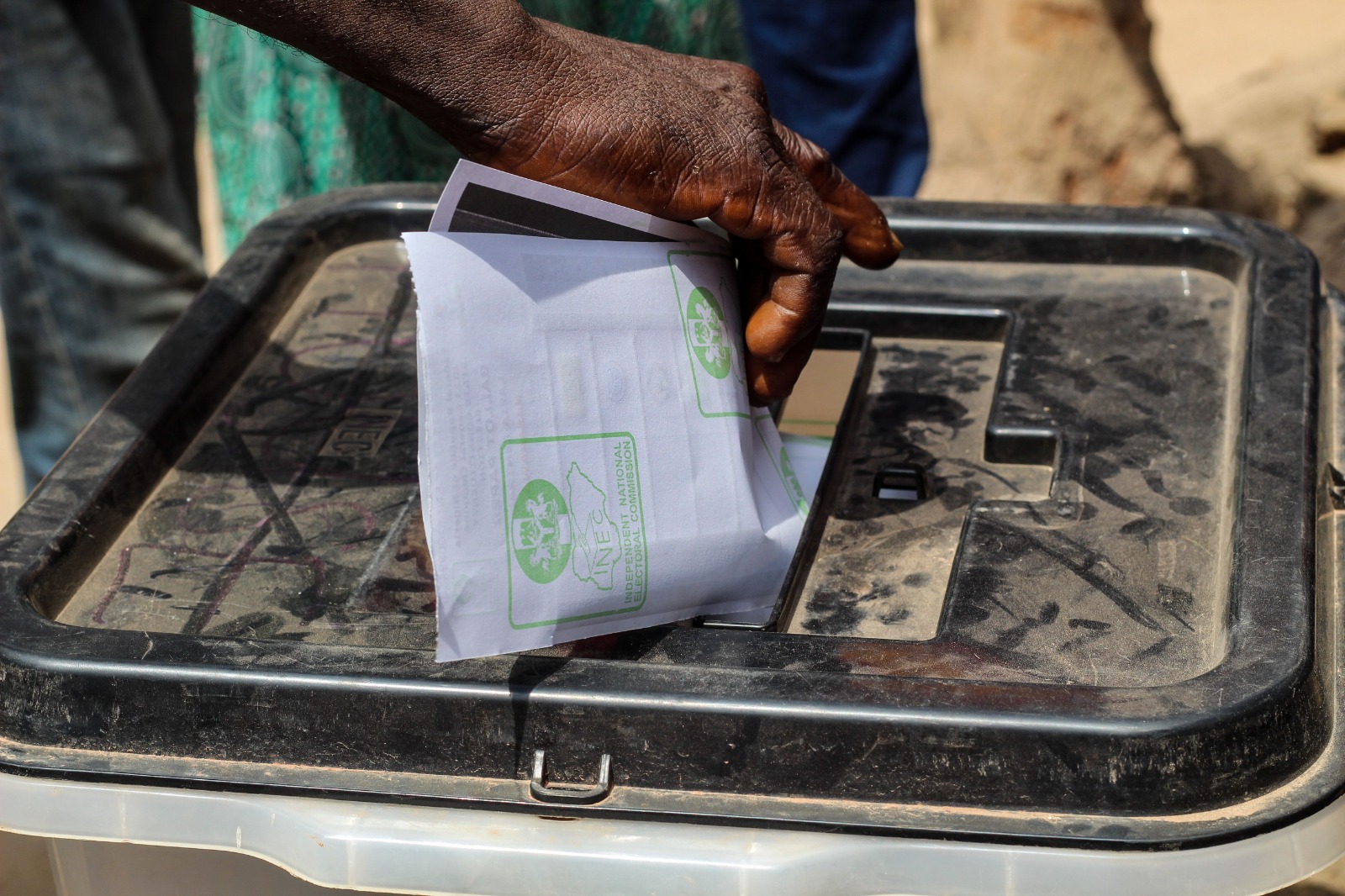
The government has implemented some of the most economically consequential reforms on the continent since 2023, including the removal of the petrol subsidy and major foreign-exchange reforms.
Those decisions were politically difficult because they transferred significant costs to households in the short term.
Yet they also addressed major distortions in public finances and the currency market.
By 2026, the reform agenda has expanded into taxation, revenue administration, energy and financial-sector restructuring. The Nigeria Tax Act 2025, effective from January 2026, consolidates tax legislation, modernises revenue administration and expands digital collection mechanisms.
The Central Bank of Nigeria has also characterised the reform programme as part of a broader effort to reduce dependence on oil, strengthen investment conditions and improve financial resilience.
But Nigeria illustrates an important distinction between reform implementation and reform outcomes.
The IMF notes that challenges remain in ensuring that fuel-subsidy savings accrue fully to the government, while public expenditure execution has also remained an issue.
The reform agenda is therefore substantial, but the next question is whether institutional execution can catch up with the scale of policy change.
Intelligence assessment: Nigeria belongs in the reformer camp in terms of policy ambition and structural change, but it remains a high-execution-risk market. The opportunity is potentially enormous; implementation consistency remains the critical variable.
Egypt: Reform Is Advancing, but the State's Economic Role Remains the Fault Line
Egypt has made significant progress under its IMF-supported programme, including greater exchange-rate flexibility, fiscal adjustment and measures intended to improve the investment environment.
The IMF's 2026 assessment is nevertheless revealing.
Egypt's authorities have articulated a strategy aimed at moving towards a more competitive, private-sector-led economy, with reforms covering business regulation, trade facilitation, digitalisation and the state's economic role.
But the IMF argues that the largest potential gains would come from accelerating reductions in state ownership and strengthening market competition.
That distinction is central.
Egypt can improve macroeconomic stability while still leaving private investors uncertain about the degree of competition they will face from state-owned or state-linked enterprises.
The IMF's July 2026 review consequently continued to press for faster progress in reducing the state's economic footprint even as it released roughly $1.8 billion under the programme.
Intelligence assessment: Egypt is reforming, but its investment story depends heavily on whether macroeconomic stabilisation is followed by deeper structural liberalisation.
South Africa: The Most Important Test Case
South Africa provides perhaps the clearest demonstration of why reform measurement matters.
The country has made real progress.
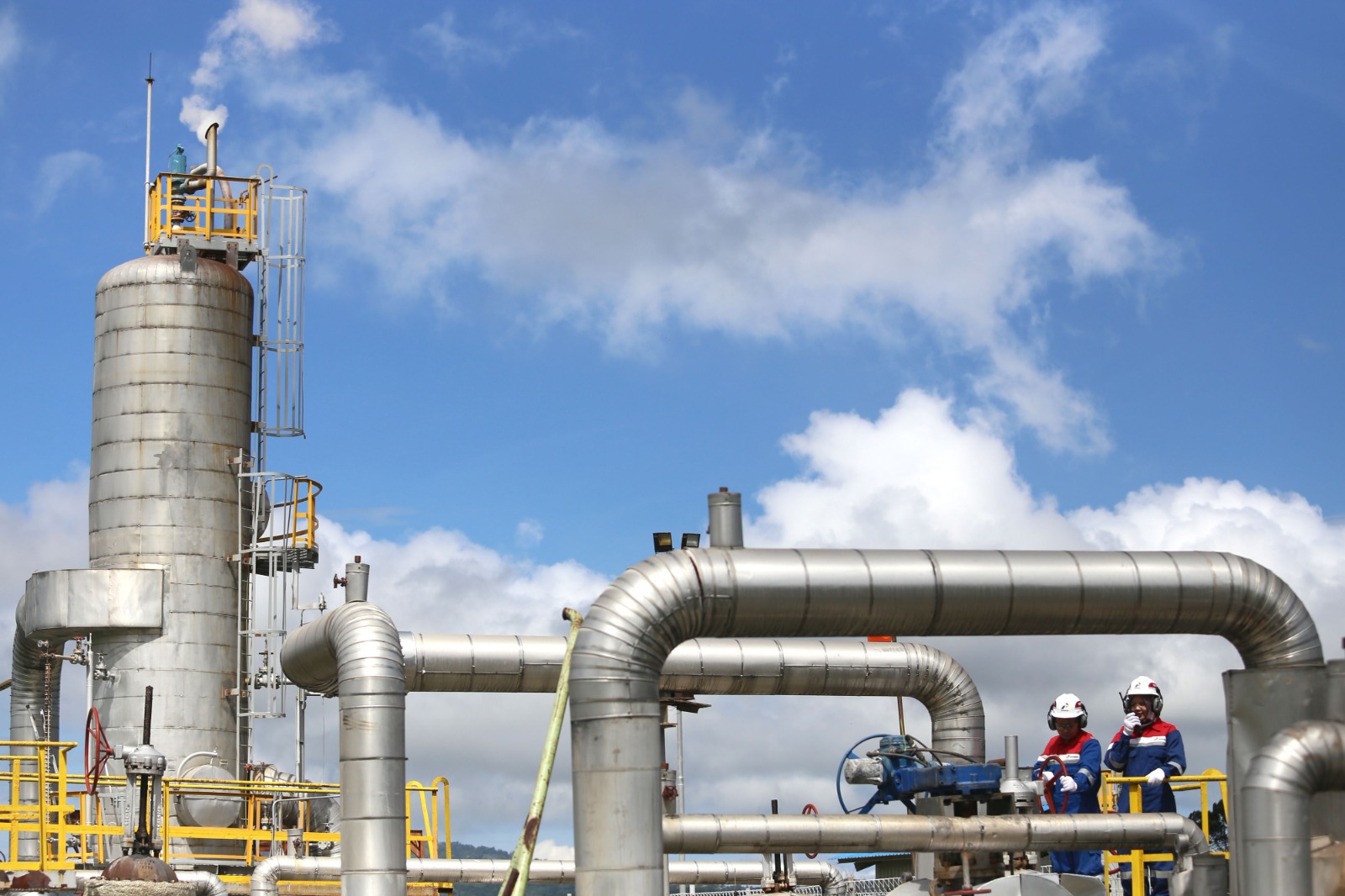
Electricity reform has helped produce a dramatic improvement in power availability. The World Bank says load-shedding has been virtually eliminated for approximately a year and a half, private renewable-energy investment has increased sixfold, and rail and port freight volumes increased by more than 50% between 2023 and 2025.
The government has also opened freight rail to private operators and advanced private participation in port infrastructure.
The Durban Container Terminal Pier 2 concession, for example, represents R11 billion in private investment.
These are not merely announcements.
They are measurable institutional changes with potential economic consequences.
But the reform story has recently become less straightforward.
Business Leadership South Africa's latest Reform Tracker, covering April–June 2026, found that the overall reform completion index fell to 71.5 from 71.7 in the previous quarter. More importantly, quarter-on-quarter reform momentum turned negative for the first time since tracking began.
The tracker monitors 247 reform deliverables across economic, criminal-justice and governance categories.
The warning is therefore significant.
South Africa has demonstrated that reforms can produce tangible economic results. The concern is that politically and institutionally difficult reforms, particularly in electricity and freight logistics could lose momentum.
This is why South Africa should not be classified simply as either a reformer or incumbent.
It is a reform-in-execution market.
Its investment attractiveness increasingly depends on whether the government can convert successful first-stage reforms into deeper competition, infrastructure efficiency and institutional performance.
Intelligence assessment: South Africa has some of the continent's strongest reform infrastructure and institutional capacity, but its current challenge is implementation speed. Reform drift is now a greater risk than reform absence.
The Incumbent Problem
The biggest obstacle to African reform is rarely the absence of policy ideas.
It is institutional resistance.
Reforms often threaten established interests:
State-owned monopolies resist competition.
Ministries resist losing administrative control.
Political networks resist procurement transparency.
Protected industries resist liberalisation.
Public-sector unions may resist restructuring.
Incumbent businesses may resist new market entrants.
Politicians may resist reforms whose benefits arrive later than their political costs.
This explains why the hardest reforms are often those that matter most economically.
Electricity-market competition, customs reform, SOE restructuring, public procurement transparency, judicial independence and removal of regulatory barriers can all generate substantial long-term economic gains while creating concentrated short-term political resistance.
The reformer, therefore, is not simply the government that announces the most ambitious programme.
It is the government that can survive the resistance required to implement it.
Where Reform Is Producing the Strongest Economic Signal
The most important distinction for investors is between reforms that change policy architecture and reforms that change economic behaviour.
Five signals deserve particular attention.
1. Private Capital Is Entering Previously State-Dominated Sectors
When governments introduce competition in electricity, rail, ports, telecommunications or financial infrastructure and private capital actually enters, reform is moving beyond legislation.
South Africa's renewable-energy investment and port reforms provide an example.
2. Government Revenue Is Becoming More Predictable
Tax reforms matter when they broaden the tax base, improve compliance and reduce dependence on volatile commodity revenues.
Nigeria's new tax framework and Rwanda's revenue-administration reforms illustrate this direction.
3. Inflation and Exchange-Rate Management Become More Credible
Macroeconomic reform is ultimately measured by whether businesses can make investment decisions without constantly repricing currency and inflation risk.
Rwanda's decision to tighten monetary policy and strengthen exchange-rate flexibility illustrates the type of institutional adjustment required when inflationary pressures rise.
4. State-Owned Enterprises Become More Accountable
SOE reform is one of Africa's largest potential productivity gains.
Governments that introduce transparent financial reporting, independent governance, competition and credible restructuring mechanisms can reduce fiscal risks while improving services.
5. Bureaucracy Becomes Digitally Measurable
Digital government should not be judged by the number of government apps launched.
The meaningful indicators are whether businesses can register companies, pay taxes, obtain licences, clear goods, access public procurement and interact with government without unnecessary physical bureaucracy.
The digital state becomes economically valuable when it reduces transaction costs.
The Investor Question Is Changing
For international investors, the traditional African market assessment has often focused on GDP growth, natural resources, demographics and market size.
Those factors remain important.
But they are insufficient.
Two countries with similar populations and growth rates can produce radically different investment outcomes if one has faster customs clearance, more reliable electricity, predictable taxation, independent regulators and functioning courts.
This means reform velocity should increasingly be treated as an investment variable.
A country that is improving rapidly can become more attractive even before its absolute institutional quality reaches the level of established markets.
Conversely, a country with strong institutions can lose competitiveness if reforms stall while neighbouring economies move ahead.
The competition is therefore becoming dynamic.
Investors should ask not only:
"Where is Africa attractive today?"
but:
"Where is Africa becoming more investable fastest?"
The Countries to Watch
The evidence points towards several distinct reform trajectories.
Rwanda — The Consistent Reformer
Strong institutional execution, macroeconomic discipline and administrative reform remain key advantages, although fiscal and external pressures are increasing.
Nigeria — The High-Impact Reformer
Major macroeconomic and fiscal reforms have changed the policy environment, but execution, inflation and social pressures remain important risks.
South Africa — The Reform Platform at Risk of Drift
Significant infrastructure and energy reforms are producing measurable results, but the latest tracking indicates that momentum has weakened.
Egypt — The Macro Reformer Facing a State-Ownership Test
Macroeconomic stabilisation is progressing, but deeper private-sector reform remains necessary to unlock the full investment dividend.
The broader regional picture is also improving. The IMF reported that sub-Saharan Africa entered 2026 with its strongest growth performance in a decade, with countries including Benin, Côte d'Ivoire, Ethiopia and Rwanda recording growth above 6% in 2025 and macroeconomic imbalances generally improving.
But growth alone should not be mistaken for reform.
The crucial question is whether economic expansion is being accompanied by institutional improvements that make future growth more durable.
What Serious Decision-Makers Should Do Next
Investors
Investors should build reform momentum into country-risk models.
Rather than treating governance as a static country score, track whether conditions are improving or deteriorating.
A country moving from state monopoly towards competition may offer opportunities before the full economic benefits appear in headline GDP figures.
Corporates
Companies entering African markets should monitor regulatory reforms as closely as consumer demand.
Changes in customs, tax, energy, logistics and investment regulation can materially alter the economics of a project.
Governments
Governments should publish measurable reform deliverables rather than relying primarily on announcements.
A credible reform programme should specify:
what will change, who is responsible, when it will happen and how success will be measured.
Development Finance Institutions
DFIs can strengthen reform incentives by linking financing to measurable institutional and infrastructure outcomes.
The most valuable intervention is not simply financing a project.
It is helping create the conditions under which hundreds of private projects can subsequently become viable.
The Case for an Aldrenor African Government Reform Index
This analysis points towards a potentially valuable annual Aldrenor research product:
Aldrenor African Government Reform Index
The index could rank and track African governments according to reform execution rather than political rhetoric.
The methodology could measure ten pillars:
Fiscal reform
Monetary-policy credibility
Public-sector performance
Infrastructure delivery
Anti-corruption and transparency
Energy-market reform
Digital government
Investment and competition regulation
Trade and customs reform
Judicial and institutional independence
Each country could receive:
Reform Score
Reform Momentum
Implementation Gap
Investor Signal
Top Three Reforms
Top Three Risks
12-Month Outlook
The most valuable feature would not be the annual ranking itself.
It would be the momentum indicator.
A country moving from 48 to 57 may be more strategically interesting than one remaining at 72 for three consecutive years.
That would turn the index from a conventional governance ranking into an early-warning and opportunity-identification tool for investors, executives and policymakers.
Executive Outlook
Africa does not lack reform agendas.
It lacks enough reform execution.
That distinction will become increasingly important as governments compete for investment in an environment defined by higher financing costs, geopolitical fragmentation, supply-chain restructuring and pressure to create jobs for rapidly expanding populations.
The governments gaining the greatest credibility will be those able to demonstrate measurable progress:
power actually working, ports actually moving goods, taxes actually being collected, currencies actually stabilising, businesses actually entering markets and public institutions actually becoming more effective.
South Africa demonstrates both sides of the equation. Its electricity and logistics reforms have produced measurable gains, yet its latest reform tracker shows how quickly momentum can weaken when politically difficult implementation slows.
Rwanda demonstrates the value of sustained execution, while Nigeria demonstrates the scale of opportunity, and political risk created by aggressive macroeconomic reform.
Egypt demonstrates another important lesson: stabilisation is not the same as structural liberalisation.
The next phase of African economic competition will therefore be shaped not only by resources, population or geography.
It will increasingly be shaped by which governments can reform faster than their neighbours, and sustain those reforms long enough for businesses and investors to respond.
For investors, that creates a new map of opportunity.
For governments, it creates a new standard of accountability.
And for Aldrenor, it creates the foundation for a recurring intelligence product capable of answering one of the most important questions in African economics:
Who is actually delivering?
Sources
International Monetary Fund — Africa Faces Mounting Risks Just as Growth Gains Take Hold
IMF — Rwanda: Request for a 38-Month Extended Credit Facility
Central Bank of Nigeria — Macroeconomic Outlook for Nigeria 2025
Reuters — IMF Unlocks About $1.8 Billion for Egypt After Reviews
Business Leadership South Africa — Reform Tracker: Completion Index Falls for First Time
World Bank — South Africa Infrastructure Modernisation and Job Creation
World Bank — South Africa Infrastructure Modernisation and Job Creation Development Policy Loan
South African Government — 2026 South Africa Investment Conference
The Presidency of South Africa — 2026 South Africa Investment Conference
South African Parliament — Reply to the 2026 State of the Nation Debate
Reuters — Nigeria Reforms Helped to Avert Economic Collapse, Finance Minister Says