
Executive Summary
Africa's most consequential political question is increasingly not who wins an election, but what happens to the state after the election.
Across the continent, presidents, parliaments, courts, electoral commissions, civil services, regulators and security institutions are competing, or cooperating to determine where authority ultimately resides. In some countries, institutional capacity is becoming stronger and more capable of constraining political power. In others, executive authority is expanding, regulatory independence is weakening, constitutional arrangements are being rewritten and state institutions are becoming increasingly identified with the political interests of those who control them.
The distinction matters far beyond democracy.
Institutional quality affects whether a government can implement an economic reform, whether a regulator can enforce a contract, whether an investor can challenge an administrative decision, whether public finances can be audited and whether a change of government produces policy continuity or a complete reversal of economic direction.
The World Bank's latest Worldwide Governance Indicators measure six dimensions directly relevant to this problem: voice and accountability, political stability, government effectiveness, regulatory quality, rule of law and control of corruption. The latest revised dataset covers more than 200 economies through 2024 and was updated in 2026.
Its significance for Africa is clear. The World Bank's 2025 Country Policy and Institutional Assessment found that the average score for IDA-eligible Sub-Saharan African countries remained at 3.1 out of 6 in 2024, while weaknesses in governance offset progress elsewhere. The Bank specifically identified government effectiveness, public-service delivery, accountability, budget execution and internal controls as continuing constraints.
At the same time, the continent contains important examples of institutional resilience.
Senegal's Constitutional Council has recently demonstrated that courts can act as a constraint on political actors. South Africa's constitutional architecture continues to provide multiple institutional checks on executive authority. Mauritius remains one of Sub-Saharan Africa's strongest rule-of-law performers. Ghana continues to operate a competitive electoral system with constitutional bodies whose independence is actively being debated and defended.
But there is a contrasting trajectory.
In Guinea-Bissau, a proposed constitutional referendum scheduled for August 2026 would expand presidential powers. Zimbabwe's government has pursued constitutional changes that could extend President Emmerson Mnangagwa's tenure. Uganda's constitutional amendments have already removed presidential age and term restrictions. Tanzania's 2025 election and subsequent political tensions have raised questions about institutional pluralism.
The resulting picture is not simply one of "democracy versus authoritarianism".
It is a contest over institutional ownership.
And for investors, businesses and policymakers, that contest increasingly determines the cost of doing business.
Why Institutions Are Becoming an Economic Issue
Political institutions are often treated as the machinery of democracy.
For investors, they are something more practical: the machinery of predictability.
A company deciding whether to build a factory, finance a mine, develop a housing project or acquire a local business is making assumptions about the future.
Will regulations remain stable?
Will contracts be enforced?
Can a regulator make decisions without political interference?
Can Parliament scrutinise government spending?
Can a court overturn an unlawful administrative decision?
Will a change of government honour agreements signed by its predecessor?
The answers determine the risk premium attached to an economy.
This is why institutional quality should be treated as economic infrastructure alongside electricity, roads, ports and telecommunications.
A country can build a modern port and still struggle to attract long-term capital if customs rules are unpredictable.
It can discover a world-class mineral deposit and still fail to develop it efficiently if licensing decisions are opaque.
It can pass an investment law and still discourage investors if courts cannot enforce it independently.
Physical infrastructure moves goods. Institutional infrastructure protects the decisions that make investment possible.
The State Is More Than the Presidency
Africa's political systems are frequently analysed through the personality of the president.
That is increasingly insufficient.
The real distribution of power is determined by the interaction of several institutions:
The Executive
The presidency and cabinet control policy implementation, public spending, appointments, security policy and, in many systems, significant influence over state-owned enterprises and regulatory bodies.
Where executive authority is constrained by strong institutions, presidential power becomes one component of a wider system.
Where those constraints weaken, the presidency can become the effective centre of the state.
Parliament
Parliaments determine whether executive decisions face meaningful scrutiny.
A legislature with strong committees, independent research capacity, budgetary expertise and genuine political competition can constrain government policy.
A legislature dominated by the executive's political coalition may still perform its formal functions while providing much weaker practical oversight.
For investors, the difference matters because Parliament often determines taxation, concessions, procurement frameworks, regulatory mandates and public expenditure.
Courts
Courts are the ultimate test of whether rules apply equally to governments and private actors.
A commercially credible judiciary does not necessarily have to agree with investors.
It must simply be capable of applying the law independently.
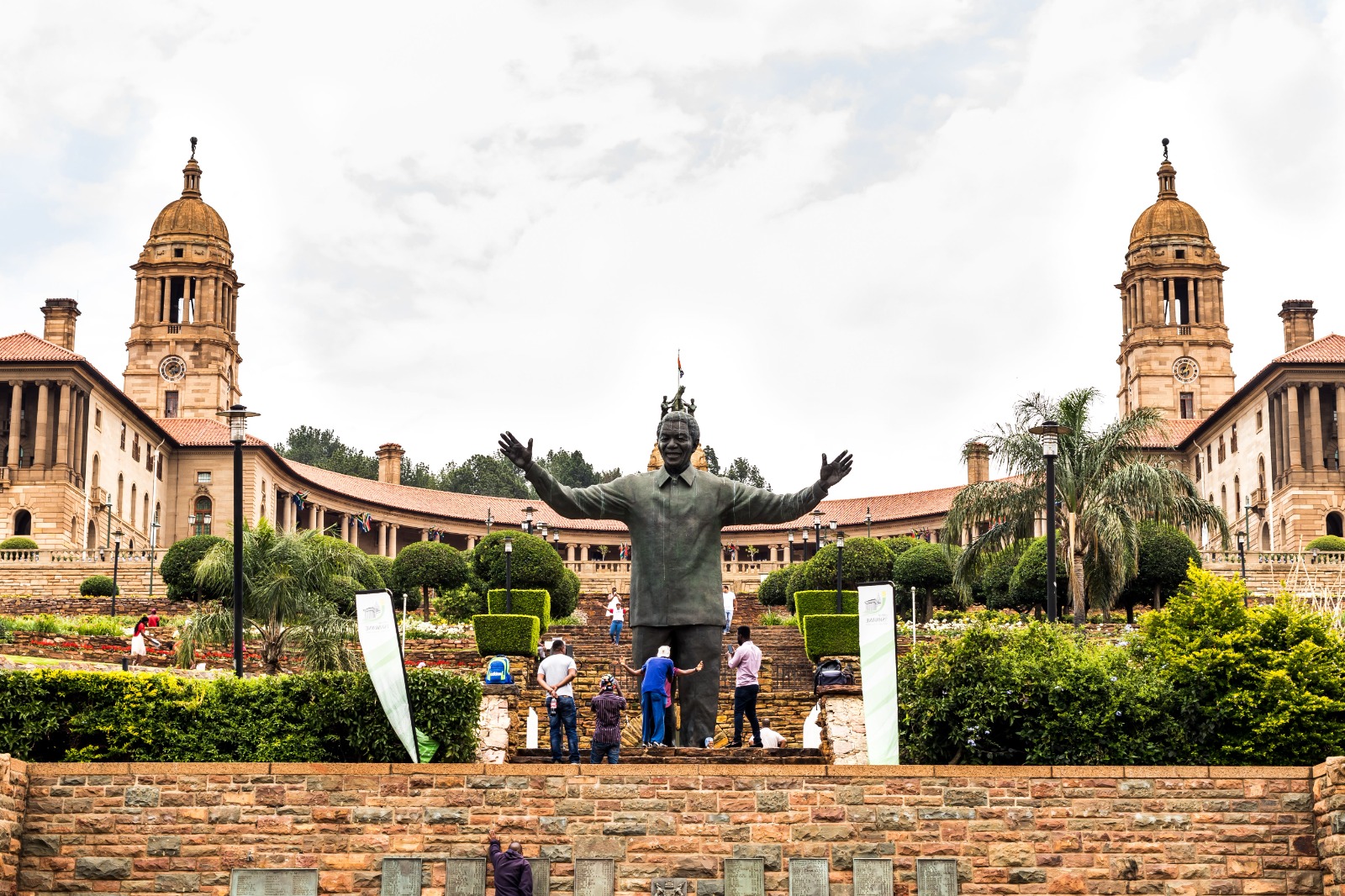
South Africa provides one of the continent's clearest institutional examples. Its Constitution expressly establishes judicial independence and prohibits interference with the functioning of the courts. It also provides for independent Chapter 9 institutions, including the Auditor-General, Public Protector and Electoral Commission.
That architecture does not eliminate political conflict. It creates mechanisms through which political conflict can be processed institutionally.
That distinction is fundamental.
Electoral Commissions
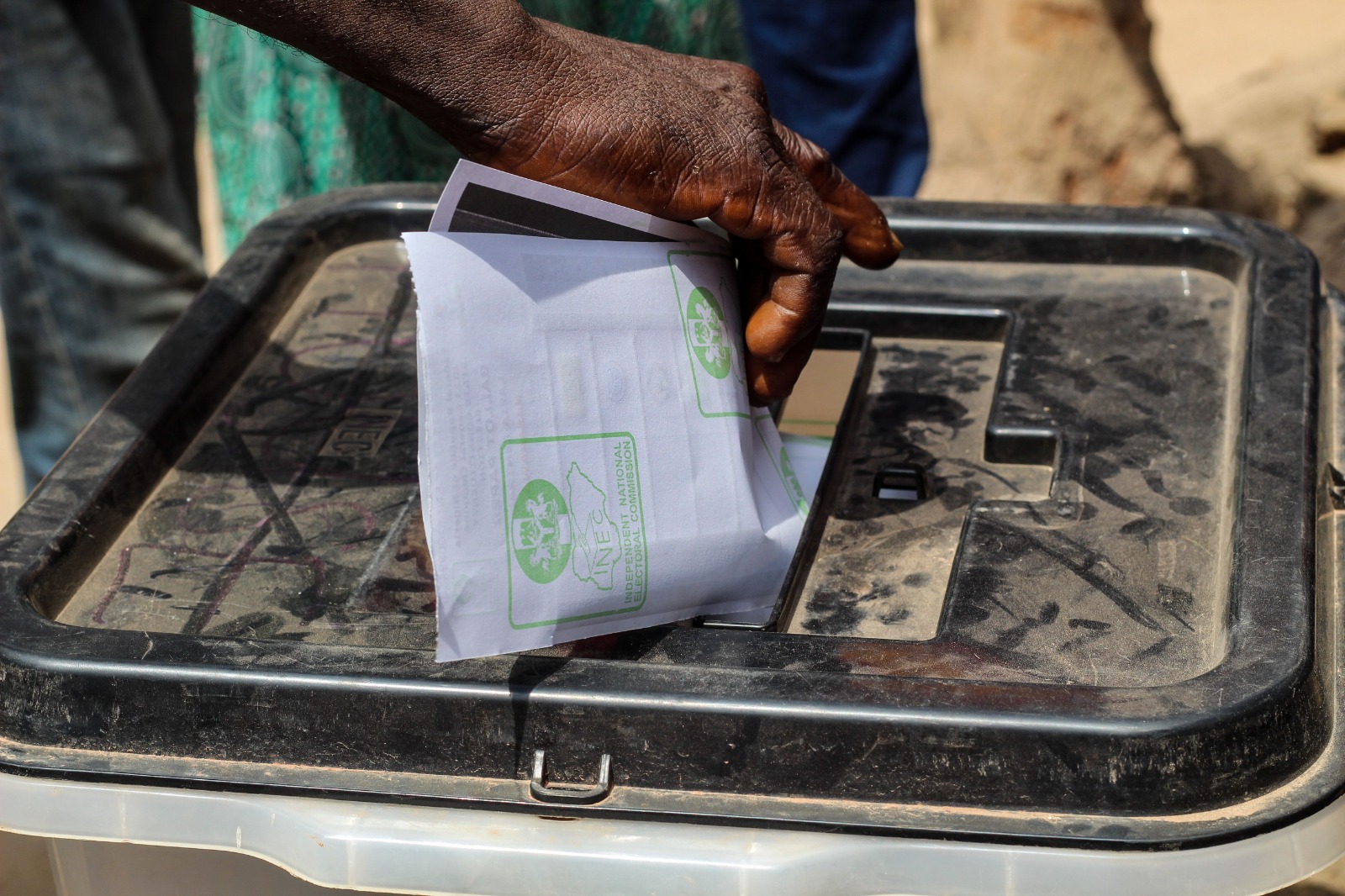
Electoral commissions are not merely election-day administrators.
They determine whether political competition is credible.
Where electoral institutions are trusted, losing parties have greater incentives to accept results and prepare for the next election.
Where they are perceived as extensions of government, electoral disputes can become existential political conflicts.
Ghana illustrates the importance of this institutional layer. In 2025, parliamentary committees engaged the country's independent constitutional bodies; including the Electoral Commission and Audit Service, over financing and institutional independence.
The issue is not administrative detail.
Financial independence can become political independence.
Civil Services
The civil service is arguably the least visible but most important institution in the state.
Presidents come and go.
Officials remain.
A professional bureaucracy provides institutional memory, policy continuity and technical capacity.
Weak civil services force governments to depend excessively on political appointees, consultants or informal networks. That can accelerate decision-making in the short term but weaken institutional knowledge over time.
The result is a state that can announce policies faster than it can implement them.
Regulators
For investors, regulators are often more important than politicians.
Central banks, competition authorities, telecommunications regulators, energy regulators, securities commissions and financial supervisors determine the practical rules under which markets operate.
A regulator that can act independently creates confidence that competitors will face comparable rules.
A regulator vulnerable to political pressure creates uncertainty that can distort investment decisions.
The World Bank explicitly defines regulatory quality in terms of a government's ability to formulate and implement policies and regulations that promote private-sector development.
Security Institutions
The military, police and intelligence services occupy a special position.
Their primary function is to protect the state.
But when security institutions become political actors, the constitutional balance changes fundamentally.
The recent experience of coups across West and Central Africa demonstrated how quickly civilian institutional weakness can become a question of regime survival.
The longer-term issue is whether states can rebuild institutions capable of ensuring civilian control over security power.
Where Institutional Capacity Is Strengthening
The African institutional story is not uniformly negative.
Several countries demonstrate that stronger institutions can emerge even amid political pressure and economic difficulty.
Mauritius: Institutional Resilience
Mauritius remains one of Sub-Saharan Africa's strongest rule-of-law performers.
The World Justice Project's 2025 index ranked Mauritius 47th globally and third in Sub-Saharan Africa, while its overall rule-of-law score improved slightly.
The significance extends beyond the ranking.
Mauritius has spent decades building institutions capable of supporting a diversified economy, including financial services, tourism, manufacturing and international investment.
Its experience demonstrates that institutional credibility can become a competitive economic asset.
South Africa: Institutions Under Political Pressure; but Still Functioning
South Africa presents a different model.
Its political system has become more fragmented since the African National Congress lost its parliamentary majority in 2024 and entered a coalition arrangement.
That fragmentation creates political uncertainty.
But it also demonstrates the resilience of institutions outside the presidency.
Parliament remains consequential. Courts remain capable of hearing disputes involving government. Independent constitutional institutions retain formal protections.
In August 2026, the Democratic Alliance, a coalition partner in government, took the Expropriation Act to court, challenging aspects of a law signed by President Cyril Ramaphosa. Whatever the eventual legal outcome, the institutional mechanism is important: a governing party is using the courts to challenge a policy of the government in which it participates.
That is institutional friction, but institutional friction can be an asset.
For investors, the relevant question is not whether governments face disagreement.
It is whether disagreement has rules.
Senegal: A Critical Test of Institutional Constraint
Senegal is particularly important because it demonstrates both the fragility and resilience of institutions.
The political relationship between President Bassirou Diomaye Faye and former Prime Minister Ousmane Sonko has become increasingly contentious.
In May 2026, Sonko was elected Speaker of Parliament after being removed as prime minister, creating a powerful institutional counterweight to the presidency.
The conflict subsequently moved into the constitutional arena.
In July 2026, Senegal's Constitutional Court struck down parliamentary-backed constitutional changes that it found contrary to the Constitution and that would have altered the balance of power between political institutions.
This is precisely the type of event investors should watch.
A political system does not demonstrate institutional strength because there is no conflict.
It demonstrates strength when conflict is absorbed by institutions rather than resolved through institutional destruction.
Senegal therefore remains a live test of whether political competition can strengthen rather than weaken constitutional checks.
Where Executive Power Is Expanding
The opposing trend is equally important.
Across several African states, constitutional engineering is becoming a mechanism through which political power can be extended or concentrated.
Guinea-Bissau
Guinea-Bissau is preparing for a constitutional referendum on 30 August 2026 that would expand presidential powers and alter electoral arrangements.
The proposal comes after a military takeover and during a period of political uncertainty.
The economic implication is significant: investors assessing the country must consider not only current policy but whether the institutional rules governing executive authority are becoming less predictable.
Zimbabwe
Zimbabwe's cabinet approved a constitutional amendment proposal in February 2026 that would extend presidential terms from five to seven years and potentially allow President Emmerson Mnangagwa to remain in office until 2030.
The proposal would also change the mechanism for selecting the president from a direct popular vote to parliamentary election.
The significance goes beyond the individual presidency.
It demonstrates how constitutional rules can themselves become instruments of political strategy.
Uganda
Uganda illustrates an earlier stage of the same institutional problem.
President Yoweri Museveni has remained in power since 1986 after constitutional changes removed presidential term and age restrictions.
In 2025, Uganda's Electoral Commission cleared him to contest the 2026 election.
The country's experience illustrates how formal institutions can continue operating while constitutional constraints on executive tenure progressively weaken.
Tanzania
Tanzania presents another warning signal.
President Samia Suluhu Hassan was re-elected in 2025 with nearly 98% of the vote in an election criticised over the exclusion of opposition candidates and subsequent violence.
In August 2026, Vice President Emmanuel Nchimbi announced his resignation, with the circumstances of his departure occurring amid wider debate about constitutional reform and political direction.
The issue for institutional analysis is not simply electoral performance.
It is whether political competition remains sufficiently credible to provide meaningful constraints on executive authority.
The Resource Question: Who Controls the Money Controls the State
Institutional power becomes particularly consequential in resource-rich economies.
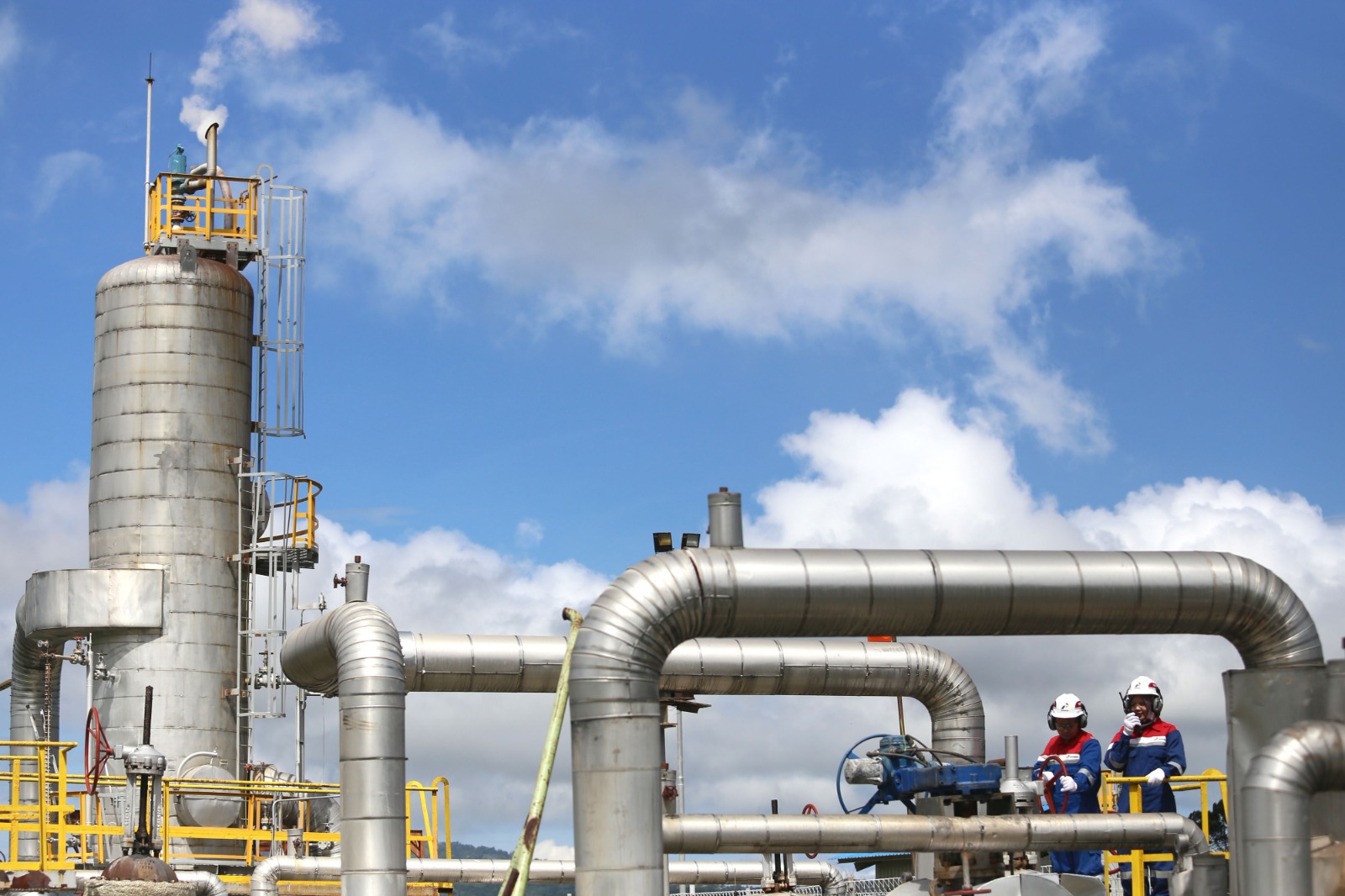
Oil, gas, minerals and large infrastructure projects generate enormous economic rents.
The question is therefore not merely:
Who owns the resource?
It is:
Which institution decides how the resource is licensed, taxed, regulated, financed and distributed?
Where institutions are strong, resource wealth can be converted into public investment, sovereign savings, infrastructure and industrial development.
Where institutions are personalised, resource revenues can become instruments of political patronage.
This creates a direct connection between governance and investment.
Mining companies are not simply negotiating with governments.
They are navigating:
licensing agencies;
ministries;
parliaments;
environmental regulators;
courts;
tax authorities;
customs agencies;
local governments;
security institutions; and
sometimes politically connected business networks.
The stronger these institutions are, the more predictable the investment environment becomes.
The weaker they are, the more important political relationships become.
That difference has a measurable economic cost.
Why Institutional Quality Changes Investment Decisions
Foreign investment in Africa reached a record $97 billion in 2024, according to UN Trade and Development, a 75% increase from the previous year. But the headline number was heavily influenced by a major project-finance transaction in Egypt; excluding that increase, African FDI still rose by around 12% to approximately $62 billion.
The lesson is important.
Africa is attracting capital.
But capital is becoming increasingly selective about where and under what institutional conditions it is deployed.
A multinational investor can tolerate political disagreement.
It has much greater difficulty pricing uncertainty over whether:
a licence will be renewed;
a tax agreement will be honoured;
capital controls will change;
a regulator will reverse a decision;
a court will enforce a contract;
public procurement will be competitive;
a concession will survive a change of government.
This is why institutional risk often appears in investment decisions as a higher required return, shorter investment horizon or preference for partnership with politically connected local entities.
In other words, weak institutions do not necessarily stop investment. They change the type of investment a country receives.
That distinction is strategically important.
Strong institutions are more likely to attract capital seeking long-term productivity.
Weak institutions can attract capital seeking short-term extraction, political protection or unusually high returns.
The Personalisation Problem
The greatest institutional risk emerges when formal institutions remain intact but become personalised.
A personalised state may still have:
a constitution;
parliament;
courts;
regulators;
elections;
ministries; and
central banks.
But their practical independence becomes dependent on relationships with the executive.
This creates a dangerous illusion of institutional normality.
The institutions exist.
They simply no longer operate with equal autonomy.
The result can be particularly damaging for economic policy.
A government may change tax policy because a politically connected industry requires protection.
A regulator may delay an investigation because a politically connected company is involved.
A public procurement process may favour firms with access to political networks.
A central bank may face pressure to finance fiscal deficits.
A court may become cautious about cases involving senior officials.
Each individual decision can appear isolated.
Collectively, they transform the investment environment.
What Happens to Economic Policy When Institutions Become Personalised?
Economic policy becomes less predictable.
And unpredictability changes corporate behaviour.
Businesses begin to invest more cautiously.
Investors demand higher returns.
Banks shorten lending horizons.
Companies seek political relationships alongside commercial competence.
Public contracts become more valuable than open markets.
Entrepreneurs spend more resources managing government relationships.
The private sector becomes less productive because resources shift from innovation and competition towards political navigation.
This is one reason institutional quality should be considered part of economic productivity.
A highly capable entrepreneur operating inside a low-predictability institutional environment may spend significant time solving problems that would not exist in a stronger regulatory system.
The economy effectively pays an institutional transaction cost.
The Africa Investment Map Is Becoming an Institutional Map
The conventional investment map of Africa tends to focus on:
GDP growth;
population;
natural resources;
infrastructure;
market size;
exchange rates; and
political stability.
A more sophisticated map needs another layer:
institutional architecture.
Investors should increasingly assess countries according to:
Constraint on executive power
Can political decisions be challenged?
Regulatory independence
Can regulators make unpopular decisions without political retaliation?
Judicial credibility
Are contracts and property rights enforceable?
Parliamentary effectiveness
Can legislators scrutinise budgets and major policy decisions?
Civil-service capability
Can government policies actually be implemented?
Electoral credibility
Can political power change hands without institutional crisis?
Security-sector accountability
Are military and police institutions subordinate to civilian constitutional authority?
Resource governance
Are mineral, oil and infrastructure decisions transparent and rules-based?
These factors collectively determine how much confidence investors can place in the formal rules of an economy.
The Countries to Watch
The most interesting institutional stories are not necessarily the countries with the strongest or weakest governance scores.
They are the countries undergoing institutional transition.
Senegal
A critical test of whether political competition can strengthen constitutional checks.
South Africa
A test of whether coalition politics can reinforce institutional accountability without producing policy paralysis.
Ghana
A key electoral democracy where the independence and financing of constitutional institutions remain important governance questions.
Mauritius
A benchmark for how institutional credibility can support economic diversification and international investment.
Rwanda
A case of high administrative capacity combined with a much more concentrated political system, illustrating why state capacity and institutional independence are not the same thing.
Kenya
A major regional economy where questions of public-sector governance, corruption risk and regulatory credibility remain economically significant. The IMF completed a governance diagnostic process with the Kenyan government in 2026 as part of broader engagement over governance weaknesses and corruption risks.
Guinea-Bissau, Zimbabwe, Uganda and Tanzania
Countries where the evolution of constitutional rules, executive authority and political competition warrants close monitoring.
What Serious Decision-Makers Should Do Next
For Investors
Stop treating governance as a single country-risk score.
Build an institutional risk map covering the executive, legislature, judiciary, regulators, civil service, electoral institutions and security sector.
A country with moderate political risk but strong institutional checks may be more investable over a 15-year horizon than a seemingly stable state where power is concentrated around one political centre.
For Corporates
Political-risk analysis should move beyond monitoring presidents and elections.
Companies should understand the institutions that can actually affect their operations.
A telecommunications company needs to understand its regulator.
A mining company needs to understand licensing and environmental institutions.
A financial institution needs to understand the central bank and financial regulator.
An infrastructure investor needs to understand procurement, concession and judicial systems.
The relevant question is not simply "Who is in power?"
It is "Which institutions can change the economics of our investment?"
For Policymakers
Institutional reform should be treated as economic policy.
Strengthening procurement systems, regulatory independence, public financial management, judicial efficiency and professional civil services can have effects on investment that are comparable to traditional investment incentives.
Governments seeking foreign capital should therefore compete not only through tax holidays and investment zones.
They should compete through predictability.
For Development Finance Institutions
DFIs should measure institutional risk at project level rather than treating governance as a country-level abstraction.
Projects can strengthen institutions when financing is linked to:
transparent procurement;
independent oversight;
measurable regulatory standards;
public reporting;
auditability;
contract transparency; and
institutional capacity-building.
Capital can therefore become a tool for institutional development rather than merely a response to institutional conditions.
Executive Outlook
Africa's next political contest will not be defined solely by elections.
It will be defined by what happens between elections.
Who controls the regulator?
Who appoints the judges?
Who controls the budget?
Who audits public spending?
Who determines election rules?
Who controls natural-resource licences?
Who commands the security institutions?
Who can challenge the executive?
And, ultimately, who can say no to the state?
These questions determine whether institutions are genuinely independent or simply extensions of political power.
The strongest African states of the next decade will not necessarily be those with the most powerful presidents.
They will be those where power survives the president.
That means building institutions capable of continuing to function when governments change, markets deteriorate, political coalitions collapse or national leaders leave office.
The economic implications are profound.
A reliable court is an investment asset.
An independent regulator is an investment asset.
A competent civil service is an investment asset.
A credible electoral commission is an investment asset.
An effective Parliament is an investment asset.
Transparent resource governance is an investment asset.
Together, they form a country's institutional infrastructure.
Africa's competition for capital is therefore also a competition between institutional models.
The central question for investors should no longer be simply which African economy will grow fastest?
It should be:
Which African states are building institutions strong enough to make growth durable?
That is the distinction between a market that produces opportunity for one political cycle and an economy capable of compounding opportunity across generations.
Political institutions are economic infrastructure.
The countries that understand this earliest may gain the greatest advantage in Africa's next era of investment, industrialisation and economic transformation.
Sources
World Bank — Worldwide Governance Indicators, 2025 Revision.
World Bank — 2025 Africa Country Policy and Institutional Assessment (CPIA).
World Bank — Global Indicators of Regulatory Governance.
World Justice Project — Rule of Law Index 2025.
World Justice Project — Mauritius Rule of Law Index 2025.
UN Trade and Development (UNCTAD) — World Investment Report 2025: Africa Foreign Investment.
Reuters — Senegal Constitutional Court ruling on parliamentary constitutional reform, July 2026.
Reuters — Senegal parliamentary and political developments, May 2026.
Reuters — Guinea-Bissau constitutional referendum and proposed expansion of presidential powers, August 2026.
Reuters — Zimbabwe constitutional proposals to extend presidential tenure, February 2026.
Reuters — Uganda presidential election and constitutional limits, September 2025.
Reuters — Tanzania political and institutional developments, August 2026.
Reuters — Kenya IMF governance diagnostic, June 2026.
Parliament of South Africa — Constitutional Court and institutional accountability.
Government of South Africa — Structure and functions of government and Chapter 9 institutions.
Ghana News Agency — Parliamentary oversight of constitutional bodies and institutional independence, May 2025.
Freedom House — Senegal: Freedom in the World 2025.