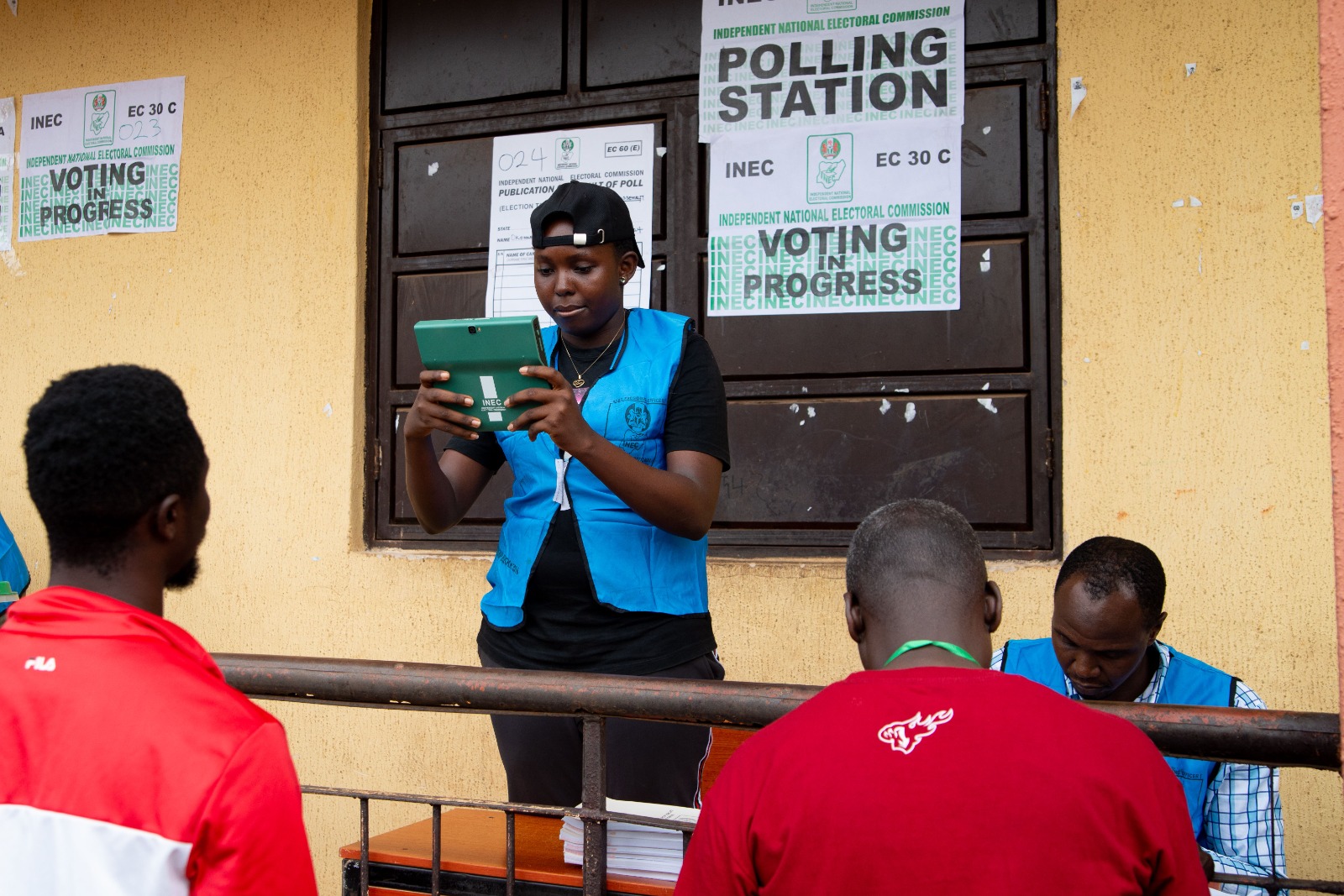
Across the continent, elections are influencing fiscal priorities, infrastructure commitments, regulatory expectations, capital allocation and investor risk assessments. The immediate political question is who wins office. The more consequential economic question is what that victory—or an unexpected transition, does to the policy framework governing investment, public spending, taxation, regulation and infrastructure.
The timing is particularly important.
Several major 2026 elections have already taken place. Ethiopia voted in June, Algeria in July and Zambia in August, while Morocco's parliamentary election is scheduled for 23 September. The 2027 calendar then brings major political events in countries including Nigeria and Kenya, alongside elections elsewhere on the continent.
The economic significance varies considerably between countries.
In Zambia, President Hakainde Hichilema's re-election has been interpreted by investors as a continuity signal following debt restructuring and IMF-backed reforms. The next question for markets is whether political continuity translates into faster investment, particularly in copper and energy, without weakening fiscal discipline.
In Ethiopia, Prime Minister Abiy Ahmed's Prosperity Party secured a large parliamentary majority, providing political continuity but leaving investors to assess the country's security situation, debt restructuring, foreign-exchange reforms and wider investment environment.
Morocco presents a different case. Its September parliamentary election arrives as the country is simultaneously pursuing major infrastructure investment, private-sector reforms and an effort to shift towards more private-sector-led growth.
And in Nigeria, the 2027 presidential election is already becoming an economic event. President Bola Tinubu's administration has implemented reforms welcomed by international investors—including the removal of the fuel subsidy and exchange-rate reforms—but those policies have also intensified domestic cost-of-living pressures, making the sustainability of the reform programme a central electoral question.
The broader lesson is important:
Markets do not necessarily fear elections. They fear uncertainty about what comes after them.
Recent IMF research finds that election-related uncertainty can suppress private capital inflows, particularly foreign direct investment and cross-border lending. The effect becomes more severe when uncertainty persists after polling, especially following contested or violent elections or when a change of government leaves future policy unclear.
For investors, therefore, the relevant question is not simply who wins?
It is:
What happens to fiscal policy, regulation, infrastructure, currency policy, taxation and investment rules once the votes are counted?
Why the Election Economy Matters
Elections change incentives.
Governments approaching voters have political reasons to demonstrate visible economic progress. This can influence the timing and composition of government expenditure, the introduction of subsidies or social programmes, infrastructure announcements, public-sector employment, tax measures and regulatory decisions.
That does not mean every election produces irresponsible spending.
In countries with strong fiscal institutions, elections can coexist with continued reform and investment discipline. In weaker institutional environments, however, political incentives can amplify fiscal pressures.
The IMF's research on election cycles in sub-Saharan Africa finds that post-election periods have historically been associated with fiscal consolidation, with budget deficits narrowing by roughly 1.4 percentage points of GDP over the three-year period following an election. Importantly, that adjustment has tended to rely more heavily on expenditure cuts than revenue increases.
This creates a potentially important investment cycle:
Pre-election period → higher political spending and policy uncertainty → election outcome → post-election fiscal adjustment or reform → renewed investment visibility.
Businesses that understand this cycle can anticipate changes before they become obvious in economic data.
What Markets Actually Watch
1. Fiscal Policy
Fiscal policy is often the first transmission mechanism between politics and markets.
Governments approaching elections face pressure to demonstrate improvements in living standards. This can translate into increased spending on wages, transfers, infrastructure, subsidies and public services.
The problem arises when political expenditure is financed through borrowing in economies that already have limited fiscal space.
For investors, the critical indicators are therefore not campaign promises alone but:
budget deficits;
debt-service costs;
domestic borrowing;
public-sector wage bills;
subsidy commitments;
tax changes;
capital expenditure;
arrears;
foreign-exchange reserves; and
IMF or other multilateral programmes.
Election promises become economically meaningful when they begin appearing in budget documents.
2. Infrastructure Spending
Infrastructure is one of the sectors most exposed to political incentives because large projects provide visible evidence of government activity.
Roads, railways, ports, electricity networks, housing, water systems and public transport can all become politically important before elections.
For construction companies, engineering firms, banks and infrastructure investors, this creates opportunities.
It also creates risks.
Projects announced before elections may face delays, renegotiation or cancellation after a change of government.
The key investment question is therefore not simply whether a project has been announced.
It is whether it has:
funding + procurement approval + contractual commitments + political continuity.
Projects that have progressed through these stages are generally more resilient to political change than campaign-stage announcements.
3. Regulation and Business Conditions
Election outcomes can alter the regulatory environment even when headline economic policy appears unchanged.
Potential changes include:
tax rates;
local-content requirements;
mining licences;
telecommunications regulation;
energy pricing;
foreign-exchange rules;
import restrictions;
investment incentives;
privatisation programmes;
competition policy; and
public procurement.
This is particularly important for multinational companies whose investment horizons extend well beyond a single political administration.
An election should therefore trigger a regulatory scenario review, not simply a political briefing.
4. Investor Confidence
Investor confidence is fundamentally about predictability.
The IMF's recent research into elections and capital flows found that gross private capital inflows into emerging markets tend to weaken during election cycles, with foreign direct investment and cross-border lending particularly sensitive to political uncertainty. The effects can persist into the two quarters after an election when uncertainty remains unresolved.
But the same research contains an important qualification.
Countries with stronger political stability and institutional quality experience significantly smaller election-related effects.
That distinction is critical for Africa.
The election itself is not necessarily the risk.
Institutional uncertainty is the risk.
Where investors believe that contracts will be respected, central banks will retain credibility, courts will function and economic policy will remain broadly predictable, election volatility can be relatively short-lived.
Where institutions are weaker, political uncertainty can become an investment shock.
Country Focus: Zambia
Zambia provides one of the clearest early examples of the election economy in 2026.
President Hakainde Hichilema was re-elected in August with roughly 60% of the vote. Investors have broadly interpreted the result as a continuity signal following Zambia's debt restructuring and IMF-supported economic reforms.
The economic agenda now shifts.
Hichilema's government wants to expand copper production dramatically, while investors are watching for a new IMF programme, continued fiscal discipline and the possibility of renewed access to international bond markets.
The opportunity is therefore concentrated around:
copper;
critical minerals;
energy;
infrastructure;
logistics; and
mining services.
The risk is that political pressure to deliver faster economic gains could collide with the fiscal discipline required after Zambia's debt crisis.
Investment interpretation: continuity is positive, but the second-term test is execution.
Country Focus: Ethiopia
Ethiopia's June election produced strong political continuity.
Prime Minister Abiy Ahmed's Prosperity Party won 438 of the 486 parliamentary seats for which results were announced, securing a large majority. Voting did not take place in parts of Tigray and Amhara because of security conditions.
For investors, the significance goes beyond the election result.
Ethiopia is simultaneously navigating debt restructuring, foreign-exchange reform, security challenges and efforts to attract investment.
In June, Ethiopia reached a preliminary agreement with international bondholders to restructure its defaulted $1 billion bond, marking an important step in restoring external financial credibility.
The political continuity therefore gives policymakers room to pursue economic reforms.
But it does not remove the underlying risks.
For investors, Ethiopia remains a high-opportunity, high-complexity market where currency convertibility, debt sustainability, security and regulatory execution must be assessed together.
Country Focus: Algeria
Algeria's parliamentary election took place on 2 July 2026.
Three pro-government parties secured a combined 221 seats in the 407-member National People's Assembly, while turnout was only 21.2%.
The immediate economic implication is continuity.
Algeria remains heavily influenced by the state's role in the economy, energy revenues and public investment.
For businesses, the most important variables are therefore likely to remain:
hydrocarbons;
energy infrastructure;
public investment;
industrial policy;
import regulation;
domestic manufacturing; and
diversification away from oil and gas.
The election is less about a sudden change in economic ideology than about whether Algeria can use policy continuity to accelerate diversification.
Country Focus: Morocco
Morocco's parliamentary election on 23 September 2026 is one of the most important remaining votes of the 2026 calendar.
The timing matters because Morocco is already implementing an ambitious investment and development agenda.
The World Bank estimates that structural reforms could generate an additional 1.7 million jobs by 2035 and lift real GDP close to 20% above baseline. Its recommendations include strengthening competition, private investment, public investment and labour-market participation.
The IMF projects Moroccan GDP growth of 4.4% in 2026 and has highlighted infrastructure investment, fiscal-space rebuilding and private-sector development as important priorities.
For investors, the election should therefore be analysed through the question of policy continuity versus acceleration.
Key sectors include:
infrastructure;
automotive;
renewable energy;
logistics;
manufacturing;
tourism;
digital services; and
private-sector investment.
Morocco's election economy is less about whether the state will invest and more about how effectively public investment can crowd in private capital.
Country Focus: Nigeria
Nigeria is likely to become the most commercially significant election economy in West Africa during 2027.
The presidential election is scheduled for 16 January 2027, according to current election planning information.
The stakes are unusually high because the election will test the durability of one of Africa's most consequential economic reform programmes.
President Bola Tinubu's government removed the petrol subsidy and implemented major exchange-rate reforms. International investors and lenders have broadly welcomed the direction, while households have experienced significant inflation and cost-of-living pressures.
This creates a difficult electoral equation.
Investors want reform credibility. Voters want economic relief.
The next administration—whether the incumbent returns or power changes hands—will have to reconcile these objectives.
For investors, the critical questions include:
Will fiscal reforms continue?
Will subsidy policy remain stable?
Will exchange-rate reforms be maintained?
Will tax reform accelerate?
Will energy-sector reform deepen?
Will infrastructure spending increase?
Will debt remain manageable?
Will regulatory policy become more predictable?
Nigeria's size means the consequences extend beyond domestic markets into regional trade, banking, energy and investment flows.
Country Focus: Kenya
Kenya's 2027 general election is scheduled for 10 August 2027.
The election will arrive against a backdrop of slower growth expectations, fiscal pressures and concerns about private investment.
The World Bank projects growth of 4.3% in 2026 and 4.4% in 2027, while warning that political uncertainty associated with the 2027 election could affect investor confidence and fiscal stability.
For investors, Kenya's election economy is therefore closely linked to debt management.
The country's ability to finance infrastructure and public services without excessive reliance on costly domestic borrowing will be a central market issue.
The most sensitive sectors are likely to include:
infrastructure;
financial services;
telecommunications;
energy;
transport;
agriculture; and
consumer markets.
Where Political Spending Usually Flows
Election economics does not distribute spending evenly.
Certain sectors are politically more visible and therefore more likely to receive attention.
Infrastructure
Roads, bridges, electricity, water and public transport provide tangible evidence of government activity.
Social Spending
Cash transfers, food programmes, education and healthcare become politically important where households face high living costs.
Agriculture
Subsidised inputs, rural roads, irrigation and agricultural finance can become prominent election issues.
Energy
Fuel subsidies, electricity tariffs and power projects have direct effects on household costs and therefore strong political relevance.
Public Employment
Government recruitment and wage adjustments can become significant fiscal variables, particularly in economies where the public sector is a major employer.
Construction
Housing and urban development projects can accelerate before elections because of their visibility and employment effects.
For investors, the key is distinguishing politically motivated spending from economically productive capital expenditure.
The two are not always the same.
The Fiscal Cliff After the Election
One of the least discussed features of election economics is what happens after voting ends.
A government may inherit a fiscal position weakened by pre-election expenditure. The new administration then faces pressure to restore fiscal credibility.
That can produce a sharp policy reversal.
Subsidies may be reduced.
Capital expenditure may be delayed.
Taxes may rise.
Public-sector hiring may slow.
Domestic borrowing may be reduced.
These adjustments can create short-term economic pain even when they improve medium-term fiscal sustainability.
The IMF's evidence that post-election fiscal consolidation in sub-Saharan Africa has historically relied substantially on expenditure reductions is therefore particularly relevant for investors.
The implication is straightforward:
The investment opportunity created by election-related spending can be followed by a fiscal adjustment cycle.
Businesses that anticipate both phases will be better positioned than those responding only to the election-year boom.
What Serious Decision-Makers Should Watch
For executives, investors and institutions, the election calendar should become part of the corporate risk calendar.
Before the Election
Monitor:
government budgets;
campaign promises;
subsidy proposals;
tax proposals;
infrastructure commitments;
polling volatility;
currency pressure;
central-bank policy; and
capital-flow data.
During the Election
Monitor:
turnout;
credibility of the process;
violence;
communications restrictions;
market closures;
currency movements;
sovereign spreads; and
statements from election observers.
After the Election
The most important phase begins after the result.
Monitor:
cabinet appointments;
finance-ministry leadership;
central-bank independence;
budget revisions;
IMF negotiations;
infrastructure priorities;
tax policy;
subsidy policy;
regulatory appointments; and
early signals on private investment.
The first 100 days can reveal more about the economic direction of a new administration than the campaign itself.
The Investor Playbook
1. Build an Election-Adjusted Investment Thesis
Every major African investment should include a political-cycle scenario.
Investors should model:
Base case: policy continuity.
Reform case: faster implementation and stronger private investment.
Disruption case: contested outcome, policy reversal or fiscal deterioration.
This allows investment committees to assess risk before volatility appears.
2. Separate Political Risk from Institutional Risk
A change of government does not automatically mean an investment thesis is invalid.
If institutions remain strong and economic policy is broadly continuous, political transition can be manageable.
The greater risk arises where elections weaken institutional credibility.
That distinction should influence country risk premiums, investment timing and financing structures.
3. Prioritise Contractual Certainty
Infrastructure and natural-resource investors should place particular emphasis on the durability of licences, concessions, power-purchase agreements, public-private partnerships and tax arrangements.
Political relationships matter.
But contractual and institutional protections matter more.
4. Watch the Fiscal Numbers, Not Just the Speeches
Campaign promises are inexpensive.
Budgets are not.
Investors should track actual expenditure, borrowing requirements, revenue performance and debt-service costs rather than relying on political rhetoric.
Aldrenor Intelligence View
Africa's 2026–27 election cycle should not be treated as a collection of isolated political events.
It is a continent-wide economic risk cycle.
The countries with the greatest market sensitivity are not necessarily those with the most dramatic elections. They are the countries where political outcomes intersect with large fiscal imbalances, major infrastructure programmes, commodity dependence, foreign-exchange constraints or ongoing structural reforms.
Three broad patterns are emerging.
Continuity can become an economic asset
Zambia demonstrates how a relatively predictable election outcome can reduce political uncertainty and allow investors to focus on growth, debt management and sector expansion.
Reform creates an electoral trade-off
Nigeria demonstrates the tension between reforms that improve macroeconomic credibility and reforms that impose short-term costs on households.
Political continuity does not eliminate structural risk
Ethiopia's election produced a strong governing majority, but debt, foreign exchange and security challenges remain relevant to investment decisions.
The broader investment lesson is that election outcomes should be analysed as inputs into economic policy scenarios, not as political headlines in isolation.
Executive Outlook
The next 18 months will create a significant political-economic testing period for Africa.
The immediate 2026 calendar has already provided three useful signals.
Ethiopia produced political continuity while continuing to confront difficult macroeconomic and security challenges.
Algeria produced continuity within a state-led economic model.
Zambia produced a pro-business continuity signal at a time when investors are looking for evidence that debt restructuring can translate into sustainable growth.
Morocco now approaches a September election while pursuing an ambitious infrastructure and private-investment programme.
Then comes 2027.
Nigeria's election will test the political durability of major macroeconomic reforms in Africa's largest economy. Kenya's election will test fiscal credibility and investor confidence in East Africa. Angola will add another major oil-producing economy to the political risk landscape.
For investors, the most important question will not be whether political change occurs.
It will be whether economic institutions remain credible when political incentives intensify.
For governments, the challenge will be maintaining fiscal discipline while responding to voters demanding jobs, lower prices, infrastructure and better public services.
For businesses, the election calendar should become part of strategic planning.
And for financial institutions, elections should increasingly be treated as identifiable macro-financial events capable of affecting sovereign risk, capital flows, currency markets, government borrowing and sector valuations.
The election economy is therefore not a political side story to Africa's markets. It is becoming part of the market itself.
The institutions that understand this early will be better positioned to distinguish temporary electoral volatility from genuine changes in the economic rules of the game.
Sources
International Monetary Fund — Elections Matter: Capital Flows and Election Cycles
International Monetary Fund — Regional Economic Outlook: Sub-Saharan Africa
International Monetary Fund — Fiscal Monitor: Fiscal Policy in the Great Election Year
World Bank — Morocco Growth, Jobs and Private Investment Reform Assessment
World Bank — Morocco Country Partnership Framework 2026–2035
Independent Electoral and Boundaries Commission — Kenya 2027 Election Operations Plan
Inter-Parliamentary Union — Election Data and Parliamentary Calendar
Reuters — Zambia's Hichilema Seeks to Turn Debt Recovery into Economic Expansion
Reuters — Ethiopian Prime Minister's Party Wins Parliamentary Majority
International Parliamentary Union — Algeria 2026 Legislative Election Results
Algerian Radio — Preliminary Results of the 2026 Legislative Elections